Woman's Body Found in Suitcase on Rural NSW Road; Police Forensics Seize Evidence

A woman's body was discovered inside a suitcase beside a road in regional New South Wales on Sunday afternoon, prompting a homicide investigation by NSW police.
Officers were called to Wolgon Road, near Oallen Ford Road, in the locality of Oallen at approximately 12.50pm on 9 August 2026, after a passer-by reported finding what appeared to be human remains at the roadside. The discovery was made roughly 40km south of Goulburn, in a remote stretch of countryside that sits 70km east of Canberra and 180km south-west of Sydney. (The Guardian; Yahoo News Australia)
The body had not been formally identified, but a NSW police spokesperson indicated it was believed to be female. Police did not immediately disclose how long the remains may have been at the location, leaving open the question of whether the body was dumped recently or had been at the roadside for an extended period.
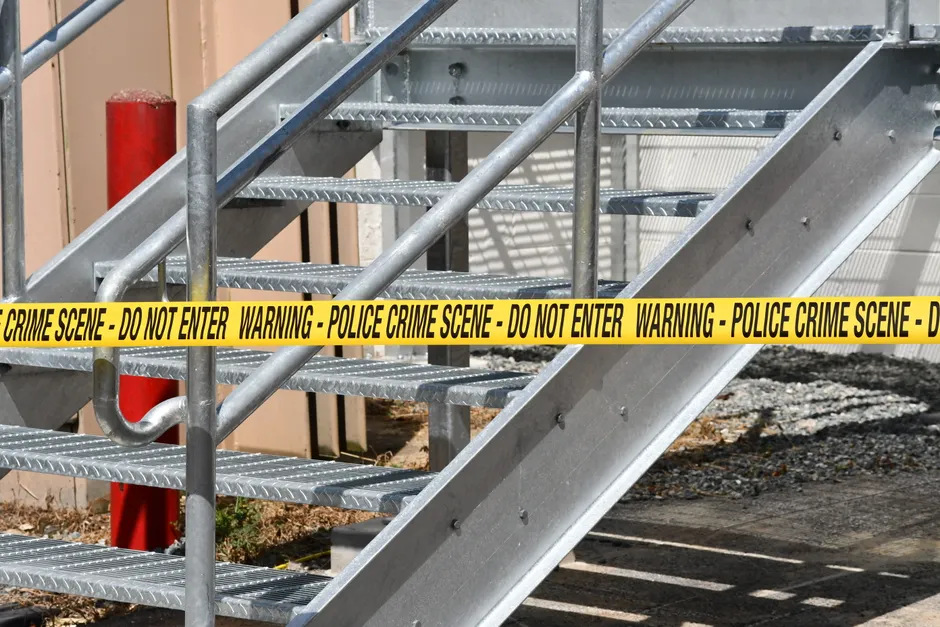
A crime scene was established at the site. The suitcase was seized for forensic examination, and detectives commenced an investigation into the circumstances of the death. No further details about the woman's identity, age, or cause of death were released. (The Guardian)
The geography of the find location is notable for investigators and for those who follow rural policing in NSW. Oallen is a sparsely populated area in the Southern Tablelands, positioned at the intersection of several regional roads connecting Goulburn, Braidwood, and the ACT. The nearest significant population centre is Goulburn, a city of roughly 40km to the north, but the specific stretch of Wolgon Road where the body was found is rural and lightly trafficked. That profile is relevant for forensic time-of-death estimation and for any reconstruction of vehicle movements, since low traffic volume means fewer potential witnesses but also a narrower set of plausible transport routes.
Several procedural steps will follow from here. Formal identification typically requires dental records, fingerprint comparison, or DNA analysis, all of which take time. A post-mortem examination will be conducted to establish cause and approximate time of death, findings that will shape the direction of the detective investigation. The forensic examination of the suitcase itself, including any trace evidence such as fibres, biological material, or fingerprints, may yield information about who transported it and how the body was moved.
NSW police have not indicated whether they are treating the case as a suspected homicide at this stage, though the circumstances of a body concealed in a suitcase and left on a roadside carry an implicit investigative weight. The establishment of a crime scene and the seizure of the suitcase for forensic examination reflect standard major-crime protocols within the NSW police framework.
The investigation is at an early stage. Further details, including the results of formal identification and any post-mortem findings, are likely to determine whether the case advances toward a suspected homicide investigation or takes a different course. Police have not released information about suspects, persons of interest, or public appeals for information.