BC Wildfires Trigger Mass Evacuations as Ottawa Approves Federal Assistance
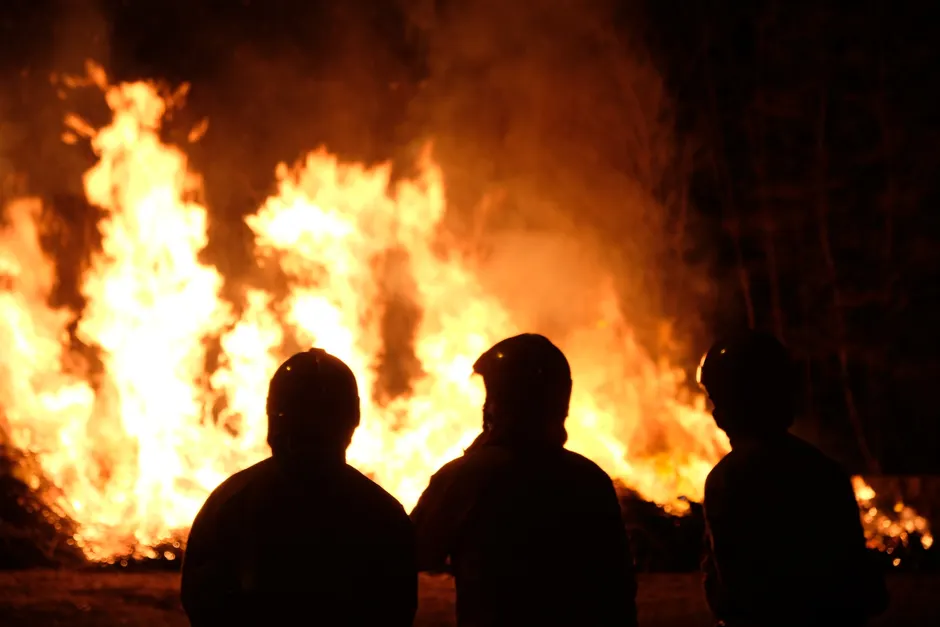
Canada's federal government has approved urgent assistance to British Columbia after fast-moving wildfires forced roughly 22,000 people to flee their homes over the weekend. Eleanor Olszewski, the minister of emergency management and community resilience, approved the province's request for federal aid on Sunday. She tasked federal officials, led by the government operations centre at Public Safety Canada, to coordinate with the province on providing shelter and accommodations for evacuees The Guardian.
The crisis centers on the Bald Range wildfire, first detected late Friday evening. Within hours it had grown to more than 100 sq km (39 sq miles), racing nearly 15km toward Okanagan Lake. Officials said the blaze triggered the largest evacuation event so far this summer in British Columbia Reuters. Premier David Eby declared a provincial state of emergency late on Saturday. The entire community of Summerland, approximately 50km south-west of Kelowna and home to about 12,000 people, was evacuated overnight. A further 8,000 people around Peachland, near Summerland, were also evacuated. Roughly 10,000 additional residents across the province have been told to prepare to evacuate at a moment's notice The Guardian.
As of Sunday, 102 wildfires were raging across British Columbia. Seventy-eight of them ignited during the past week alone. Nearly half are categorized as 'out of control' by the BC Wildfire Service. Cliff Chapman, the service's director of provincial operations, said prolonged hot and dry weather had resulted in 'explosive' fire conditions never seen before. He warned that lightning from forecast thunderstorms could further escalate the situation. Southern British Columbia and the US Pacific north-west have had little to no rain in the past six weeks, leaving the regions 'bone dry,' according to Mike Flannigan, a professor of wildland fire at Thompson Rivers University in Kamloops. Flannigan attributed the conditions to human-caused climate change and noted the rapidity of the fires' spread was indicative of increasingly extreme blazes across Canada and the United States The Guardian.
Aerial response capacity has been constrained. The BC Wildfire Service reported that 10 helicopters and a night-vision helicopter were involved in the response, but thick smoke, turbulence, and the sheer size of the fires have hindered operations. On the ground, the Royal Canadian Mounted Police are investigating a possible fatality in the fire near Summerland The Guardian.
The federal mobilization draws on a framework that Canada has been scaling up throughout the 2026 wildfire season. Operation LENTUS, the Canadian Armed Forces' domestic emergency response mechanism, is activated under requests for federal assistance Government of Canada. The federal government's July 2026 wildfire season update projected that August would follow July's regional trends, with southern interior British Columbia facing elevated fire danger Government of Canada. That forecast has now materialized with force.
The broader context here is one of accelerating strain on federal-provincial emergency coordination. Ottawa has already responded to wildfire-driven requests from other provinces this summer. Ontario requested federal assistance on July 16 to evacuate remote northern communities ravaged by fires Reuters. Earlier, on May 28, the Government of Canada announced funding for 10 new wildfire-fighting aircraft and two support assets to boost nationwide response capacity Public Safety Canada. Through the Emergency Management Assistance Program, Indigenous Services Canada reimburses 100 percent of eligible wildfire response costs Public Safety Canada. British Columbia experiences an average of 1,600 wildfires per year, but the intensity and velocity of the current blazes are testing the assumptions that underpin that baseline BC Wildfire Service.
Looking at what this means for operational doctrine, Flannigan's observation is particularly striking for emergency managers. Before this decade, he noted, fire agencies' policy was that if a blaze was 20km away from a community, there was no cause for immediate concern. The Bald Range fire's 15km sprint toward Okanagan Lake effectively collapsed that buffer. The doctrinal shift from distance-based threat assessment to velocity-based risk modeling appears no longer theoretical. Agencies are now contending with fire behavior that outpaces traditional decision-making timelines, and the interplay between prolonged drought, lightning ignition, and rapid spread is compressing the window for protective action to hours rather than days.


