Two Planes Almost Crashed Into Each Other at Sydney Airport — Here's What's Being Done

Transport minister Catherine King called the head of Airservices Australia — the agency that runs air traffic control in Australia — to Canberra on 10 August 2026. The reason: one day earlier, a Jetstar passenger jet came dangerously close to hitting a Qatar Airways plane being towed across its path at Sydney Airport. The incident, being investigated by the Australian Transport Safety Bureau (ATSB), left one Jetstar crew member injured and caused minor damage to equipment. No passengers were hurt. (The Guardian, 10 Aug 2026)
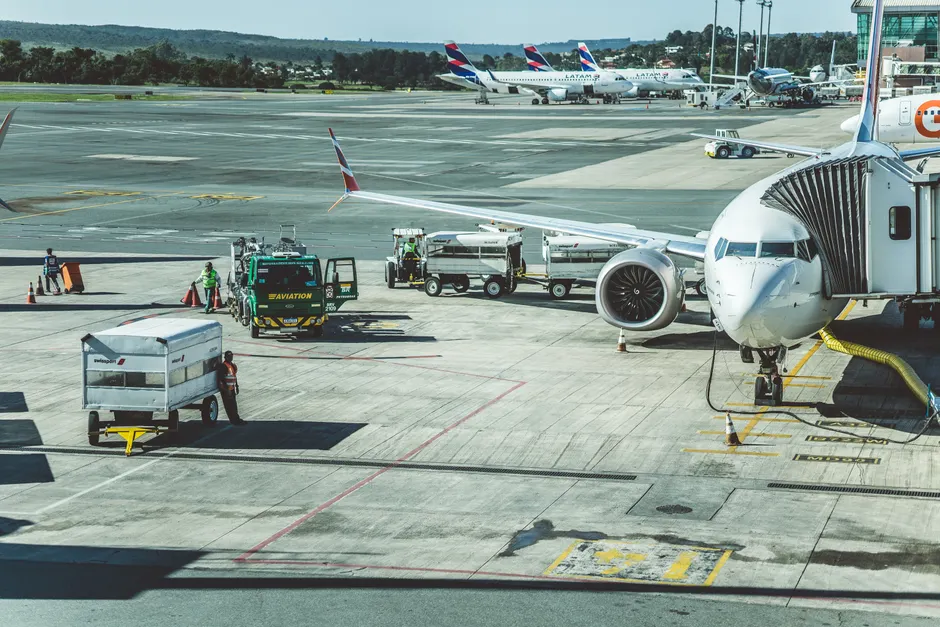
Here's what happened: the Jetstar plane was slowly driving on the ground toward the runway when its pilots saw the Qatar Airways plane, which was being pulled by a small vehicle called a tug, right in front of them. The Jetstar pilots slammed on the brakes to avoid a crash. (ATSB)
Two Airservices Australia staff involved — the air traffic controller on duty and the tug driver — were taken off work while they underwent drug and alcohol testing, which is standard after any incident. (The Guardian, 10 Aug 2026)
This wasn't a one-off. The ATSB is also investigating another near-miss at the same airport on 27 July 2026, when a Qantas plane was given permission to cross a runway right in front of another Qantas plane that had just landed. ATSB chief commissioner Angus Mitchell said on 10 August that both incidents were "unacceptable" and that pilots had to make split-second emergency decisions both times to keep the planes from hitting each other. (The Guardian, 10 Aug 2026)
Investigators plan to interview pilots, tug drivers, air traffic controllers, and other witnesses, and will review security camera footage for both cases.
King called the wider delays and disruptions at Sydney Airport "unacceptable" but said she was confident Airservices Australia was "doing everything they could to get on top of the situation." She announced that air traffic controllers would get better work schedules starting in early September 2026, with the rest of August to be "carefully managed." Airservices Australia separately made the same commitment. (The Guardian, 10 Aug 2026)
On staffing, King said 95 people were expected to be fully trained as air traffic controllers by the end of 2026, with six currently training at Sydney's control tower and another 15 expected to start training before the end of 2027. A new simulator had been installed at Sydney Tower to help train more controllers faster. (The Guardian, 10 Aug 2026)
The broader context here is that Sydney Airport is one of the Southern Hemisphere's busiest single-runway airports, and it appears to be under serious strain. Two near-misses in under two weeks, both stopped only because pilots acted at the last second, suggest deeper problems than a schedule tweak can fix. The July incident involved a plane being cleared to cross a runway in front of a landing aircraft — what safety experts call a runway incursion, meaning someone or something ends up on a runway without proper permission. The August event was a different kind of problem: a vehicle towing a large plane across a ground path without enough coordination with the controller directing the Jetstar jet.
That difference matters for investigators. A runway incursion and a ground-path near-miss follow different rules and procedures. But both are what regulators call loss-of-separation events — meaning planes or vehicles got closer than safety rules allow — and both require a formal investigation under Australian aviation law.
The scheduling changes and new simulator are aimed at a well-known bottleneck: it takes a long time to train air traffic controllers. Becoming fully certified to work at a major airport like Sydney typically takes 18 to 24 months from the day someone is hired. The six controllers now training and the 15 expected to start before the end of 2027 are small additions to a team that, if it was stretched thin enough to contribute to two near-misses in two weeks, probably needs more than small fixes. The gap between September's schedule changes and the eventual arrival of new fully trained controllers means the period of higher risk — when current staff are still carrying the same heavy workload — could last well beyond the minister's announced timeline.
Mitchell's choice of the word "unacceptable" is worth noting. The ATSB is an independent agency that investigates without assigning blame, and it usually avoids strong language in public statements. That its chief commissioner chose this word for both incidents tells you how seriously the bureau takes the pattern. Whether these two events are a temporary dip or a sign of something more deeply wrong is exactly what the investigations — interviews, camera footage, and procedural reviews — are meant to find out.