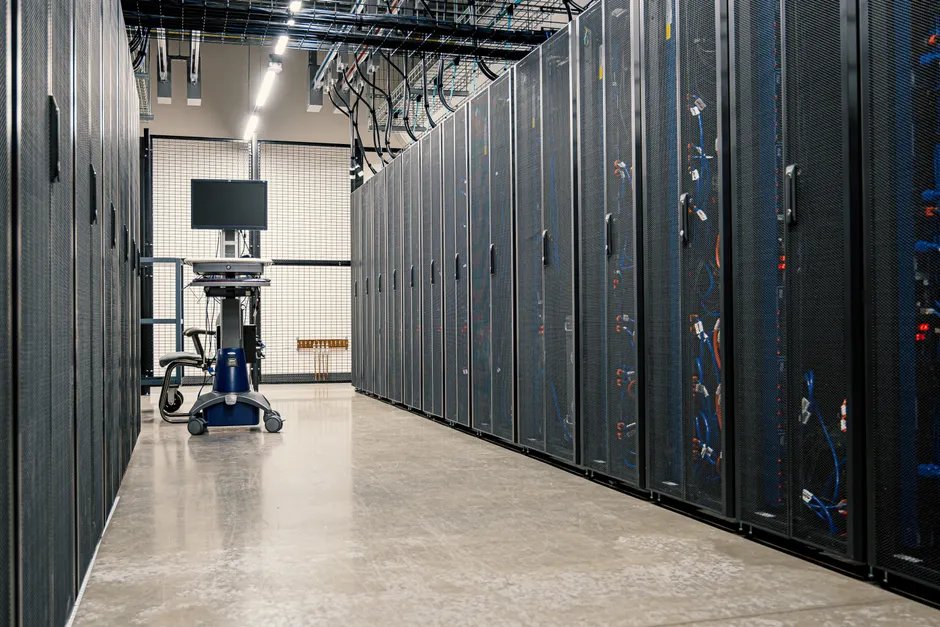
A New Marketplace Wants to Make Buying GPUs as Straightforward as Trading Stocks

Stoa is a new online marketplace for buying and selling new and used GPUs — the specialized computer chips that power artificial intelligence. It just launched as part of Y Combinator's Summer 2026 startup batch. The platform works a bit like a stock trading desk: a buyer describes the hardware they need in plain language or uploads a price quote they already have, and an AI system writes up a formal request for quotes. The buyer can review and edit that request before it goes out to a group of checked and approved dealers. Those dealers respond with firm price offers, and accepting one creates a binding, enforceable trade. Stoa
Stoa was founded by Eren, Berat, and Kaan, who previously ran their own GPU brokering business. They got into brokering to understand firsthand why buying and selling GPU hardware stayed so manual and inefficient, and the marketplace is the result of that experience. The three founders have known each other for over ten years and bring backgrounds in starting companies, trading financial products called interest rate derivatives, and building pricing systems for the oil and gas industry. Hacker News
The marketplace covers GPUs used in data centers, ranging from individual cards to full racks of connected machines, in new or used condition. Before dealers can receive requests, they must pass a business verification process, similar to how banks verify a customer's identity before opening an account. On the buyer side, the process requires confirming exact configuration, quantity, condition, warranty, location, delivery terms, and inspection criteria before dealers return their firm price quotes. Stoa does not take possession of the hardware it helps sell. Hacker News
After a trade is accepted, it moves through a series of recorded steps: confirmed, payment, shipped, delivered, inspected, and settled. Each step requires proof before the next one can happen, creating a paper trail from start to finish. Stoa charges a fee on completed trades, and that fee goes down as trading volume goes up. Stoa
In its first month, Stoa received more than $300 million in requests for quotes. The company is a member of Y Combinator's S26 batch, confirmed by YC's own LinkedIn announcement in early August. Hacker News Y Combinator
The market for used GPUs has long had problems: prices are hard to pin down, buyers and sellers do not always trust each other, and there is risk that a deal falls through after payment. What Stoa is trying to do is similar to what electronic trading platforms did for bonds and commodities: standardize the process, verify who is on each side of the deal, and create a binding chain of steps with proof at each stage. The founders' backgrounds in trading and oil-and-gas pricing show up in how the platform is designed.
Using AI to draft the initial request for quotes is a practical use of the technology in business purchasing rather than a novelty. A buyer uploading a price quote and getting back a structured, editable request compresses what is normally a manual step that has historically caused errors and disputes. Whether the AI-generated drafts hold up well enough at scale to reduce friction rather than add it will depend on how well the system handles the wide variety of GPU configurations, software versions, and multi-machine setups that buyers care about.
The $300 million in first-month requests signals demand for a structured marketplace in this category, though the volume of requests is not the same as completed and settled trades. The gap between how much is requested and how much actually gets bought and paid for will be the key number to watch as the platform grows.
Stoa's decision not to hold the hardware itself keeps the company lean, but it means the buyers, sellers, and the settlement process are responsible for shipping, insurance, and making sure the hardware matches what was promised. The step-by-step proof requirement is the mechanism meant to keep everyone accountable without Stoa needing to run warehouses or delivery trucks.
The broader question for platforms like Stoa is whether enough buyers and sellers concentrate in one place fast enough to make it the default way to trade GPU hardware, or whether the market stays scattered across informal channels, direct broker relationships, and competing platforms. The fee structure is designed to reward volume, but marketplaces for physical goods have historically grown more slowly than digital marketplaces, where delivery is instant and there is no shipping to worry about. GPU trading sits in an awkward middle ground: the hardware is expensive, physically shipped, and configuration-sensitive, which raises the stakes on every step of the process.
For now, Stoa has built the rails. The market will determine how much traffic runs on them.