Trump Was Sneaked Off Air Force One Because of an Iranian Threat — Here's What Happened

Democrats in Congress are demanding answers after news broke that Donald Trump was secretly taken off Air Force One during an international flight because of a reported Iranian plan to assassinate him. More than a hundred people aboard the presidential plane, including staff and journalists, were not told about the threat. The story was first reported by the Washington Post and the New York Times on August 10, 2026, and later detailed by the Guardian. Trump left Air Force One through a side door hidden in a catering truck, then was moved to a different military plane, a C-32A, while stopped in Ankara, Turkey. Washington Post
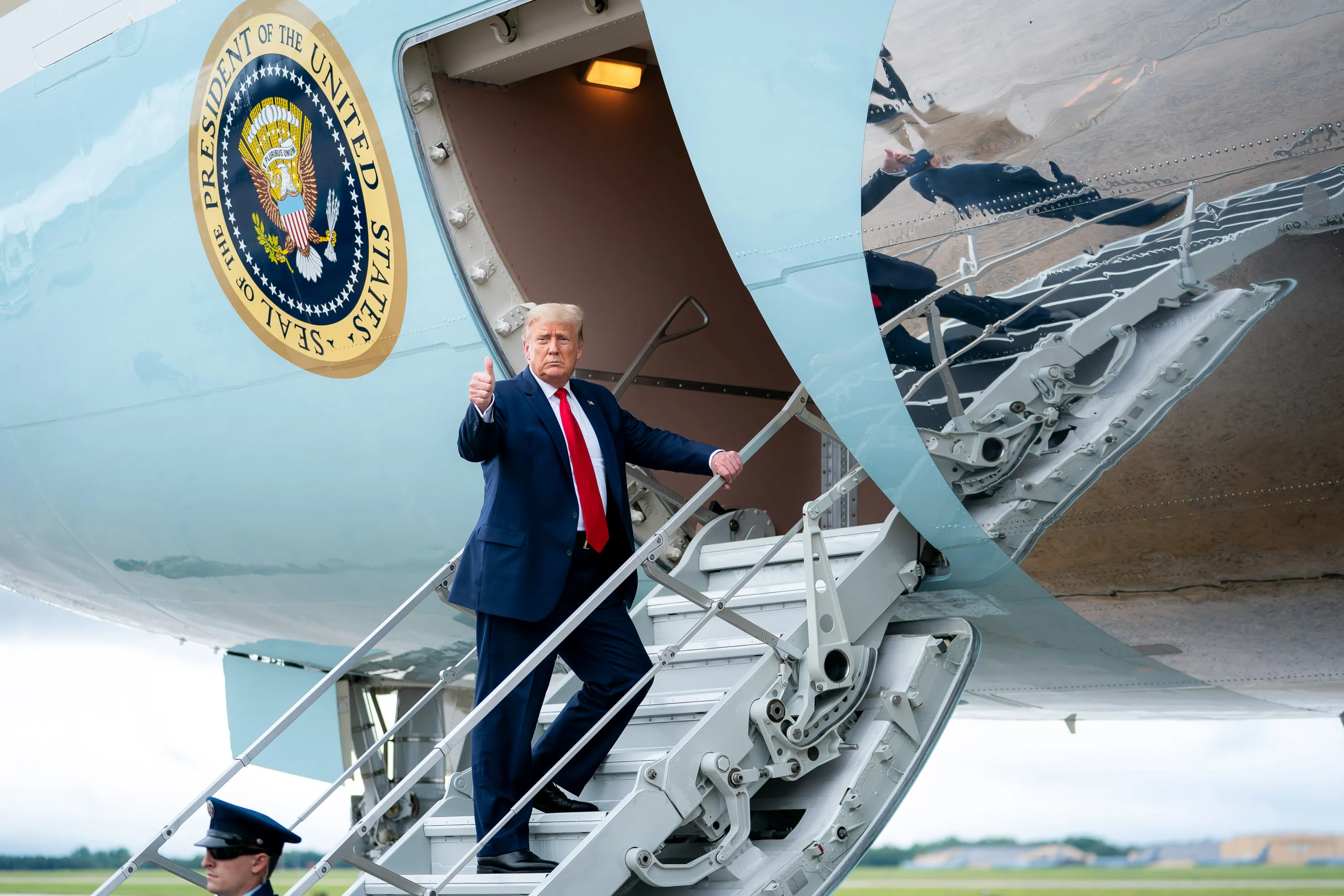
The White House had publicly said the president would fly to Britain on Air Force One. Trump boarded the plane in front of television cameras, but minutes later he was quietly taken off and moved to the C-32A. Journalists traveling with the president and some White House staff thought Trump was still on Air Force One for the whole flight. Reporters were told to keep their window shades closed. Guardian
US intelligence had reportedly found a credible threat that Iran was planning to kill Trump in the month before the flight. According to the Wall Street Journal, the decoy operation was designed to protect Trump from security threats linked to Iran, including possible missile risks aimed at the aircraft. The C-32A carrying Trump flew to RAF Mildenhall, a military base in Britain, arriving around 10:20pm. The original Air Force One, with the journalists on board, landed at the same base minutes later. WSJ
After arriving at the base, Trump greeted troops there, then boarded a newly refurbished Boeing 747 that had been donated by Qatar and flew on to Washington. Photographers took pictures of Trump walking off the presidential aircraft after he had been secretly reunited with it on the ground. The staged arrival made it look like Trump had traveled on Air Force One the entire way. Guardian
Senator Richard Blumenthal of Connecticut called the operation "unprecedented and surreal" and "downright scary" on CNN, saying Congress needs a briefing. Steven Cash, a former CIA intelligence officer who also served as a senior adviser to the Department of Homeland Security's intelligence branch, also criticized the operation. Ned Price, a former deputy to the US ambassador to the UN and a former special assistant to President Barack Obama on the national security council, accused the administration of an "outright lie" and of turning reporters into "unwitting conspirators." Guardian
The operation raises several accountability questions that Congress will likely push on. More than a hundred people on Air Force One were not told about a threat to their own lives. The press pool, which acts as the public's eyes on the president, was misled about where Trump was for the whole flight. And the photos of Trump walking off Air Force One in Britain were staged, not a real record of how he arrived.
This is not the first time the security of Trump's presidential aircraft has been questioned. In July, Representative Jim Himes of Connecticut called the Qatar-donated Boeing 747 "a security risk" because of controversy over how much protective modification it had. The Hill The decision to use that aircraft for the onward flight from the British base to Washington puts it directly in the chain of events in an already controversial security episode.
The Iranian threat also connects to a broader political dispute. In March, sources told Reuters that the Pentagon had told Congress there was no intelligence showing Iran was going to attack the US first. That finding led Democrats to criticize Trump for waging a "war of choice." The reported assassination plot, if confirmed by the briefing Democrats are seeking, would be a different kind of threat than what the Pentagon described to Congress months earlier. But it also feeds into the ongoing political fight over the administration's confrontation with Iran. Reuters
The broader context here is that the decoy operation was, in technical terms, a protective measure. Similar tricks have been used by heads of state facing credible threats. What makes this episode unusual is how far the deception went, how many people were involved without knowing it, and the fact that the arrival photos were deliberately staged. Whether the Secret Service and military planners had no other option, or whether less disruptive choices existed, is exactly the question a congressional briefing would be meant to answer. Until that briefing happens, Democrats are likely to keep pressing on two points: whether the ruse was truly necessary, and why the press pool was kept in the dark about a threat aimed at someone traveling right next to them.