What Do Animals Do During a Solar Eclipse? A Lot, It Turns Out.
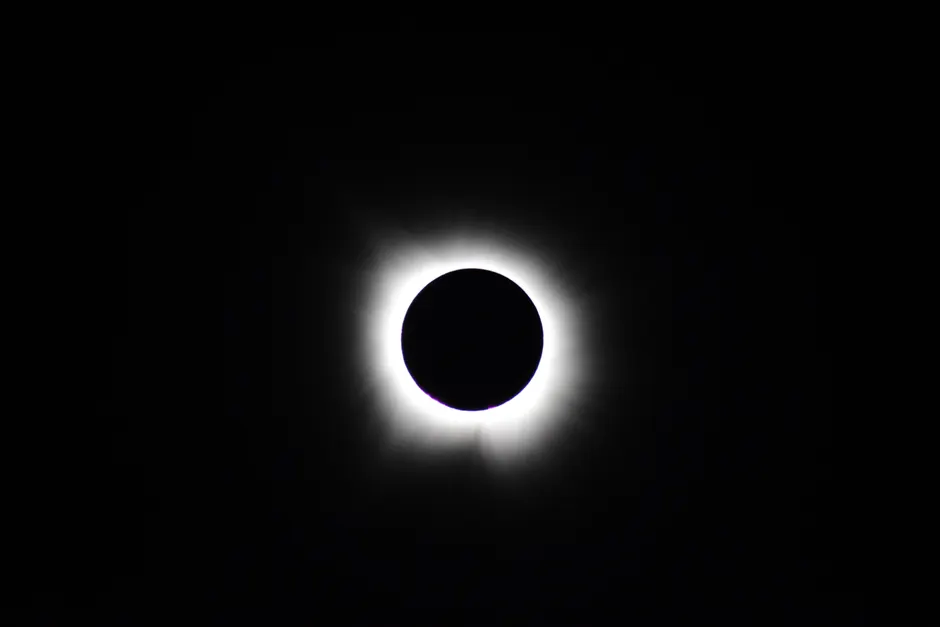
When the moon fully blocks the sun during a total solar eclipse, the sky goes dark in the middle of the day — and animals notice. About 75% of the species scientists have watched during eclipses changed their behavior, and most of them started acting like it was evening, according to studies of the April 2024 eclipse (National Wildlife Federation). These results come from multiple eclipses across different continents and years, and they show a clear pattern: animals that are active during the day calm down, and animals that are active at night wake up.
During the April 2024 total solar eclipse, the most common thing animals did was start their evening routine, such as heading to the places where they sleep (Houston Public Media). Bees stop buzzing and go back to their hives. Birds stop singing and settle in to roost. Crickets start chirping. Owls start hooting (New York Times; U.S. Fish & Wildlife Service). The New York Times, reporting ahead of the August 12, 2026 total solar eclipse visible in Europe, says these same patterns have shown up across multiple eclipse events (New York Times.
A study of wild birds published in Science in October 2025 found that more than half of wild bird species changed their daily rhythms during a total solar eclipse. Many of them even sang what scientists call a dawn chorus — the burst of birdsong that normally happens at sunrise — right after the eclipse ended (Science). A separate large-scale study backs this up, finding that birds stop singing and switch to nighttime behavior during the darkness (Nature). This dawn chorus after the eclipse suggests that some birds thought the returning light meant a new morning had started.
Animals in zoos show more varied and sometimes stronger signs of stress. A study published in July 2026 found that Japanese macaques — a type of monkey — showed the most behavioral changes of any zoo species studied. They moved to higher spots in their enclosures and stood still and quiet during the darkness (Wiley). Other zoo animals, including zebras, camels, and some birds, also showed signs of stress, with some climbing high into trees (ScienceX). Pet dogs and cats may feel anxious during an eclipse too (New York Times, though researchers have studied companion animals less than wildlife and zoo animals.
Night-active animals, on the other hand, may start waking up as the eclipse progresses and the light fades (National Wildlife Federation). Scientists have also looked at what happens during annular solar eclipses — when the moon covers the center of the sun but leaves a bright ring of light around the edge. They studied one such eclipse on December 26, 2019, and found that animals do react, but the effects are likely weaker since some daylight remains (Nature.
The broader context here is that these findings, repeated across many species and many eclipses, suggest something important: animals are deeply tuned in to light levels. Their daily routines seem to be driven by how much light they sense, not just by what time it is. Think of it like a dimmer switch in your home — it's the brightness that tells your body what to do, not the clock on the wall. The dawn chorus that birds sing after an eclipse reinforces this idea, because they treat the returning light as a new morning, no matter what time it actually is.
For researchers getting ready to watch the August 12, 2026 eclipse across Europe, these earlier studies give them a baseline — a set of behaviors they already expect to see. The macaque stress response, the bird dawn chorus, and the widespread shift toward evening routines all give scientists something to compare against. Factors like how long the eclipse lasts, where in the world it happens, and what animals live nearby could all change how strong the reactions are this time around.


