Three AI Pioneers Agree on One Thing: Keep AI Open
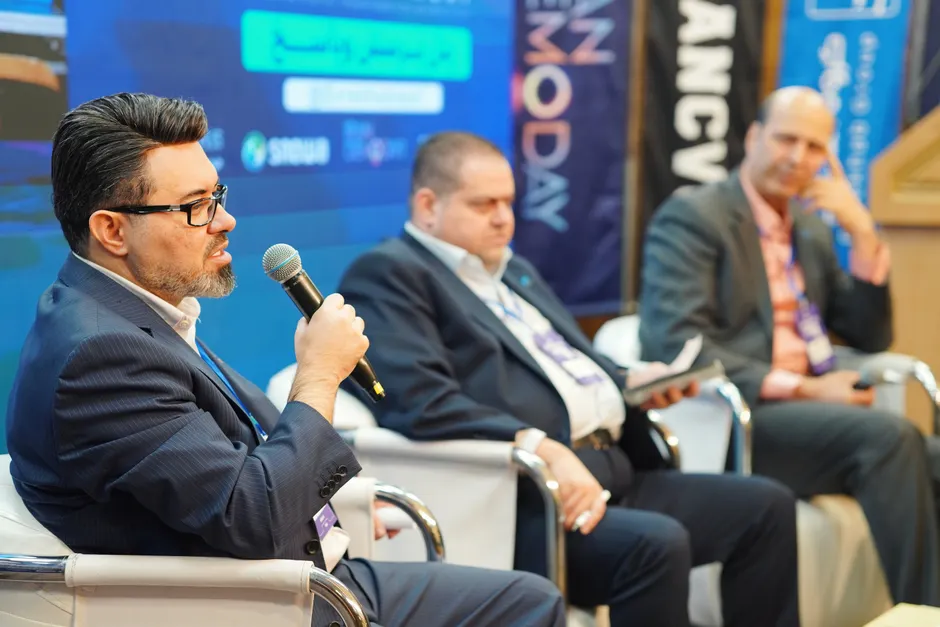
Three of the people who helped build modern AI appeared together at a big technology conference in Las Vegas in August 2026 and agreed on one point: AI should stay open. Geoffrey Hinton, Fei-Fei Li, and Andrew Ng, described by the Ai4 conference as "the Founders of AI," argued against restricting access to AI development and deployment. But they disagreed on how to handle the risks, who should control the technology, and what "open" should actually mean (TechCrunch).
The panel, which opened with keynotes at 8:30 AM on the conference's first day, became a public airing of disagreements that have run through the AI research community for years. Forbes reported that the three clashed over AI's impact on jobs, how risks should be defined and regulated, and who should control AI (Forbes).
Andrew Ng's prescription was straightforward: promote openness and maintain multiple competing providers and models rather than allowing a few players to dominate. He said he did not want "gatekeepers" in AI because that limits how all people can access the technology. Ng also framed the open-models debate as a question not of risk but of market control and geopolitical influence. If China's openly available AI models gained widespread adoption across Asia, Africa, and the developing world, he warned, they could exert influence over those regions (TechCrunch).
Ng's stance on existential risk — the idea that AI could threaten humanity's survival — is well established and was on display at Ai4. He has previously called that framing "harmful nonsense," sometimes deployed deliberately to slow competitors and capture regulators (TechTimes). He has drawn a distinction between "Responsible AI," which suggests harm is a matter of human misuse, and "AI safety," which acknowledges that technology can introduce systemic risks (LinkedIn). In a written statement to the U.S. Senate AI Insight Forum in 2023, Ng listed hypothesized catastrophic harms including AI "taking over" leading to human extinction and cybersecurity risks, though he has characterized such scenarios as speculative (AI Fund).
Hinton, by contrast, has estimated a 10–20% probability that AI poses an existential risk to humanity (TechTimes). At Ai4, he said it is unfair to label people who worry about possible bad effects of AI as fear-mongers. He also said he thought AI advancing was largely a good thing and would boost productivity and improve education and healthcare (TechCrunch).
The sharpest tactical disagreement between Hinton and Ng came on the question of open weights. To understand this distinction, think of an AI model as a recipe. Open-source software is like publishing the recipe itself, so anyone can read it, modify it, and cook their own version. Open-weight models are more like publishing the finished spice blend — the specific numbers the model learned during training that determine its behavior — without the full recipe. Anyone can use that blend to build on the model, including adapting it for harmful purposes. Hinton said he was against open weights because they make it easy for people to take expensive-to-train AI models and adapt them for things like cyber attacks. But he acknowledged that open-weight models are already a permanent fixture of the AI landscape. "That battle's been lost," he said, and it is too late (TechCrunch).
Fei-Fei Li, a professor at Stanford University and founding director of Stanford HAI, a research institute focused on human-centered AI, took a different approach to the governance question. She urged sector-specific AI policy updates over sweeping AI rules, focusing on deployment contexts rather than blanket regulation (Data Center Knowledge). Her remarks came as Stanford HAI is being merged with the Stanford Data Science initiative, an effort she and John Hennessy have described as mobilizing "team science at scale" (Stanford HAI). The Ai4 conference ran a dedicated AI Policy Summit track on Wednesday, August 5, 2026, alongside the main-stage keynote, reflecting how governance questions now sit alongside technical ones on the conference circuit (TechTimes).
The conference itself, promoted as "America's Largest AI Conference," took place at The Venetian in Las Vegas and featured an AI House presented by KPMG with executive keynotes, panels, and networking sessions (Ai4). Hinton and Li had previously appeared at Ai4 2025; Ng joined them for the 2026 edition (Yahoo Finance).
Ng has noted on his X account that how people prompt AI in 2026 is very different from 2022 when ChatGPT launched, and that protecting open source AI is now a critical part of ensuring this continued evolution (X).
What emerged from the Ai4 stage was not a unified position but a set of overlapping arguments with distinct prescriptions. All three want AI to remain broadly accessible. Hinton wants to limit the release of model weights and takes existential risk seriously enough to assign it a double-digit probability. Ng wants no gatekeepers, favors a competitive landscape with many providers, and views existential-risk framing as a tool used to push regulation. Li wants policy tailored to specific sectors and deployment contexts rather than sweeping rules. The open question is whether the open-AI coalition they collectively sketched can hold when its members disagree this fundamentally on what "open" should mean in practice.
The broader context here is that these three figures represent different strands of a field that has never had a single governing philosophy. Hinton's caution comes from decades of building the neural networks that power today's AI and a belief that those systems may someday exceed human control. Ng's optimism is rooted in the idea that wider access to technology produces faster progress and broader benefit. Li's pragmatism reflects a policy-maker's instinct that rules should fit the context in which technology is actually used. Whether their shared instinct for openness can survive these deep disagreements may tell us a great deal about how AI governance takes shape in the years ahead.