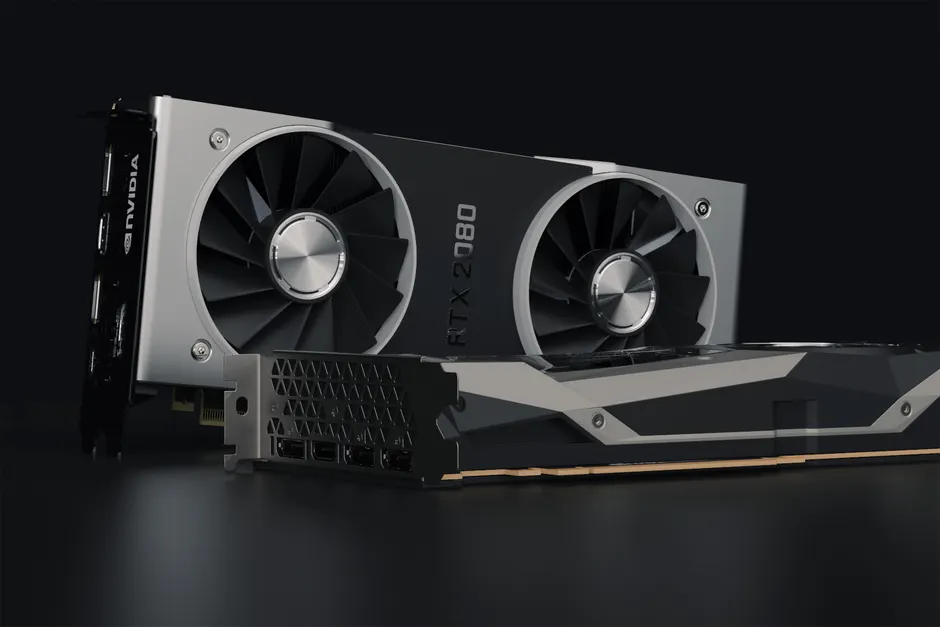
Nvidia Just Borrowed $500 Billion from Wall Street So Customers Can Keep Buying Its Chips

Nvidia has signed financing agreements with six Wall Street institutions totaling $500 billion to help customers build AI data centers, according to reporting from August 10, 2026. The program targets frontier AI developers, enterprises, governments, and cloud providers — all of whom would gain access to Nvidia-based infrastructure through the financing arrangements (Reuters). The Wall Street Journal confirmed that Nvidia reached a deal with several major Wall Street firms to raise the $500 billion for its customers (WSJ).
The scale is unusual. Nvidia is not lending its own money. It is lining up money from banks and other financial institutions to make it easier and cheaper for customers to buy Nvidia hardware. Think of it like a car company partnering with banks to offer low-interest loans so more people can afford its cars — except here the customers are companies and governments buying AI computers that cost billions.
Nvidia controls approximately 90% of the AI accelerator market as of late 2025 (Yahoo Finance). An AI accelerator is a specialized chip that powers artificial intelligence — the brains inside the systems that run tools like chatbots and image generators. That 90% share gives Nvidia leverage: customers who need AI computing power at scale have limited alternatives. Wall Street firms lending against Nvidia-based systems are backing a narrow set of technology. The $500 billion figure reflects confidence that demand for Nvidia chips will persist long enough for borrowers to repay the debt.
The competitive landscape is shifting. Alphabet, Google's parent company, was the first to pursue a custom chip strategy for AI and, as of August 2026, remains the most significant threat to Nvidia in that area (Yahoo Finance). Google's chips, called tensor processing units or TPUs, have been in development for roughly a decade and mostly compete inside Google Cloud on cost and efficiency rather than being sold to outside customers (Bloomberg). Alphabet shares rose 1.15% on July 20, 2026, after a report surfaced that Google is developing a new generation of AI chips (Yahoo Finance).
The threat from Google's TPUs is not purely hypothetical. In October 2025, Anthropic PBC struck a deal with Alphabet's Google for Google to supply the AI startup with more than a gigawatt of computing capacity, a commitment that shows Google's ability to compete for large-scale AI workloads using its own chips (Bloomberg). Anthropic is a frontier AI developer and the kind of customer Nvidia's $500 billion financing program is designed to keep.
Bloomberg characterized the rivalry between Nvidia and Google as escalating in a late-November 2025 report (Bloomberg). Nvidia has dominated the market for AI chips, while Google released its own TPUs as an alternative (Bloomberg). A Saxo Bank analysis from the same period noted that Nvidia still leads in general-purpose AI chips, while Alphabet's TPUs mostly compete inside Google Cloud on cost and efficiency (Saxo).
Amazon, Alphabet, and Microsoft are all racing to design their own AI chips, as reported in June 2026 (Yahoo Finance). That same report noted Nvidia shares fell about 6% in a broad semiconductor sell-off, though the article did not attribute the decline to the custom-chip trend specifically.
The broader context here is that Nvidia's $500 billion financing push arrives precisely as its biggest customers are investing in alternatives to its hardware. The logic of the program is straightforward: by making it cheaper and easier for more customers to use Nvidia-based systems, the company deepens its installed base and raises switching costs before rival chips mature. Alphabet's approach is structurally different. Google's TPUs are not sold as standalone chips to outside buyers. They run inside Google Cloud, where Google collects both the computing profit and the cloud services revenue. That setup limits Google's direct revenue to workloads hosted on its own infrastructure but gives it cost advantages on its own cloud.
For investors and industry participants, the key question is whether the $500 billion program can extend Nvidia's 90% market share long enough to lock in customers before in-house chips from Alphabet, Amazon, and Microsoft catch up. Google's gigawatt-scale deal with Anthropic suggests that catching up, at least for certain workloads, may already be closer than Nvidia's market share implies. The financing initiative is a bet that a flood of capital can move faster than the development of rival chips. Whether that bet pays off depends on how quickly those chips can match the performance and software ecosystem that Nvidia has built around CUDA, its proprietary programming platform that developers use to write applications for Nvidia chips.
None of this is investment advice. The figures cited come from the sources attributed above, and the competitive dynamics described are evolving. What is clear from the facts is that Nvidia is using an unprecedented financing mechanism to defend a dominant but contested position, and at least one major competitor has shown it can win large-scale computing commitments using its own chips.