Samsung's New Folding Phone Has a Hinge Problem, According to Repair Experts
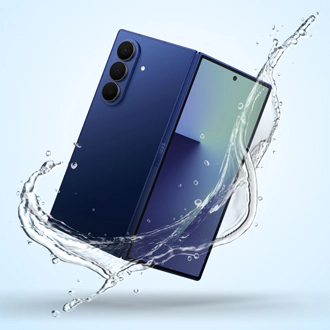
iFixit, a well-known repair and teardown company, has given Samsung's Galaxy Z Fold 8 a repairability score of 4 out of 10. The hinge mechanism proved difficult to repair or replace and failed under basic open-and-close testing. The Verge
The Galaxy Z Fold 8 has an IP48 rating, which means it is protected against water but not against dust particles smaller than 1 millimeter. Dust and sand can get into the hinge. In iFixit's testing, after repeated opening and closing, the hinge started making crunching and grinding noises and the phone stopped opening normally. The Verge
Repairs are made harder by how Samsung builds the inside of the phone. On earlier Galaxy Z Fold models, Samsung treated the hinge and the inner screen as one combined replacement part. iFixit assumes the Fold 8 works the same way. If either the hinge or the screen is damaged, replacing the part means essentially taking the entire phone apart. The Verge
Samsung's own product and support pages confirm the IP48 rating. The Galaxy Z Fold8 product page says the device carries IP48 for dust and water resistance, which Samsung says helps the hinge and display stay reliable through everyday use. Samsung's US support page lists the same IP48 rating across the Z Fold6, Z Fold7, Z Fold8, and Z Fold8 Ultra. Samsung Philippines | Samsung US Support
Competing folding phones have moved ahead on dust protection. Google's Pixel 10 Pro Fold, Pixel 11 Pro Fold, and Honor's Magic V6 all carry fully dust-resistant ratings. Samsung's foldables, including the new Z Fold 8 Ultra, remain at IP48. The Verge | Samsung US
The hinge problem is not new for Samsung's foldable line. iFixit's 2019 teardown of the original Galaxy Fold found the hinge area packed with much of the phone's bulk, partly because the screen did not fold completely flat, closing more like a binder than a book. That teardown showed there was not enough protection from debris damaging the screen. iFixit later removed the teardown, and reporting at the time indicated Samsung asked iFixit, through a partner, to pull it. iFixit Teardown | iFixit News | Mashable
The Z Flip, introduced in 2020, improved on the Fold's hinge design by folding closed more cleanly with less of a gap around the hinge. But seven years after the original Fold's debut, the core issue iFixit identified, dust getting into and damaging the hinge, persists in the current generation. iFixit Z Flip Teardown | iFixit News
The score of 4 out of 10 reflects a device where the part most likely to break is also the hardest to fix. A consumer who damages the hinge faces what amounts to a full phone disassembly to replace the combined hinge-and-screen part, assuming it is even available through Samsung's repair network. The 2019 incident in which iFixit removed its critical Fold teardown at Samsung's request is worth noting as context for how Samsung has historically managed the visibility of these hinge weaknesses.
The difference between Samsung's IP48 rating and the fully dust-resistant ratings on competing foldables from Google and Honor is concrete rather than theoretical. The IP4X level of protection blocks objects larger than 1 millimeter, but sand and common household dust fall below that size. Competing devices with full dust resistance are sealed against the exact particles that iFixit found causing grinding and eventual hinge failure on the Z Fold 8.
For buyers, the Z Fold 8's hinge remains the phone's weak point, and the IP48 rating does not address the specific problem iFixit found. For anyone using the phone in dusty environments or near sand, the gap between Samsung's rating and what competitors offer is not a small one. And for independent repair shops, the combined hinge-and-screen design means the most common foldable repair is also the most labor-intensive, with a parts cost that likely covers two components even when only one has failed.


