Chevrolet's New Corvette Hybrid Hits 721 Horsepower — But Who Is It For?
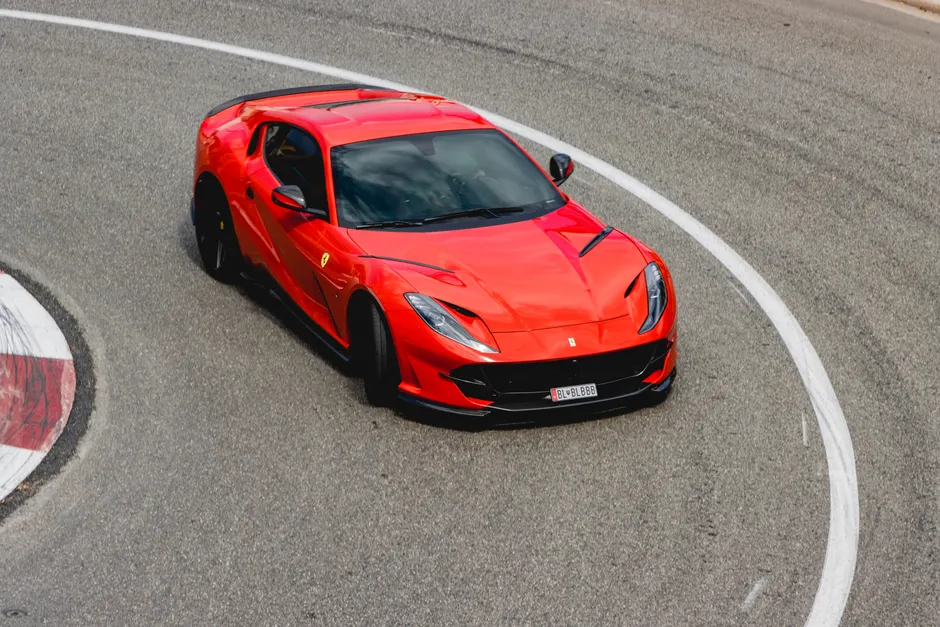
The 2027 Corvette Grand Sport X delivers 721 horsepower from a new V-8 gasoline engine paired with an electric motor on the front wheels, making it the most powerful production Corvette hybrid yet and the direct successor to Chevrolet's first hybrid sports car, the E-Ray (The Verge).
The Grand Sport X uses an architecture that carries over the E-Ray's fundamental concept but scales it up. The rear wheels are driven solely by the gasoline engine; the front wheels are driven by the electric motor. There is no physical connection between the two systems. Think of it like two people pushing the same cart from opposite ends — they both contribute, but they are not linked by a shared driveshaft. GM's two Corvette hybrid models use electricity strictly for performance, not for fuel economy, a deliberate choice that aligns with the Grand Sport's racing lineage rather than the efficiency-first hybrid philosophy that dominates the broader market (The Verge).
Chevrolet unveiled the 2027 Grand Sport and Grand Sport X on March 25, 2026, reviving one of Corvette's most storied racing names. Both models are powered by a new 6.7-liter V8 engine. Unlike many modern performance engines that use turbochargers to force more air in and boost power, this engine is naturally aspirated, meaning it draws air in on its own without mechanical assistance. In the base Grand Sport, the engine produces 535 horsepower and 520 lb-ft of torque (Yahoo Finance). The Grand Sport X layers its electric front-axle motor on top, bringing combined output to the 721-horsepower figure.
Pricing for the Grand Sport starts at $86,000 according to Chevrolet's product page, while the configurator lists the coupe from $88,495 and the convertible from $95,495 (Chevrolet, Chevrolet Configurator). The Grand Sport X has its own dedicated upcoming-vehicles page on Chevrolet's site, indicating it has not yet reached full configurator status (Chevrolet). A quarter-mile trap speed of 124 mph appears on the Grand Sport product page but is marked FPO, or "for placement only" (Chevrolet).
The E-Ray that the Grand Sport X replaces was rated at 650 horsepower and positioned as a versatile grand tourer, a daily-drivable Corvette with all-weather capability from its electric front axle. The Grand Sport X pushes the formula harder on output, though the same all-wheel-drive concept with no mechanical link between axles remains (The Verge).
The Grand Sport X arrives against a broader hybrid surge that is reshaping the US auto market. Hybrids were the only powertrain type to gain market share in 2026, reaching a record 15.4 percent through June and outselling fully electric vehicles by nearly three to one (The Verge). Toyota, Hyundai, and Honda control roughly 90 percent of that market. Toyota and Lexus alone sold 600,000 hybrids through June. Kia's expanding hybrid lineup posted a 115-percent sales jump, helping Hyundai and Kia achieve their best overall sales on record (The Verge).
GM's position in this boom is, conspicuously, near the sidelines. The company currently offers just two hybrid models, both Corvettes, both using electricity for performance rather than efficiency. GM is racing to bring fuel-saving plug-in hybrids back to showrooms, reportedly beginning the following year (The Verge).
The tension here is worth pausing on. GM is launching a 721-horsepower hybrid halo car into a market where hybrid growth is being driven almost entirely by fuel-conscious buyers choosing Camrys, RAV4s, and Sonatas. The Grand Sport X will not move GM's hybrid volume needle; it is a performance statement and a brand exercise, not a volume play. The E-Ray showed that Corvette's hybrid architecture could work in a road car, and the Grand Sport X extends that with more power and a revived racing nameplate. But the customers driving hybrid market share to 15.4 percent are not cross-shopping Corvettes.
Meanwhile, GM's competitors are capitalizing on exactly the segment GM has yet to seriously re-enter: efficiency-oriented hybrids at accessible price points. Toyota's 600,000-unit hybrid sales through June, and Kia's 115-percent growth, reflect demand for cars that use electrification to reduce fuel costs, not to reach 60 mph faster. GM's announced plan to bring plug-in hybrids back is a response to that gap, but the timeline puts the automaker behind rivals who have been steadily expanding hybrid availability through the EV transition's deceleration.
For Corvette enthusiasts, the Grand Sport X is a straightforward proposition: more power than the E-Ray, all-wheel-drive grip, and the revival of a name that traces back to Corvette's endurance-racing heritage. The new 6.7L V8 replaces the 6.2L engines that powered the C8 Stingray and E-Ray, and the LS6 designation reaches back into Chevrolet's performance-engine history. The naturally aspirated design is notable at a time when many performance rivals have moved to turbocharging; Chevrolet is preserving the immediate throttle response that these engines are valued for, while using the electric front axle to fill in power at low speeds, when the gasoline engine has not yet reached its strongest pulling force.
The broader signal from GM's lineup is mixed. The company that pushed the Bolt as a mass-market EV and committed to an all-electric future is now investing in a 721-horsepower hybrid sports car while scrambling to field plug-in hybrids that competitors already sell by the hundreds of thousands. The Grand Sport X is a compelling engineering exercise. It is not a strategy for the 85 percent of the market that GM does not yet address in hybrid form.

