What Happened at the World War II Memorial — and Why the Charges Are a Big Deal
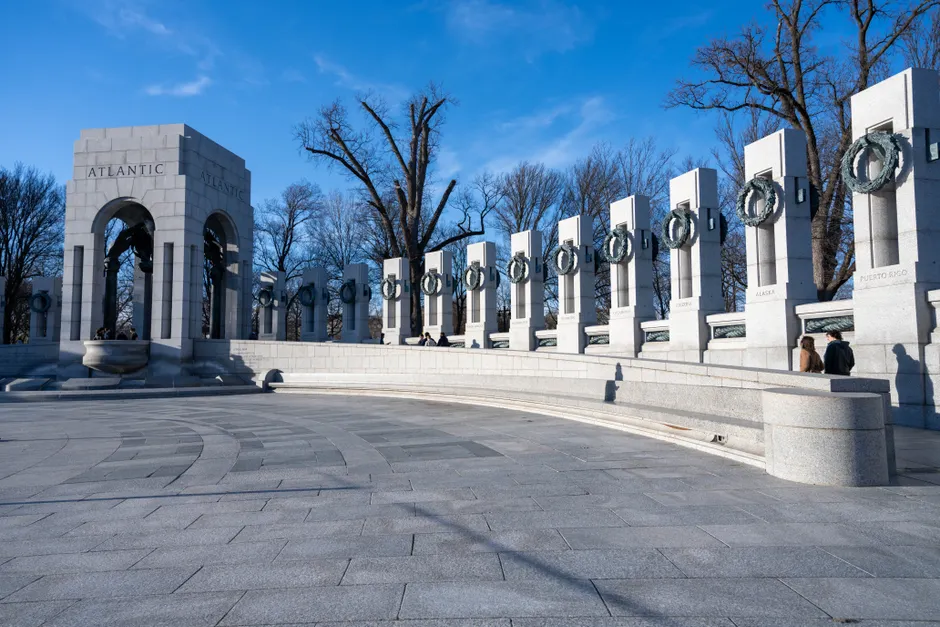
A woman was arrested Friday morning after the World War II Memorial in Washington, DC, was vandalized. She faces two federal felony charges, each carrying up to ten years in prison. The Guardian
A felony is a serious crime, usually punished by more than a year in prison. Jeanine Pirro, the top federal prosecutor for Washington, DC, announced the charges. The suspect is Melissa L Farris. She faces one count of damaging government property and one count of destroying a veterans' memorial. The Guardian
The vandalism happened on Thursday. Someone wrote red graffiti that said "Clean hands dirty $" across the memorial and filled its fountain with soapy bubbles. US Park Police led the investigation, and the US Interior Department said the person responsible would be found. The Guardian
Pirro said her father and grandfather were among the Americans honored by the memorial. Her announcement framed the prosecution not just as a legal matter but as a defense of a place with deep personal and national meaning. The Guardian
Veterans' groups reacted quickly. The Veterans of Foreign Wars called the vandalism "an act of profound disrespect." The nonprofit Friends of the National World War II Memorial said the memorial should not be used for political expression. The Guardian
The graffiti, "Clean hands dirty $," could be read as a protest about money and moral compromise, but the facts available do not establish the suspect's motive. What is clear is the legal approach. Congress passed a specific law that adds stiffer penalties for defacing monuments dedicated to military service members. Using that law here shows federal prosecutors are treating the incident as more serious than ordinary property damage.
The broader context here is about who has authority over the National Mall. The National Mall is run by the National Park Service, which is part of the Interior Department. Because it is federal land, crimes committed there are handled by the federal government, not the city of Washington, DC. Think of it like a national park: if someone breaks the law inside one, federal agencies, not local police, take the lead. US Park Police, the oldest federal law enforcement agency in the country, investigates crimes on Park Service land in the capital. The involvement of the federal prosecutor's office, rather than the city's police, confirms that this case runs through the federal system.
The decision to use federal charges matters because it can lead to longer prison sentences. Local property crime in Washington, DC, is usually handled by the city's attorney general or the federal prosecutor's office, depending on the type of case. By choosing the more serious federal charges, each carrying up to ten years, the government is showing it considers attacks on military monuments a grave offense.
What we do not yet know is whether more people will be charged, and whether the suspect's lawyers will argue that her actions were protected free speech under the First Amendment. The memorial group says the site should not be a place for political messages, while a defense team might argue the opposite. That clash between protecting a sacred site and defending free expression is the question most likely to shape the case as it moves through the courts.


