Apple's New Mac Mini Is More Powerful but Also More Expensive
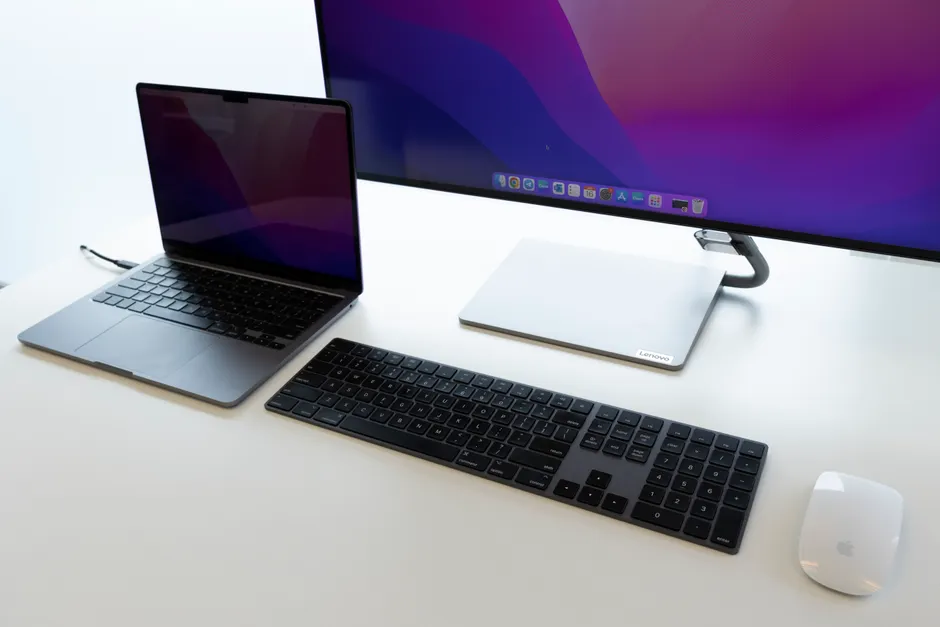
Apple announced a new Mac Mini on August 25, 2026, built around its latest chip, the M6. The base model comes with 16GB of memory (the working space your computer uses to juggle tasks) and 256GB of storage (where your files, apps, and operating system live), priced at $899. The M6 chip has a 12-core CPU (the part that handles general computing) and a 12-core GPU (the part that handles graphics and visual tasks), up from 10 cores each on the previous M4 model. Apple said the new Mac Mini handles AI tasks four times faster than the M4. Pre-orders are open now, and the computers ship after September 22 (TechCrunch).
Apple also released a more powerful version, the M5 Pro Mac Mini, with 512GB of storage and 24GB of memory, starting at $1,699. Its chip comes with a 15-core CPU and 16-core GPU by default and can be upgraded to an 18-core CPU and 20-core GPU. Both Mac Mini models include Wi-Fi 7, Bluetooth 6, and a fast wired internet port, with an option for an even faster one. They run macOS 27 and include Siri AI.
Apple updated its Mac Studio line too, which is aimed at professionals who need serious computing power. The M5 Max version starts at $2,499 with 36GB of memory and 512GB of storage. The M5 Ultra version starts at $5,499 with 96GB of memory and 1TB of storage.
The price change at the entry level is hard to miss. Apple discontinued an earlier base Mac Mini that cost $599 with 256GB of storage. The company had more recently been selling an M4 Mac Mini at $799 with 512GB of storage. The new M6 Mac Mini replaces that at $899, which is $100 more than the M4 and $300 more than the old $599 model. The new base model also drops back to 256GB of storage, half of what the M4 base offered.
The broader context is that Apple is organizing its desktop computers into a clear ladder. The M6 Mac Mini is for everyday users. The M5 Pro Mac Mini is for people with heavier workloads, like photo editors or software developers. The Mac Studio models sit at the top for professionals. The M6 has a higher number than the M5 Pro, which might seem like it should be faster, but Apple staggers its chip names across different product levels. The M6 is the newer everyday chip; the M5 Pro and Ultra are still the high-performance options until their own next-generation versions arrive.
The 4x AI performance claim is worth looking at closely. Apple did not say which specific tasks or tests produced that number, and the jump from 10 cores to 12 cores alone would not make a computer four times faster at everyday computing. The claim likely reflects improvements in the chip's dedicated AI processing hardware, faster response times for on-device AI tasks, or a combination of behind-the-scenes upgrades. For people who run AI programs on their own computer rather than in the cloud, the practical question is whether that 4x improvement shows up in real use or only in a narrowly chosen test.
The connectivity upgrades matter for a computer at this price. Wi-Fi 7 and Bluetooth 6 are the newest wireless standards, meaning faster and more reliable wireless connections. The wired internet port included by default is faster than what most home computers offer, which signals that Apple knows many people use the Mac Mini as a small home or office server, not just as a desk computer.
In my view, the $899 starting price with halved storage is the real story here. Apple has steadily pushed Mac Mini buyers toward higher prices over several generations, and this continues that trend. The $599 Mac Mini is gone. The $799 Mac Mini is gone. What is left is a more capable machine at $899, with better processing and modern connectivity, but one that costs more to get into and gives you less storage to start with.
The M5 Pro Mac Mini at $1,699 is a more straightforward deal for professionals who need the extra processing cores. And the Mac Studio models offer enough memory for serious AI work: 96GB on the base M5 Ultra is enough to run large AI models directly on the computer without slowing down by relying on the storage drive.
All new machines ship September 22. Pre-orders are live now.


