A Mountain of Ice Collapsed and Flooded the Nepal-Tibet Border — Here's What Happened

A massive wall of ice and rock collapsed on 26 August 2026, sending a flood of water, mud, and boulders crashing down valleys along the Nepal-Tibet border. The flood wiped out entire villages. At least 165 people are confirmed dead, according to the US Geological Survey. Rescuers on 27 August were searching for hundreds of missing people, including travellers from India, the United States, the United Kingdom, Australia, Canada, and several other countries.
Nepal's disaster agency said satellite images showed that a landslide of ice and rock started the flood in the Lhende River, about 20km north-east of a border crossing between Nepal and China. The USGS also cleared up an early misunderstanding: what people first thought was a small earthquake was actually the ground shaking from the collapse itself. No earthquake happened.
Nepal police said 165 bodies had been found by late Wednesday, 26 August. Chinese state media reported three dead on the Tibet side. Nepal's tourism ministry said 468 tourists and travellers were missing in the flood zone, including 393 foreigners. Chinese state media said at least 558 people were missing on the Tibet side, including at least 260 foreigners. Together, more than 1,000 people are still unaccounted for on both sides of the border.
The missing foreigners on the Nepal side included 142 Indian citizens, 47 Americans, 34 Australians, 33 Britons, and 24 Canadians, according to the Nepal tourism board. Al Jazeera reported that people from Malaysia, the Netherlands, Portugal, and South Africa were also missing. Many of those caught in the flood were on a pilgrimage to Kailash Mansarovar, a holy site in Tibet sacred to Hindus and Buddhists. That meant a large number of foreign travellers were packed into a remote mountain area right when the disaster struck.
Reports changed quickly as information came in. On 26 August, NPR said at least eight people had died and hundreds were missing. Reuters and the Associated Press each reported at least 157 bodies found. By 27 August, the Guardian and AP updated the confirmed death toll to 165. Reuters reported that Nepal's tourism ministry said around 340 foreigners were among more than 400 missing tourists.
Experts blamed the disaster on a glacial collapse in the warming Himalayan region. A 2025 Asian Development Bank report found that climate-related disasters cost Nepal about $221 million every year, with significant loss of life, and that more than 50 of Nepal's 77 districts are hit by such disasters.
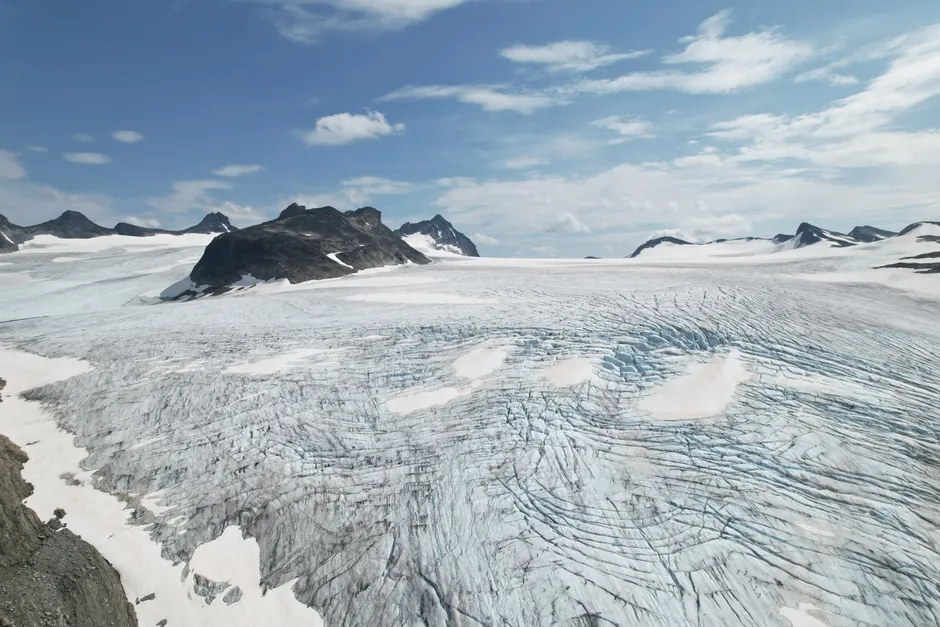
The broader context here is that high-altitude glaciers across the Hindu Kush-Himalaya are melting and breaking apart at a faster pace as the climate warms. Think of a glacier like glue holding a mountain together. When the ice melts and the permanently frozen ground underneath thaws, the rock loses its grip. A chunk of mountain can break off, crash into a river below, and send a wave of mud, rocks, and water rushing downstream. This kind of flood is far more destructive than a normal water flood because it carries heavy debris that can smash through anything in its path.
The reason so many foreigners are missing is tied to the Kailash Mansarovar pilgrimage route, which brings believers from across South Asia and around the world through the same mountain corridor that the flood hit hardest. The large number of missing foreign nationals will put pressure on governments to help their citizens, and on Nepal and China to coordinate, since the disaster zone sits right on the border between the two countries.
Nepal's disaster agency used satellite images from a company called Planet Labs to figure out where the collapse started and which direction the flood travelled, within hours of the event. That matters because in such remote terrain, rescue teams cannot easily reach the area on foot or by road. Knowing the flow path lets rescuers focus on the places where debris is most likely to have piled up. But the sheer number of missing people across two countries, combined with rough terrain and bad weather, means search efforts will be difficult for days.
What remains uncertain is how high the final death toll will go. The gap between the bodies recovered and the more than 1,000 people reported missing suggests the number will climb as rescue teams reach areas that are currently cut off. The remote location, the fact that the disaster zone spans two countries, and the large number of foreign pilgrims involved all make this one of the most complicated disaster responses the Himalayan region has seen in years.