Alienware's New 39-Inch Gaming Monitor Uses a Different Kind of OLED Screen
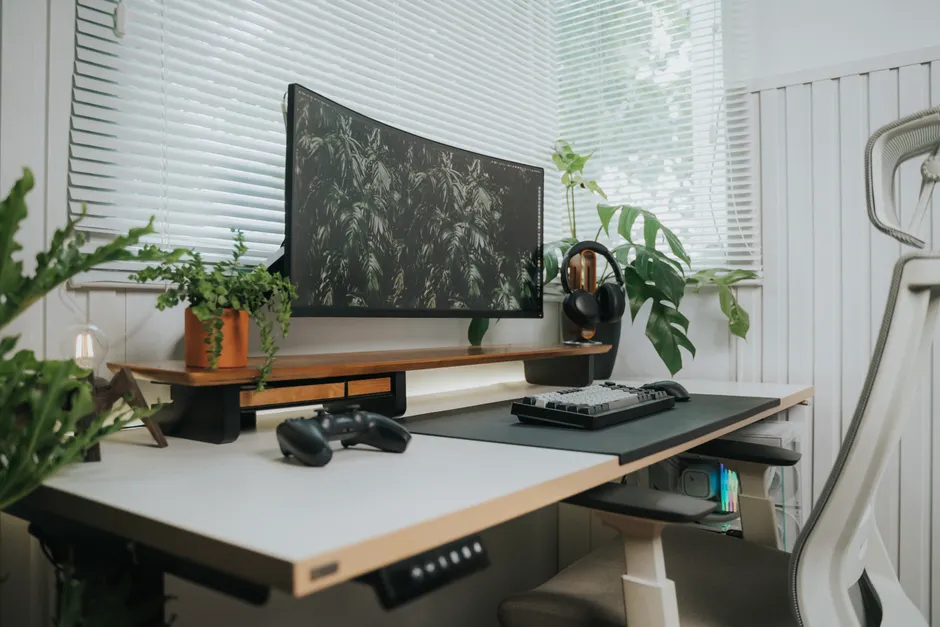
Dell's Alienware AW3926QW, sold as the Alienware 39 5K, is a 38.9-inch curved gaming monitor that uses a glossy OLED screen built differently from most premium gaming monitors on the market today (TFTCentral, Engadget).
Most high-end OLED gaming monitors in recent years have used a technology called QD-OLED, short for quantum-dot OLED. The AW3926QW instead uses something called an RGB stripe tandem OLED panel. Think of a standard OLED screen as a grid of tiny lights, each one made up of a red, a green, and a blue element sitting side by side. The "tandem" part means there are two layers of those lights stacked on top of each other, which lets the screen get brighter than a single layer could manage on its own. Dell says this is the first time this design has been used in a 39-inch monitor (Tom's Hardware, PCMag).
The screen's native resolution is 5120 by 2160 pixels, which is very sharp, running at 165 frames per second. It also has a second mode that drops the resolution to 2560 by 1080 but doubles the frame rate to 330 per second. That mode is aimed at competitive gamers, who often prefer faster motion over sharper images (Engadget).
Brightness levels are 300 nits in standard mode, 500 nits for sustained HDR (high dynamic range, which gives brighter highlights and darker shadows), and a peak of 1,300 nits for brief bright flashes. The monitor supports both G-SYNC and FreeSync, which are features from Nvidia and AMD that keep the screen's refresh rate in sync with the graphics card to prevent image tearing (Engadget).
The reason the RGB stripe design matters is text clarity. QD-OLED monitors have long had a problem where small text can show faint colored edges, sometimes called color fringing. Engadget noted in a July review of Alienware's QD-OLED model, the AW3426DW, that newer QD-OLED panels had improved on this issue significantly (Engadget). But the AW3926QW avoids the problem entirely, because its RGB stripe layout gives each pixel its own clean set of red, green, and blue elements. The tandem stacking then boosts brightness to a level a single-layer OLED could not reach without using the quantum-dot approach.
The monitor includes a USB-C port that handles data transfer at 10Gbps and delivers 100 watts of power, so you could run a laptop or mini PC through a single cable while using the monitor as your display (Dell). The screen has a 1500R curvature, meaning it is gently curved to keep the edges at a comfortable viewing distance (TFTCentral).
Dell's Hong Kong online store lists the monitor at HK$13,998 (Dell HK). Dell's Singapore storefront also carries it, though prices and availability will vary by region.
The dual-mode feature, switching between high resolution and high frame rate, has shown up on a few recent monitors aimed at people who want both immersive, sharp visuals for single-player games and fast frame rates for competitive multiplayer. The AW3926QW cuts the horizontal resolution in half when switching to 330Hz mode, going from 5120 to 2560 pixels wide. That is a bigger drop than some competitors offer, and how noticeable the quality difference is at 39 inches will depend on how far you sit from the screen and how sharp the game itself looks.
The standard-mode brightness of 300 nits is on the low side for a premium monitor today, and lower than what QD-OLED competitors have been achieving. In a dim room, 300 nits is fine. In a brightly lit room, it may feel dim. The HDR numbers are stronger, and the 1,300-nit peak suggests the tandem design's brightness advantage shows up mainly in bright highlights rather than across the whole screen, which is typical of how OLED handles HDR.
For anyone choosing between this monitor and Alienware's QD-OLED AW3426DW, the main tradeoff is text clarity and panel type versus the QD-OLED's stronger color and brightness. The RGB stripe layout should give cleaner text, which matters if the monitor will be used for work as well as gaming. The tandem OLED design helps close the brightness gap that has favored QD-OLED, though the lower standard-mode brightness figure suggests that advantage is not consistent across all uses.
In my view, what makes this monitor interesting is that it does not force buyers to choose between crisp text and the deep contrast that OLED is known for. Whether tandem OLED becomes a lasting direction for monitor design or a stepping stone to whatever comes next is something we will learn as more of these screens reach more people. For now, it offers a real alternative in a category that, until recently, gave buyers variations on one technology rather than a choice between different ones.