Anker's New Eufy MindBase Is a Smart Home Hub That Thinks for Itself

Anker has announced the Eufy MindBase, a new device that acts as a smart hub for its Eufy security cameras. Unveiled at the IFA 2026 trade show in Berlin, the MindBase uses artificial intelligence built directly into the device to analyze camera footage inside your home, rather than sending it to a company's servers over the internet. Anker calls it a "central brain for the home." The Verge
The MindBase is Anker's first AI hub. It was announced as part of a larger 22-product launch that also includes headphones, earbuds, power banks, and chargers. Tom's Guide It connects to a wide range of smart-home devices using several wireless standards and works with Apple HomeKit, Amazon Alexa, Google Home, and Home Assistant. It also supports Matter 1.5, a widely adopted standard that lets devices from different brands communicate with each other, covering over 40 device types including lights, sensors, and heating and cooling systems.
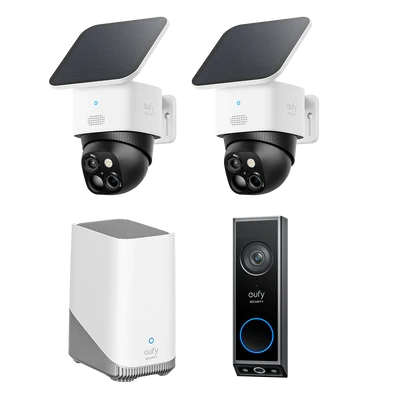
The device offers up to 48 terabytes of storage, which is enough to hold years of camera recordings, along with a dedicated AI chip. That is a big step up from Eufy's previous hub, the HomeBase S380, which maxes out at 16 terabytes. Eufy The MindBase supports 16 wireless cameras, four wired cameras, and 34 sensors. It also includes a new motion sensor that uses radar to detect movement across a wide area.
The AI features are what set the MindBase apart from typical security hubs. You can search your recordings using plain language, so you might ask it to find footage of a person at your front door on Tuesday, and it will pull up the relevant clip. It can also generate summaries of events. These features come at no monthly cost. Smart alerts can recognize faces and distinguish between people, cars, pets, and strangers. Family members can carry a digital ID on their phones so the system knows who belongs in the house and sends fewer unnecessary alerts. Eufy Security spokesperson Janet Jin told The Verge that the company also plans to support cameras from other brands that work with Matter.
Anker's plans go beyond security. The company intends to add features for managing home electricity use and controlling robot vacuums, turning the MindBase into a device that manages the whole home.
One of the first products designed for the MindBase is the Eufy TrackLight Cam S1, sold as part of a security kit. This camera has a light that follows movement, radar-based detection, and 4K video quality. Anker says the MindBase will also work with existing cameras like the eufyCam S4. The new wired Eufy S4 video doorbell, also launching around the time of the announcement, is compatible too. Priced at $299.99, the S4 doorbell offers a very wide viewing angle, AI-powered tracking and zoom, 3K video recording, 64GB of built-in storage, Wi-Fi 6, and motion detection using radar and infrared sensors. Its app lets users view panoramic footage by moving their phone around, an experience Anker compares to virtual reality.
Anker also announced the $70 E10 window camera, arriving later this year. It is designed for people who cannot mount cameras outside. The camera sticks to the inside of a window and records in full HD, with built-in storage and no tools required for installation.
Anker has not yet announced pricing or a release date for the MindBase itself.
The focus on processing footage locally is worth noting because of Eufy's past. The company previously claimed its cameras had full encryption when they did not always, and has since rebuilt its systems around local storage and encryption. The Verge By running AI on the hub itself, footage stays in the home and is not sent to a cloud service for analysis. Offering advanced AI features without a subscription also removes a common reason companies collect user data, since "free" cloud services often pay for themselves by harvesting information.
Whether the built-in AI is fast and accurate enough to handle 20 cameras and 34 sensors at once is an open question, one that can only be answered once the device is available for testing. The same uncertainty applies to Matter's real-world compatibility across 40-plus device types, which has historically been more of a goal than a reality. But the specifications and range of supported devices Anker has put together suggest a genuine effort to turn the AI hub from an idea into a real product, and the industry will be watching to see how well it delivers on what the spec sheet promises.