Trump Called Nvidia's CEO on Stage to Say AI Shouldn't Slow Down

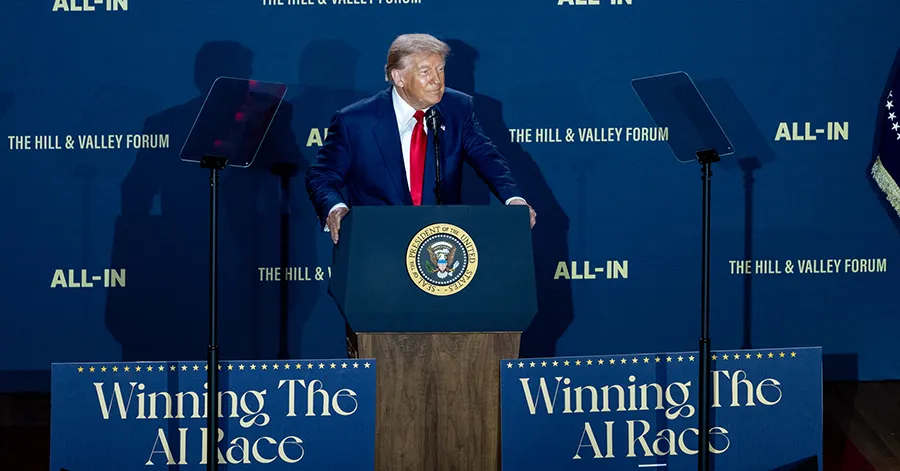
Nvidia CEO Jensen Huang answered a call from President Donald Trump while on stage at the All-In Summit in Los Angeles and put it on speaker so the crowd could hear, as reported Sept. 14, 2026. TechCrunch The New York Times
The call came during a talk about how fast AI should improve. Huang had been speaking with hosts Chamath Palihapitiya, Jason Calacanis, David Friedberg and David Sacks about Anthropic CEO Dario Amodei's request to slow down work that makes AI more capable.
Trump said AI work must be done carefully but added "that doesn't mean we're going to stop an industry" and "We're going to lead." He said slowing AI could help political opponents or China, and called that idea a hoax that "we're not going to let" happen.
Huang replied, "You're right. We're not going to let that happen, sir." His answer was short. The crowd clapped loudly.
Two other company leaders disagree with Huang in public. SpaceX CEO Elon Musk and OpenAI CEO Sam Altman have said they agree with Amodei about slowing AI improvements. Huang has separately said he expects AI to raise productivity and create jobs rather than remove them. Reuters
The broader context here is a disagreement about speed, not about whether AI work goes on. One side sees going slower as careful management, like driving slower on a tricky road. The other side sees steady progress as needed to stay productive and competitive. For buyers and builders, that choice affects how often new versions arrive, what safety checks happen, and what rules control use.
In my view, the onstage call made a complex topic sound like a simple yes or no. Making AI more capable involves several steps, from first training to fine tuning to testing to helper tools to daily operation. Each step can move at its own speed.
Looking at what this means for work teams, the short term message is steady as before. Plans that expect regular model updates and wider use in daily tasks are unlikely to stop. That makes careful habits matter more, such as tracking versions, undoing bad updates, limiting access, watching systems and fixing problems fast.
In this author's view, agreement on a stage between a president and a company chief does not settle the jobs question. More output and more jobs must be measured in hiring, pay, output per hour and tasks done by machines. Over time, technology has often created new kinds of work even as it changed old jobs, and that hopeful pattern may hold here.