Camp Snap's New Pocket Camera Has No Screen
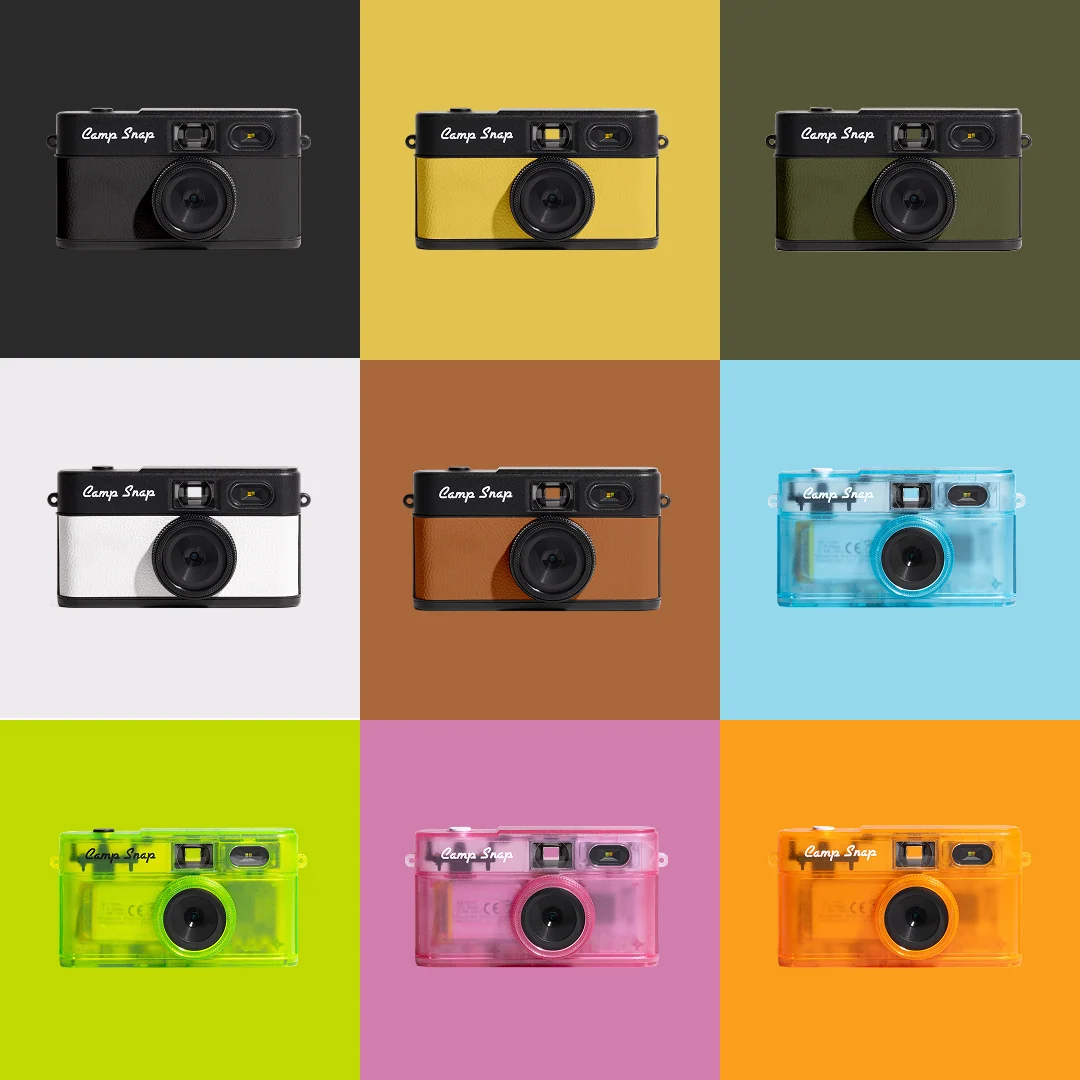
Camp Snap is taking preorders for the 110D, a $74.95 pocket camera with no screen for checking photos.
A pocket-first shape
The camera uses a thin, horizontal shape first popularized by Kodak film cameras in the 1970s, according to The Verge.
It comes in two colorways, back in black in black and gray and dreamsicle in white and orange, with matching accessories. A lanyard and carrying case are included. The thin body is made to slip into a pocket rather than hang from a neck strap.
What is inside
It shoots with an 8-megapixel Sony 1/3.2-inch CMOS sensor, the small chip that records light, paired with a 4.2mm f/2.0 lens. That lens opening lets in a good amount of light. The lens fits 30.5mm screw-on filters. A built-in flash with adjustable color temperature, or warmer or cooler white light, is included for dark scenes.
There is no screen. Like a disposable film camera you can reuse, you shoot without checking each shot. Five built-in software filters with vintage, analog, and black and white looks are picked with a sliding switch on the body. A segmented LCD on the back, a simple number-style display, shows battery life and number of photos taken. Power comes from an 800mAh battery good for around 500 shots. Storage is a bundled 4GB microSD card that holds up to 2,000 photos, with copies to a mobile device or PC over USB-C.
Where it sits
The 110D sits alongside other Camp Snap models. The Camp Snap 2 is listed at $69.99 and described as a screen-free camera for everyday use with vintage feel and no film, with six built-in filters selectable on-camera with no apps required, plus CampLock kid-friendly settings and Quick Draw battery-saving technology, according to Camp Snap. Its box includes the camera, a USB-C to USB-C charging and data cable, and a pre-installed memory card. The CS-Pro is listed at $99.00 with 16MP quality, a 4-filter dial and xenon flash, while the CS8 Digital Video Camcorder is listed at $199.00 as a Super-8-inspired camera with no playback screen.
In my view, leaving the screen out is the whole point. You shoot, pick a look before you press the shutter, and do the checking and editing later on a phone or computer. For kids, travel, classes, or party tables where a phone is too much, that simple setup makes it easy to hand someone a camera and let them shoot.


