Meta Just Announced Lighter VR and Smarter Glasses

Meta announced four new wearables at its yearly Meta Connect event. The main product is VR Glasses that use a small computer you keep in your pocket. They are planned for spring 2027. The Verge
Connect 2026 was a two-day online event on September 23 to 24 about AI, AI glasses and VR. Mark Zuckerberg gave the main talk on AI glasses, VR and more. Meta Engadget
VR Glasses push compute into the pocket
Meta VR Glasses look more like normal glasses than a headset. There are no straps. They weigh 100g, which Meta says is five times lighter than the Meta Quest 3.
They connect by wire to a pocket-sized puck. The puck holds the main chip, a Qualcomm Snapdragon Reality Elite, plus 128GB of storage and 12GB of memory. The split keeps weight and heat off your face. The system still works on its own.
The screens are 5K micro OLED Infinite Display, with 2412 x 2288 pixels for each eye and up to 120 updates per second. Meta says it is the first IMAX Enhanced VR device. That label is for watching video, not for recording.
The glasses run the full Meta Quest catalog of apps and games. They also support Xbox Cloud Gaming. They can act as an extra screen for a Mac or Windows laptop, with a virtual keyboard and touchpad. For calls, a hologram feature makes a lifelike digital copy of your face.
The price is $1,299. Launch is planned for spring 2027. The Verge
For work buyers, the facts to know are screen sharpness, top speed, the chip, memory and storage, and the link to Mac and Windows. The 12GB of memory and 128GB of storage are similar to a mid-range phone. The 120 speed setting lowers lag and can feel more comfortable for long work sessions.
Camera-free tier and a Gen 3 refresh
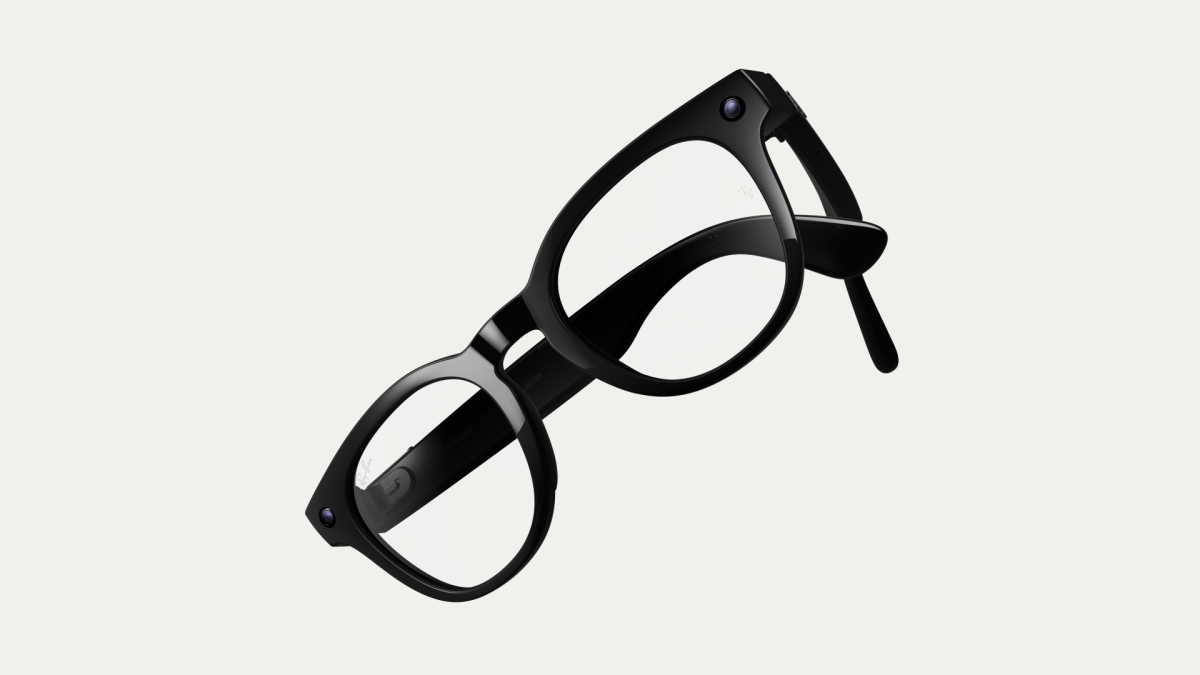
Meta also announced Ray-Ban Meta Audio. These smart glasses have no cameras for photos or video. They weigh 43g, the lightest and slimmest AI glasses from Meta so far. Battery lasts up to 12 hours, or 48 hours with the charging case. They launch October 13 starting at $349 with 23 color and lens choices.
No cameras means lower power use and heat, a simpler board inside, and different privacy for people nearby. It divides the range between sound and AI help and full photo and video.
Ray-Ban Meta Gen 3 keeps cameras and starts at $449 with up to nine hours of battery. It has a button you can set for Meta AI. It has six microphones that cut more than 90% of background noise. There are 27 color and lens choices, including new Zena and Aviator styles.
The cheapest new pair is Meta Adventurer. It starts at $249 with black frames and gray lenses on October 23. Current Ray-Ban Meta and Oakley Meta AI glasses start at $224. Meta
Some news was out before Connect. Reuters reported on September 15 that Meta planned camera-free glasses called Luna for fall 2026. Meta introduced Meta One on September 15, 2026, a paid plan with more features and AI to create, connect, and stand out. In May, Meta launched Muse Spark, described as the first step toward personal superintelligence and the start of new models made for its products. Reuters Meta Meta
The broader context here is choice. Meta now has a camera-free pair for long wear, a Gen 3 pair for photos and video AI, a $249 pair to lower the cost of trying, and a $1,299 VR system for movies and computer work. Each trades weight, battery, sensors and price.
In my view, the pocket puck is the part to watch. Think of it like a game console in your pocket, with the glasses as the screen. A fixed puck is simpler for app makers than dealing with many phones and PCs. The virtual screen and keyboard could get more daily use than games if text stays clear.
Looking at what decides success, comfort will beat specs. Fit without straps, heat, microphone quality in real rooms, and a steady wire link will matter. My kids adopted earbuds and light glasses faster than any headset because they fit into routine. If these work as planned, light glasses can handle daily AI and sound while the puck system handles movies, desk work and Quest apps.