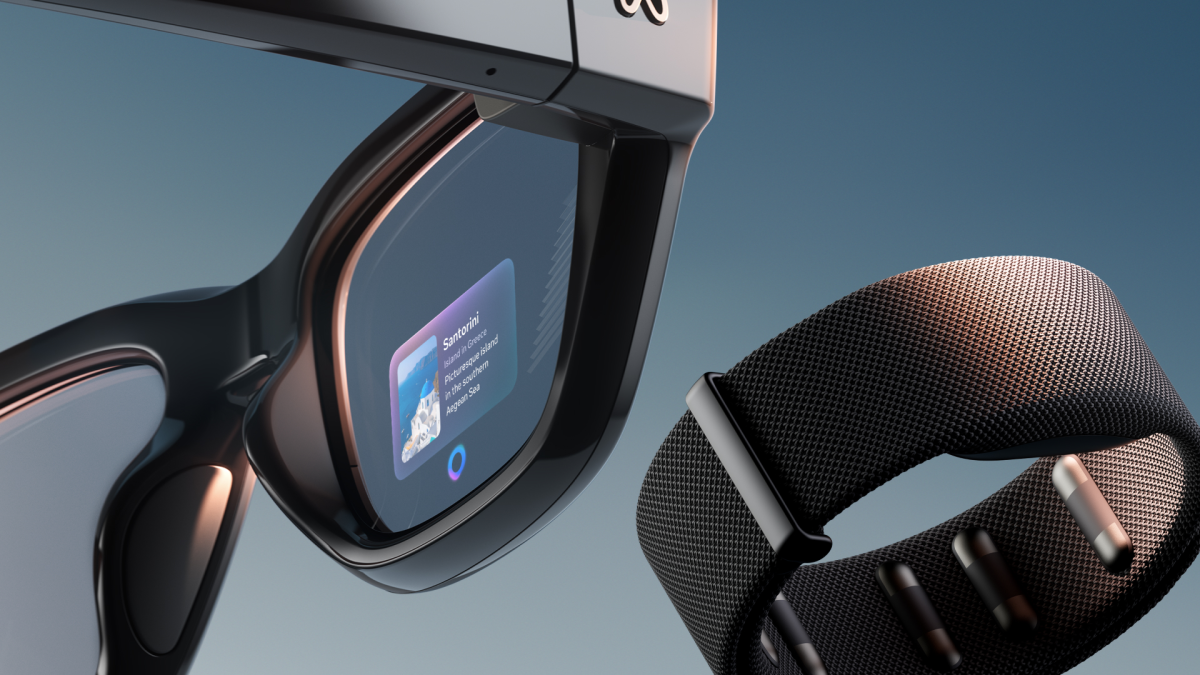
Meta's AI Glasses Now Come in Two Styles and Three Price Points

Meta's AI Glasses Now Come in Two Styles and Three Price Points
Meta has expanded its line of AI-powered glasses to include two different brand partnerships, with prices ranging from $224 to $499. The cheaper option is the Ray-Ban Meta glasses starting at $224, while the Oakley Meta line starts at $399. If you need prescription lenses, the Ray-Ban Meta with corrective lenses costs $499.
The $224 Ray-Ban Meta is designed to reach everyday consumers. It's cheaper than most high-end earbuds and puts artificial intelligence — the technology that powers voice assistants like Siri — directly into a pair of glasses. You can ask questions, have the glasses show you information, and take photos hands-free.
For people who already wear glasses for vision correction, the $499 prescription option removes a real problem. Until now, if you wanted AI glasses, you had to either wear them over your regular glasses or switch between two pairs. The prescription Ray-Ban Meta solves that by combining both in one frame. The price is reasonable compared to what you'd pay for high-quality prescription glasses from an optical store — and you get AI features included.
Ray-Ban: Fashion and Options
Meta and its partner EssilorLuxottica, the company behind Ray-Ban, have added more color and lens choices. New styles include options like Shiny Chalky Gray frames with Gradient Cinnamon Pink lenses, and Shiny Black frames paired with Transitions photochromic lenses — the kind that darken automatically in sunlight.
These choices matter more than they might seem. In the eyewear world, how glasses look and what the lenses can do are the main reasons people choose one pair over another. If AI glasses are going to become something regular people wear every day, they need to fit into fashion eyewear norms. Adding everyday colors and useful lens technology — like automatic tint adjustment for outdoor brightness — makes that possible.
Oakley: Built for Athletes
The Oakley Meta takes a different approach. It's aimed at people who already spend $200 to $400 on sport eyewear: cyclists, runners, skiers, and outdoor enthusiasts. At $399 to start, these glasses have a wider field of view — 122 degrees, compared to a narrower angle in the Ray-Ban version. That wider view helps athletes see movement in their peripheral vision, which matters if you're cycling or skiing.
The lens options for Oakley Meta include PRIZM, Oakley's proprietary technology that sharpens contrast and colors for specific environments like snow or water. Polarized lenses reduce glare. These are not just cosmetic features slapped onto an AI device; they are serious optical upgrades designed for people who use their eyes professionally or at high intensity.
Meta highlighted the Oakley Meta in its Super Bowl advertisement this year, with filmmaker Spike Lee wearing them. The Super Bowl reaches the widest possible American audience in a single moment, and pairing the glasses with a respected filmmaker signals that these are tools for creative work and capturing video — not just athletic gear.
Why the Pricing Strategy Matters
The three different price points each target a different group of people. The $224 Ray-Ban gets the glasses into as many hands as possible and normalizes the idea of wearing AI glasses every day. The $399 Oakley captures people who care deeply about optical quality and are willing to pay for it. The $499 prescription Ray-Ban addresses people who have been left out of the wearable tech market because they already wear corrective lenses.
The broader context here is distribution and trust. Meta owns the AI inside these glasses, but Ray-Ban and Oakley are among the most trusted eyewear brands in the world. By partnering with them, Meta can use existing optical retail stores to sell the glasses, leverage decades of reputation for lens quality, and borrow the fashion credibility these brands carry. That matters because a pair of glasses branded only as "Meta" would have taken years to build the same level of consumer trust.
The real question that remains is whether the AI features are useful enough that people actually want to wear these glasses every day. For now, the pricing and design seem thoughtfully engineered to remove obvious barriers. The glasses look like eyewear, not a tech gadget. They come in styles and price points for different needs. And if you need vision correction, you no longer have to choose between seeing clearly and using AI.