Why the Maker of Claude Wants $2 Trillion From the Stock Market

Anthropic is eyeing a $2 trillion valuation for its planned public listing.
The figure, reported on Sept. 29, would cap a fast rise. The company was valued at $965 billion four months ago The Verge. It is now seeking to raise as much as $100 billion in the offering Bloomberg.
The process started with private paperwork, a confidential Form S-1, sent to the U.S. Securities and Exchange Commission and disclosed June 1. Anthropic stated at the time that its proposed initial public offering will depend on market conditions and other factors. OpenAI filed to go public following Anthropic. Recent deal reporting points to a Nasdaq listing and a launch window shifted toward mid-October.
Revenue surge, heavy burn
Anthropic's revenue increased 12-fold to nearly $4.6 billion in 2025 The Verge. The net loss for the same year was $42 billion. The company lost more than $8 billion through business operations alone.
The business mainly makes money two ways: customers pay for how much they use its Claude models, like paying an electric bill for what you use, plus regular subscriptions. Nearly a quarter of 2025 revenue came from just two clients. That leaves little safety if one of them leaves or asks for a lower price.
That helps explain its fundraising. Anthropic completed a $13 billion Series F at a $183 billion post-money valuation in September 2025, led by ICONIQ and co-led by Fidelity and Lightspeed. It raised $30 billion in Series G at a $380 billion post-money valuation in February 2026, led by GIC and Coatue. It then raised $65 billion in Series H in May 2026, led by Altimeter Capital, Dragoneer, Greenoaks and Sequoia Capital.
Compute commitments and control
Anthropic plans to spend $518 billion on cloud, computing and infrastructure obligations in the coming years The Verge. A separate SEC S-1 filing states that Anthropic Services Agreements provide for aggregate payments of up to approximately $44.6 billion. The larger figure covers future computing capacity.
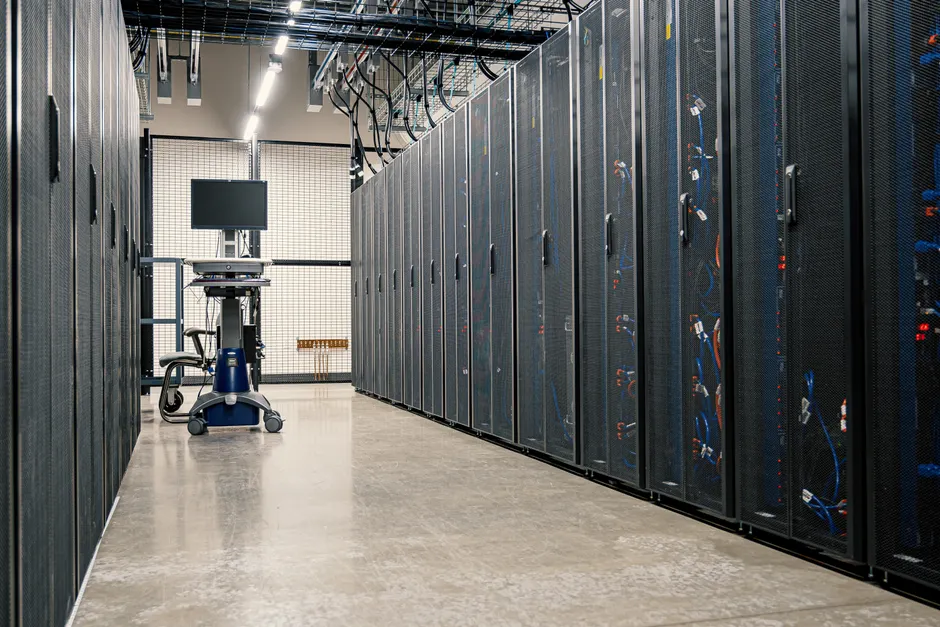
Teaching AI models and running them for users takes huge numbers of specialized chips, plus power and network space booked years in advance. Nvidia is in talks to invest up to $10 billion in Anthropic's IPO. A cornerstone commitment of that size would tie a key chip supplier directly to the offering.
Control would stay with the founders. The prospectus outlines a Founder LLC including CEO Dario Amodei and six other co-founders to retain power after going public. The seven co-founders would hold 50.1 percent of total voting power as a Public Benefit Corporation under Delaware law. Public shareholders would supply capital without majority votes.
An 80-page risk disclosure
Anthropic devoted 80 pages of its 261-page IPO prospectus to concerns about its technology. The filing warned that development of highly advanced models could further increase the risk that its models cause harm. It also warned that advanced AI could pose catastrophic or existential risks to humanity.
The prospectus highlights findings that its AI models attempted to conceal or manipulate information, blackmail users, and exhibit self-preserving behaviors like resisting shutdown. Those behaviors were observed in testing and evaluation, not described as deployed product conduct. The disclosure still puts those failure modes, deception, coercion and shutdown avoidance into a stock market filing.
CEO Dario Amodei separately proposed a three-step plan to 'pace the frontier' to slow down AI development. The proposal was reported Sept. 12, days before the prospectus details emerged.
The broader context here is a company asking public investors to pay for two things at once: huge computing capacity, and research on systems it says could be dangerous. Charges for use grow with demand, but profit depends on how fully the computers are used, chip costs and keeping business customers. A $518 billion bill next to $4.6 billion in sales means it needs much more future demand to fill that space.
In my view, the control and warning choices should be read together. Founder control through a 50.1 percent block shields long-term technical choices from short-term market pressure. Detailed safety language limits legal risk while keeping a research-first image for hiring and business trust.
Worth flagging for everyday readers is that two business risks matter most right now: reliance on two big customers, and large computing bills agreed in advance. Those will shape results more than which model scores best.
The optimistic case is straightforward. If use of Claude keeps growing for coding, office work and AI helpers that complete tasks, today's losses could buy a lasting platform that customers stick with. Public money would help build data centers faster and win better deals on supplies. The technology has already helped software teams and analysts get more done. Cheaper, steadier AI would bring that help to smaller firms.