Google and Meta Are Helping Build a Virtual Cell to Fight Disease
Google DeepMind, Meta and Isomorphic Labs are giving $300 million to Biohub as part of a $1.8 billion project to build data for biology research. The Verge
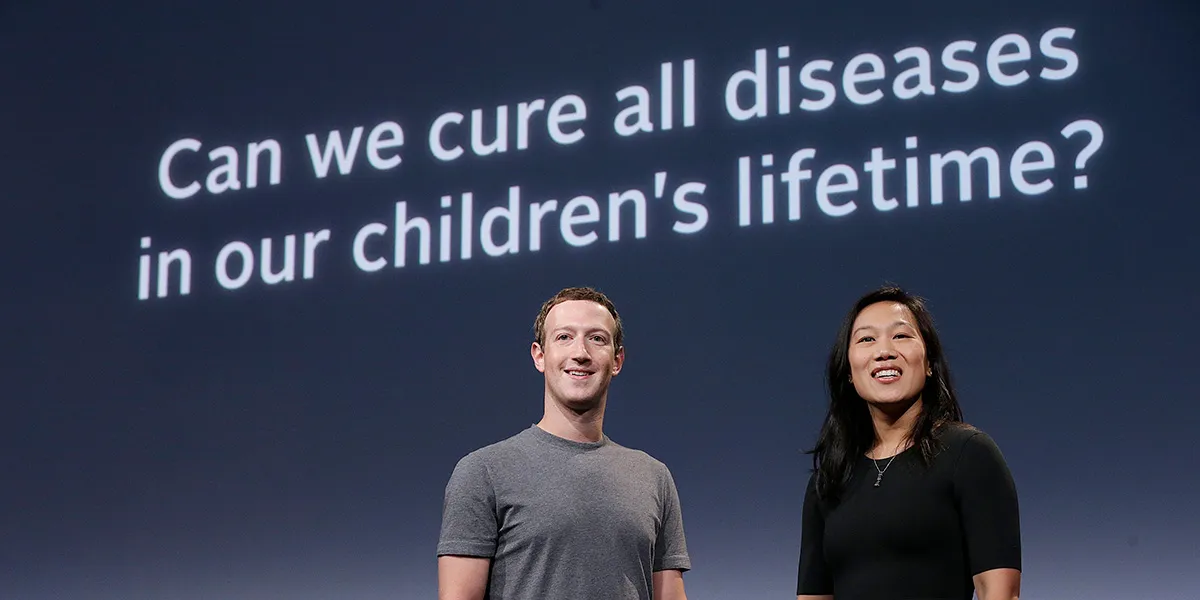
Biohub is the nonprofit medical research group started in 2016 by Mark Zuckerberg and Priscilla Chan. Its goal is to fight disease by building a "virtual cell," a computer copy of a cell that scientists can test in simulations, much like pilots train in a flight simulator.
The $300 million from the three tech contributors is part of that larger $1.8 billion effort. The focus is datasets for biology, not one single model or product.
A public-private funding stack
The U.S. Department of Energy will spend more than $500 million over the next five years to support the Biohub virtual-cell work. The National Institutes of Health will share datasets, repositories and knowledge bases built with more than $500 million in earlier federal spending. The Verge
That setup pairs new private money with past public spending. NIH is bringing existing data assets from that earlier investment, alongside DOE funding planned over five years.
Biohub itself has promised $500 million for the Virtual Biology Initiative. Biohub
The Virtual Biology Initiative is building open, global datasets to power predictive models of the cell. In Biohub's description, the stress is on open datasets as shared tools for everyone, rather than private files kept inside one lab or company.
Priscilla Chan is co-founder and co-CEO of the Chan Zuckerberg Initiative. She earned a bachelor's degree in biology from Harvard University and earned her doctor of medicine from the University of California, San Francisco, where she also completed her pediatrics residency. Mark Zuckerberg is co-founder and co-CEO of the Chan Zuckerberg Initiative. He is founder and CEO of Meta and studied computer science at Harvard University before moving to Palo Alto, California, in 2004.
Datasets as the constraint
This project starts with AI datasets for biology research, with predictive models of the cell to come later.
The problem is scattered information. Records of what happens when a cell is disturbed, plus cell images, readouts of gene activity and readouts of proteins, live in different places and come from different lab methods and cell types. Models trained on a narrow slice often work poorly on new cells.
Biohub earlier released an AI world model for drug discovery, a system built to learn broad patterns for new tasks. Reuters That world model comprises open-source AI models.
A separate CZI and NVIDIA project works on the data-processing step. On Oct. 28, 2025, CZI published a Technology article titled "CZI and NVIDIA Accelerate Virtual Cell Model Development for Scientific Discovery". The project aims to scale biological data processing to petabytes of data spanning billions of cellular observations to enable next-generation model development. On the same date, CZI's newsroom listed R&D World coverage titled "CZI, NVIDIA Expand Virtual Cell Push With Open Models and Benchmarks".
At that size, the hard work is cleaning data, lining up formats across labs, keeping careful notes on how data was made, and building tests that check real biological accuracy and not just scores on withheld training data.
Commercial models meet open infrastructure
Isomorphic Labs joins this work from the business side. It is an artificial intelligence-driven drug discovery company. It is backed by Google. Reuters
Isomorphic Labs raised $2.1 billion to scale AI-driven drug discovery. That raise, reported in May, was described around scaling discovery work, separate from the Biohub dataset funding now shared with Google DeepMind and Meta.
The broader pattern here is familiar from past tech shifts. Open datasets and open-source models lower costs for university labs and startups, while well-funded companies build their own private tools on top. In my view, that is the most useful way to read the $300 million gift. It does not blur open science and business drug work. It pays for the base layer both need.
For working scientists, three practical questions matter more than the headline number. First is access rules for the global datasets. Open in name can still be hard to use if logins, legal limits or computing needs block reuse. Second is testing. Models of the cell will need independent, updated tests tied to real lab checks. Third is upkeep. A five-year DOE plan and a $500 million Biohub promise give time, while long-term care of data stores is a separate job from building them.
One concern worth flagging is teamwork. DOE, NIH, Biohub, Google DeepMind, Meta and Isomorphic Labs put a lot of weight behind one idea, the virtual cell as something scientists can simulate. That weight helps set standards and scale. It also makes coordination harder, since joining data across government, nonprofit and company labs is people work before it is computer work.
I have watched this kind of slow build before while raising my two kids as the internet moved to phones and then to the cloud. Each shift looked obvious only later. The quiet part held. Basic tools were built first, then new uses arrived fast. If this works, researchers could try ideas in a computer before paying for costly lab tests, and drug teams could move faster because the shared data layer is cared for.