Want No AI Music? Deezer Will Let You Turn It Off
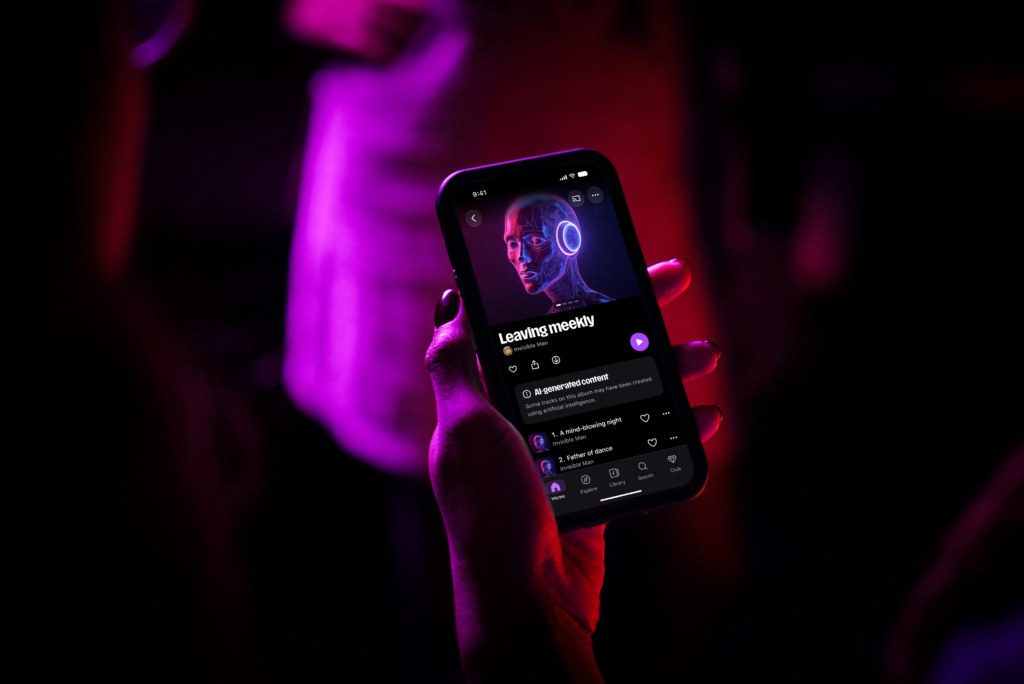
Deezer will let listeners turn off AI-generated music completely with a simple on/off switch by the end of the year.
The switch is set by each listener and stays on until changed. When it is on, fully AI-made tracks, albums and artists stay out of recommendations, search results and playback. That is according to the company's October 2026 newsroom announcement titled 'AI music toggle lets users filter content'. The switch can be turned off to bring back the full catalog. Engadget
On scope, this is not a warning label or a lower spot in the list. It is a hard block in the part of the app that controls what you see. Deezer said users will be able to leave out fully AI-made artists and albums, and block AI-made music from search results. Music Business Worldwide
The upload flood behind the filter
Deezer now says more than 50 percent of tracks uploaded each day are made by AI. That is up from around 18 percent last year. In plain numbers, that is 90,000 fully AI-made tracks per day, adding up to more than 42 million tracks waiting to enter the catalog.
The rise has been quick. In April 2026, the company put the AI share at 44 percent of new uploads. Passing 50 percent six months later shows the growth is still speeding up, not flattening. For the teams that take in and check new music, the job has changed from handling odd cases to sorting most new arrivals.
Deezer CEO Alexis Lanternier said listeners clearly want a way to filter out AI-made music. A company study found nearly half of streaming users want AI-made music fully gone from their feeds. A separate study by Deezer and Ipsos found that AI fools 97 percent of listeners, which is why avoiding it by hand does not work. For most sessions, autoplay and suggested songs decide what plays.
How Deezer detects AI audio
Deezer put its AI detection tool for music streaming in place in January 2025. It is built to spot music made by generative models such as Suno and Udio. The company said the chance of a mistake, flagging human-made music as AI, is very low. That low error rate matters for a filter that removes songs from search and suggestions.
The company launched one of the industry's first AI music detection tools and has offered to lend it to rival streaming services.
The broader point here is detection works across music only if distributors, rights holders and services share tools and warning signs.
Deezer already uses detection outside its own app. In June 2026 it launched a free online tool to spot AI-made tracks in playlists, open to users of all major streaming platforms. Reuters Its AI label tells users right away when a song was made by AI. In March 2026, Deezer announced a partnership with EJI to filter out recordings made by AI, which extends the same sorting task into rights enforcement.
The broader context here is keeping the catalog clean, not taste. Streaming catalogs were built for human-scale intake, with checks for song details, copies and fraud sized for thousands of releases per week. AI systems make music at machine scale. Without automatic sorting at intake, all later systems get worse. Suggestions get noisier. Search gets clogged. Royalty pools get thinned by tracks that cost almost nothing to make.
Looking at what this means for product design, Deezer treats AI origin as a listener choice, like filtering explicit lyrics, rather than one rule for all. That keeps choice open. Listeners who want AI background music for focus or workouts keep access. Listeners who want only human-made recordings can opt out. The checker does the hard work once. What you see follows the switch.
In my view, this is the practical path, and other services will have to respond. Central removal would start endless fights over assisted production, mastering tools and mixed workflows. Deezer avoids that by limiting the switch to fully AI-made content and pointing to its low error rate. Hard cases remain. Co-writes, AI voices over human instruments, and heavily edited samples will test any yes-or-no checker. Worth flagging for engineers, origin notes and detector scores need to stay with the track file through intake, search and suggestions, or the filter will leak.
The long arc here favors better tools. I covered the spam wars in email, the content-farm era in search, and the bot waves in social. Each time, the open system looked out of control until detection, reputation and user controls caught up. Music is going through the same cycle now. A solid detector plus a simple switch does not fix credit or pay. It does bring back a basic form of trust. Listeners know what they hear, and artists compete where origin is at least seen by the system, if not always by the ear.
