Typhoon Maysak Floods Chinese City; Another Storm Approaching

Typhoon Maysak Floods Chinese City; Another Storm Approaching
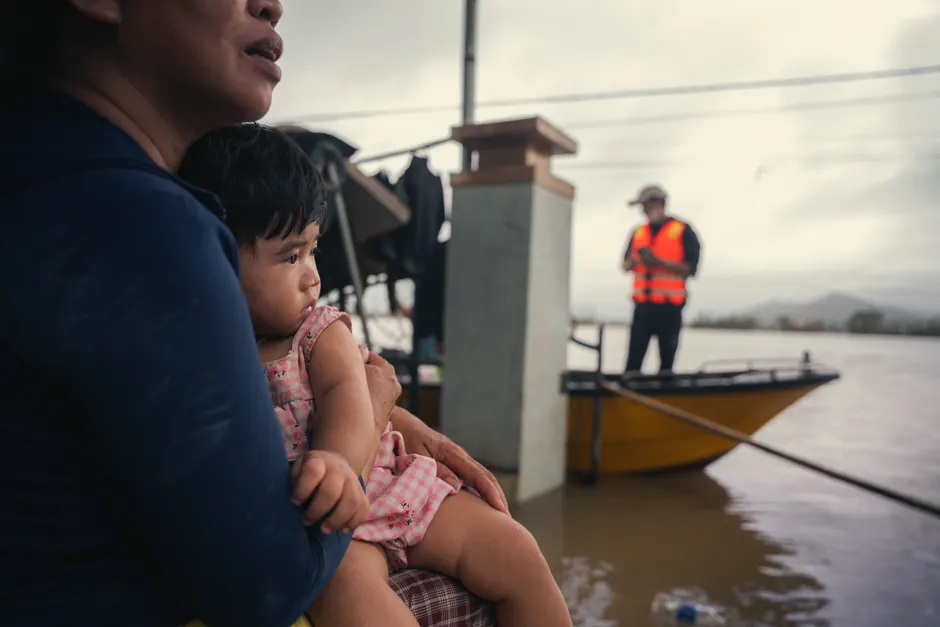
Typhoon Maysak killed two people in Nanning, the capital of China's Guangxi province, and forced about 48,000 people to leave their homes. Roughly 55,000 residents were affected by the floodwaters. These figures come from Nanning's deputy mayor Wei Jiang, as reported by The Guardian on July 6, 2026. The numbers come from Chinese state media. The Associated Press has confirmed this sourcing. One report from Deutsche Welle mentioned a separate county where about 180,000 people were affected and over 68,000 had to evacuate, which suggests the damage extends beyond just the city of Nanning.
The typhoon first hit Hainan province on July 3, 2026 — the first tropical cyclone to reach mainland China that year. Hainan authorities shut down flights and ferry services. The storm then crossed the Gulf of Tonkin and hit Vietnam on July 5. Vietnamese state media reported that Maysak knocked down trees and ripped metal roofing off buildings in Mong Cai, a city in Vietnam's northeast that sits along the storm's path into Guangxi.
Water Rising Across the Region
The flooding spread far beyond Nanning. In Guigang, about 170 miles northeast of Nanning, water levels reached 42 meters by midday on July 6, according to China's Ministry of Water Resources. That's roughly the height of a 14-story building. Video verified by The Guardian showed cars submerged on a main road — the street had become a river. In Fangchenggang, a coastal city near Vietnam's border, another verified video showed a car being swept down a flooded street with water reaching other vehicles' windows.
At least three reservoirs in Nanning overflowed or had water breach their barriers. On July 6, China upgraded its emergency response for Guangxi to Level II — the second-highest tier in the country's warning system, used only for severe situations that need coordinated action across multiple agencies. Xinhua, China's state news agency, reported this upgrade. A day earlier, on July 5, China's Ministry of Emergency Management had already sent two extra teams to Guangxi to help with flood control, according to the Chinese government's official website.
Another Typhoon Is Coming
While rescue crews work in Guangxi, meteorologists and emergency officials are watching a second, much stronger storm. Super Typhoon Bavi was moving across the Western Pacific on July 6 with sustained winds of up to 180 miles per hour. It passed over islands including Guam, according to the US National Weather Service. Chinese weather officials warned that Bavi would bring strong winds and heavy rain to eastern China starting July 9, according to Xinhua.
The timing creates a serious problem for emergency managers. Guangxi's soil is already soaked. The reservoirs are stressed. Tens of thousands of displaced residents are still not back in their homes. Chinese meteorologists are forecasting more heavy rain across Guangxi and nearby provinces in the days right after Maysak — before Bavi's outer rain bands even arrive. These three provinces together are home to more than 150 million people.
The challenge here goes beyond just the scale of two storms. A Level II emergency response needs provincial and national resources working together. With two emergency teams already in Guangxi, the Ministry of Emergency Management doesn't have much spare capacity to send more help before it also has to prepare for Bavi's arrival. Taiwan sits directly in Bavi's path and will be the first major landmass to experience the storm's full strength. How much the typhoon weakens when it crosses Taiwan's mountains will determine how powerful it is when it reaches mainland China.
Right now, the immediate concern is keeping those three reservoirs in Nanning from failing. Having three reservoirs overflow or breach in a single city during one storm is not something that happens routinely. With more rain forecast before Bavi arrives, engineers and local officials have a narrow window of time to rebuild some of the reservoirs' capacity to hold water before the next heavy rainfall comes.