Why Tech Stocks Jumped Monday: AI Memory Chips Are Big Business
US stock indexes rose on Monday, July 6, 2026, lifted by a broad rebound in artificial intelligence-related technology stocks, according to AP News. President Donald Trump rang the opening bell at the New York Stock Exchange that morning, per AP News.
The rally was backed by real earnings news. Chip maker Micron Technology reported its fiscal third quarter results with record revenue from its cloud memory division — the unit pulled in $13.769 billion in a single quarter, per Micron's filing via the Financial Times. To put that number in perspective: Micron's entire company revenue for the full year of 2024 was about $25 billion. One business unit, in one quarter, now nearly matches what the whole company earned two years ago.
Why does this matter? Because that $13.769 billion figure shows that big companies are genuinely spending enormous sums on the memory chips that power AI systems. This isn't speculation or hope—it's cash flowing into Micron's bank account right now.
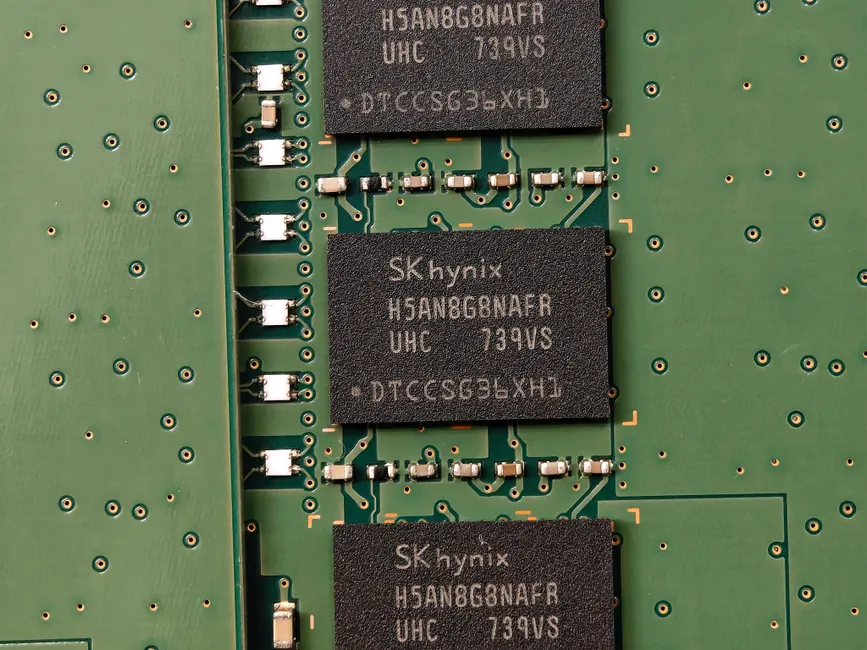
The timing brought other AI infrastructure stories into focus. Chip maker SK Hynix announced plans for a US public stock listing, planning to issue 17.79 million new shares, according to the Financial Times. A hedge fund founded by a former OpenAI researcher is betting on the deal. SK Hynix makes a specialized memory chip called HBM (high-bandwidth memory) that is essential for AI computers—and Nvidia, the dominant AI chip maker, buys most of it. When insiders who helped build large language models start buying stock in the companies supplying the infrastructure those models run on, that sends a signal about where they think the real money is flowing.
In separate news, SpaceX is being added to the Nasdaq 100 index, AP News reported. An index fund, like the widely-held QQQ ETF (which holds roughly $300 billion), must automatically buy every stock when it's added to the index. For a private company newly becoming a public stock, that automatic buying pressure can have outsized impact on the share price, separate from whether the company's actual business is improving or worsening.
What's worth noticing here is the pattern. Micron's results show AI memory demand is real and enormous. SK Hynix's US listing suggests sophisticated investors are positioning themselves for more AI infrastructure growth. And SpaceX entering a major index means index funds will have to buy it automatically. These three events on a single Monday make a coherent story about where investors see AI infrastructure going.
Trump's appearance at the stock exchange was largely ceremonial—though the image of the president on the trading floor on a day AI stocks are climbing tends to stick in people's minds when they think about market narratives. Whether it signals anything about policy is a different question, and the facts here don't answer that.
The Micron number deserves a harder look. A single business unit generating $13.769 billion in quarterly revenue is genuinely large. It tells us that AI infrastructure buildout is no longer a future bet—it's already producing measurable revenue at scale. The shift is dramatic. Two years ago, memory chip demand came mainly from consumer electronics like phones and computers. Now it's driven by companies buying chips for AI computing systems.
The SK Hynix listing, if it happens at the announced share volume, will be watched for what price the market actually assigns to a company whose entire output is already promised to Nvidia before the stock even trades in the US. That's structurally unusual. It's worth following as the IPO moves forward.


