Rocket Engine Startup Raises $90 Million, Focuses on Military Technology
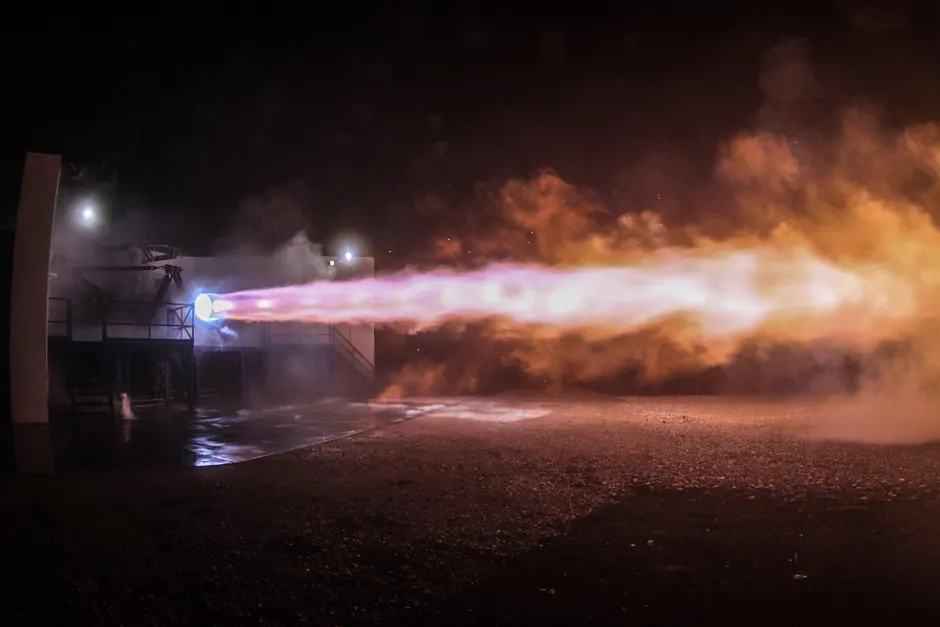
A Houston startup called Venus Aerospace raised $90 million in funding on July 8, 2026. The money will help the company develop a new type of rocket engine and test it for military and space applications.
Venus Aerospace, founded in 2020, builds what's called a Rotating Detonation Rocket Engine, or RDRE. Think of a normal rocket engine like a sustained explosion: fuel and oxidizer burn together in a controlled way to create steady thrust. An RDRE works differently. Instead of continuous burning, it sustains a wave of rapid detonation that rotates through the engine. In theory, this approach can generate more thrust from the same amount of fuel.
The company has tested this engine design about 600 times on the ground. The longest test burn lasted 32 seconds. More importantly, in May 2025, Venus successfully flew an RDRE-powered rocket for the first time — proof that the engine could work in actual flight, not just in a laboratory.
That flight test is a big reason investors are now willing to bet $90 million on the company. The funding round includes Mercury Fund as the lead investor, plus backing from Lockheed Martin Ventures (the investment arm of the defense contractor), and several other venture firms.
Venus started with an ambitious goal: building a hypersonic aircraft that could carry passengers. But after the successful rocket test in 2025, the company shifted course. Now it is focused on building engines for military weapons systems and military spacecraft instead. The company has not named its customers, but it is working on engine designs for specific projects.
The participation of Lockheed Martin Ventures is significant. Large defense companies do not typically invest in engine startups unless they see a real opportunity to use the technology in their own programs. This could mean Venus's engines end up powering military missiles or rockets built by Lockheed Martin, or the large company might eventually buy Venus outright.
The bigger question, looking ahead, is whether Venus will ever return to its original goal of civilian hypersonic transport. History shows that military engine technology often finds civilian uses later, once the core technology becomes reliable. But that depends on whether Venus's founders want to pursue that path, which is something the current funding announcement does not tell us.