Steam's New Personal Calendar Suggests Games Based on What You Play
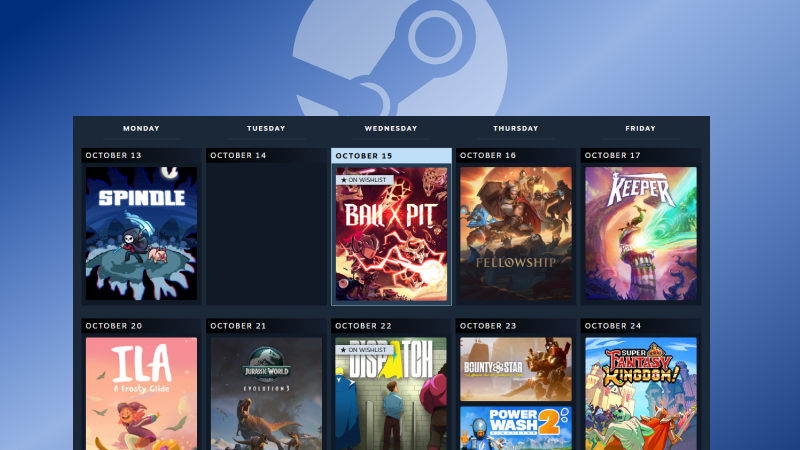
Valve has launched Personal Calendar, a feature on Steam, its online game store, that keeps updating the games it recommends to you. That is according to a report by Engadget, published on 24 October 2026. You can try it on the Steam store homepage.
Personal Calendar shows both new releases and upcoming games, chosen for each person. The feature started as an experiment called Steam Labs Experiment 16, as Valve's Steam news post explains. Valve tested it for several months and gathered feedback. Steam Labs is the program Valve uses to try out experimental store features.
Valve built the feature for two kinds of shoppers. Some people want to find what is popular or hard to find. Others want suggestions that match their own taste. Personal Calendar tries to serve both in one place.
So how does it choose? It looks at the games you have played recently and compares them with players who have similar habits. It also considers how many hours you have logged and what is on your wishlist. The recommendations refresh every day, because the models that tailor them are retrained regularly with the latest data.
Think of it like a shop assistant who pays more attention to what you actually spend time with than to what you pick up and put down.
This has a practical effect. Trying a new game for a few minutes will not change your suggestions much, since the system relies mainly on games you have spent real time playing. You are more likely to see new suggestions over an eight-week window, or when developers confirm release dates for upcoming games.
Steam reports that, on an average day, players click on more than 2,000 different games in Personal Calendar.
The broader context here is that finding games in a store has always been hard to balance. Popular titles and personal taste do not always point the same way. A feed that values long play sessions over quick tries rewards habits built up over time, rather than one impulsive click. That makes the feed steadier for regular players. It also means that someone who wants to change their recommendations has to put real hours into a game first.
Upcoming releases add a second effect. Once developers confirm a release date, those games can appear in your feed. That gives publishers a reason to keep their dates and announcements accurate. For smaller studios, a feed built around each player's profile could help a well-matched game reach people who would never have searched for it by name.
In my view, the best test of Personal Calendar is whether it leads people to games they finish and return to, not just games they click. Clicks show that people are exploring the feed. On their own, they do not show that the suggestions suit the people seeing them. Over time, a model that refreshes daily and reliably connects niche games with the right players would be a real improvement in how games get found. That is the outcome worth watching as the feature matures.