Fujifilm's New Instax Camera Prints Your Photos and Records Short Clips
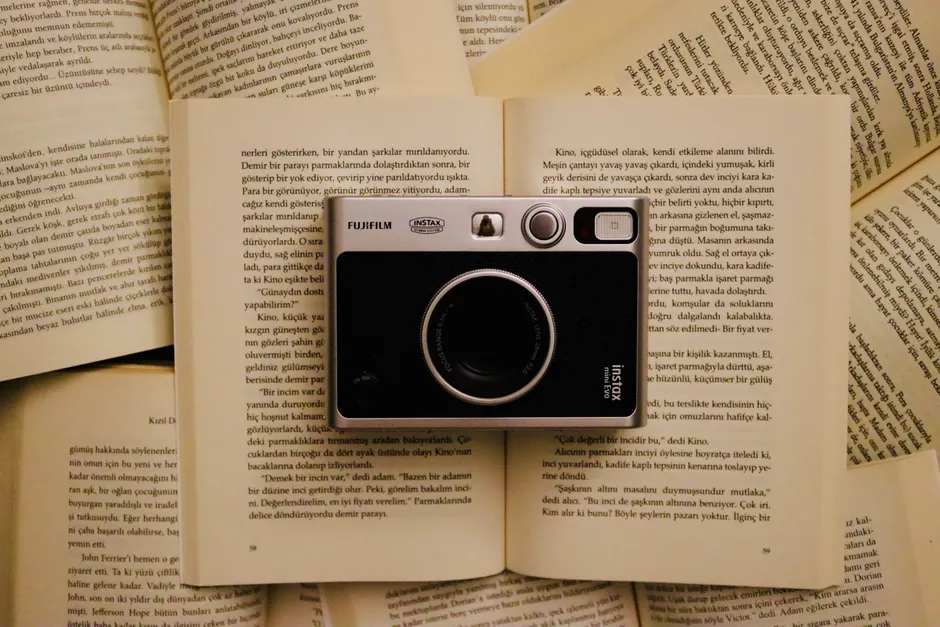
Fujifilm has announced the instax mini Evo 2, an instant camera with a printer built in. It costs $290 and goes on sale at the end of November. The Verge reported the price and release date on October 27, 2026. It comes in black only.
A traditional instant camera takes a photo and prints it on the spot. The Mini Evo 2 keeps that printing, but it also has a digital image sensor, the part that captures light. That makes it work more like a modern digital camera.
The biggest change is the sensor. The Mini Evo 2 uses a 1/2.77-inch sensor. The first Mini Evo used a smaller 1/5-inch sensor. A larger sensor generally captures more detail and performs better in low light. RedShark News reports that the camera has a 21mm lens.
You can adjust exposure, white balance and flash by hand. The camera offers 10 film effects and 10 lens effects. It also has an Expanded View mode, which captures more than the shooting area shows.
The back of the camera has a 4.5-inch touchscreen. The Verge says this is the first Instax model from Fujifilm with an LCD touchscreen. Fujifilm kept two dials and a print lever, so the screen adds to the physical buttons rather than replacing them.
Photos print at 2 x 3 inches, the standard Instax Mini size. Video is a separate feature called instax Immersive Movie. According to Fujifilm's press release, it records the four seconds before each photo. The clips are MP4 video files, 560 x 992 pixels, at 24 frames per second, with no sound. Frames per second is how many still images make up each second of motion, like the pages of a flipbook.
The videos can only be saved to a microSD card, the small memory card found in many phones and cameras. Still photos are stored inside the camera itself. The Verge describes the video as basic and limited to the few seconds before a photo. The camera charges over USB-C, the same connector many phones use.
In my view, the video is the detail most likely to shape how buyers judge the camera. A short, silent, upright clip is a narrow result. Anyone who does not already own a microSD card will need to buy one, which adds to the total cost. The design looks like a deliberate limit on a camera whose main product is paper, not a general video device.
The broader context here is how the category has changed. Instant cameras have always been defined by one mechanical process and one result, the printed photo. The Mini Evo 2 keeps the print. It adds a larger sensor, a touchscreen, creative effects and a short video that records before you press the shutter. Those additions move it closer to a digital camera with a printer built in than to a classic instant camera.
For buyers, the practical questions are simpler. Are the printing, the effects and the touchscreen worth $290, compared with a regular digital camera and a separate printer? Is the Immersive Movie feature useful in everyday use? Those answers will come from using the camera after its late-November release, not from the specifications alone.
In my view, the Mini Evo 2 is an update to Fujifilm's hybrid idea rather than a reinvention. The larger sensor, touchscreen and video buffer fix the most obvious limits of the first model. Whether people keep it for years will depend mostly on how good the printed photos are.


