Amazon's New Echo Devices Are Arriving One Launch at a Time

Amazon has introduced five new Echo smart speakers and screens, and it is releasing them in a series of smaller launches through October instead of one large event.
Panos Panay, Amazon's senior vice president of devices, Alexa, and Leo, presented the lineup at a small event for journalists in New York City's financial district (The Verge). Amazon did not hold a single big fall hardware showcase this year.
The new Echo range includes the Echo Show 16, the Echo Time smart alarm clock, the Alexa Photo Frame, the Echo Studio with Home Camera, and a new Echo Dot. Panay also announced two more launches still to come from Ring, Amazon's home security brand, and shared news about "Echo on the Go."
The screens come with new software. The Echo Show features include dedicated home screens, a 3D map view for controlling smart home devices, and a meal planning feature. Amazon also announced an updated version of Alexa Plus, its upgraded voice assistant, with stronger research abilities.
A new Card display on Show devices gathers your conversations with Alexa Plus. Those cards also appear in the Alexa app and on Alexa.com.
These products follow a set of devices Amazon launched in September 2025. Those four Echo models were built specifically for Alexa Plus: the Echo Dot Max, Echo Studio, Echo Show 8 and Echo Show 11.
The Dot Max costs $99.99. It is the first Echo Dot with two speakers, and Amazon says it produces nearly three times the bass of the 5th-generation Echo Dot. The new Echo Studio is 40% smaller than the original (Amazon).
These devices run on two custom chips, called AZ3 and AZ3 Pro. Each one includes an AI Accelerator, a part designed to run small AI programs directly on the device. Amazon says the AZ3 chip improves Alexa's ability to hear its wake word, the phrase that wakes the device, by more than 50%.
The new Show models have a 13-megapixel camera and a sensor system called Omnisense. It combines the camera with microphones, ultrasound, Wi-Fi-based sensing, an accelerometer that detects motion, and Wi-Fi CSI, a method of reading how Wi-Fi signals change through a room.
Amazon also said that anyone who buys a new Echo device gets access to Alexa Plus right away.
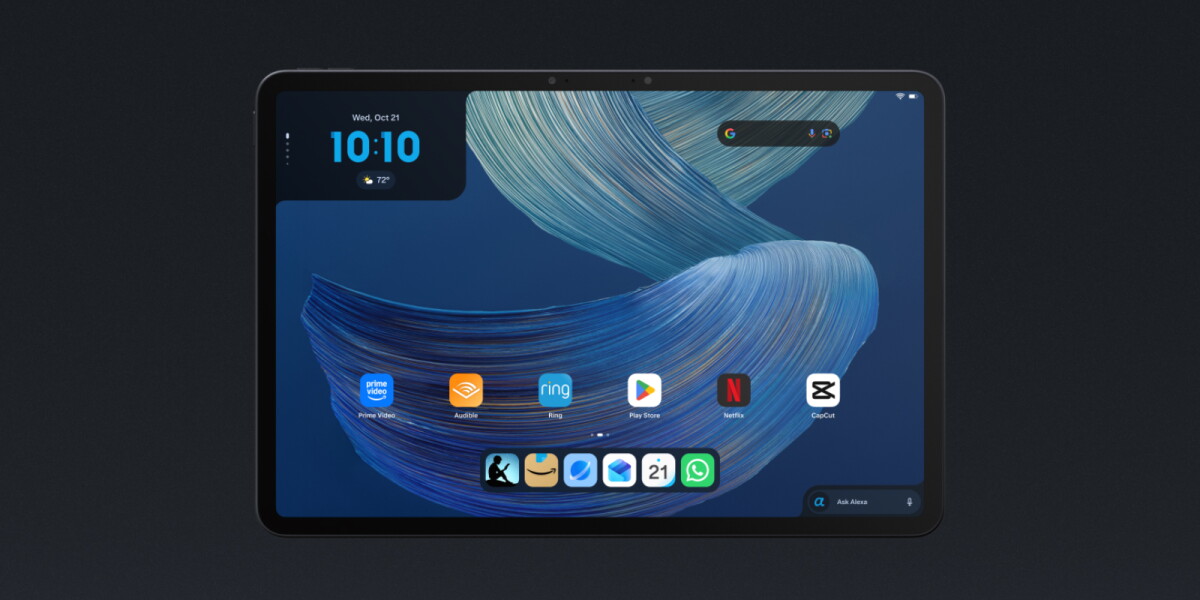
Earlier in October, Amazon announced new tablets, Kindles, Ring home gear, an updated Fire TV Stick 4K, and its first products from Bee, a company that makes AI note-taking devices and has joined Amazon. Engadget reported that the Alexa tablets can access the Google Play Store without a workaround (Engadget). Amazon also said more Alexa-branded devices are coming. Engadget reported that Amazon is moving away from Fire tablets toward a premium Alexa tablet line. It is available in the US, Mexico, Canada, the UK, Germany, France, Italy and Spain.
| Model | Price | Key specifications (per Amazon) |
|---|---|---|
| Alexa Tablet 8 | From $230 | 8.7-inch screen, 8-core processor, 4GB memory, 64GB or 128GB storage, 0.3 inches thick, 16.4 oz, up to 14 hours of video or 19 hours of Kindle reading |
| Alexa Tablet 11 | From $330 | 11-inch 2.5K screen, 90Hz refresh rate, fifth-generation AI chip (NPU), 8GB memory, dual Dolby Atmos speakers, up to 15 hours of video |
| Alexa Tablet 12 Pro | $500 | 12-inch screen with 280 PPI sharpness, 120Hz refresh rate, 8-core processor, 8th-generation AI chip (NPU), 8GB memory, 128GB storage, up to 16 hours of video or 20 hours of Kindle reading |
The Alexa Tablet 11 and 12 Pro include a fingerprint sensor. Amazon offers a Nanomatte anti-glare screen for $50 more, and a $90 Pro Pen for the Alexa Tablet 12 Pro.
Reuters reported that Amazon confirmed a shake-up in its Alexa leadership, one day after the tablet announcement (Reuters). Panay has also said that only two products from Amazon's previous fall hardware event drew any attention (Engadget).
In my view, the staggered schedule makes sense for a product line that depends on a software service changing on its own timetable. Launching in smaller groups lets Amazon connect each device to a specific Alexa Plus feature, and it spreads the news over a month instead of one afternoon. The harder question is whether people who buy these devices will actually use the features that justify the price.
The broader context here is where the work happens. The AI chips in these devices can handle more tasks inside the home, so a request does not always have to travel to a distant data center and back. That can make responses faster and means less of your voice and video has to leave the house. A household device that handles tasks locally works a bit like a cook who keeps the ingredients on the counter rather than ordering each meal from across town. Whether the new screens become part of everyday routines, rather than one more thing on the kitchen counter, will become clear over the coming months.