The US and Iran Are Fighting Over a Critical Ocean Highway

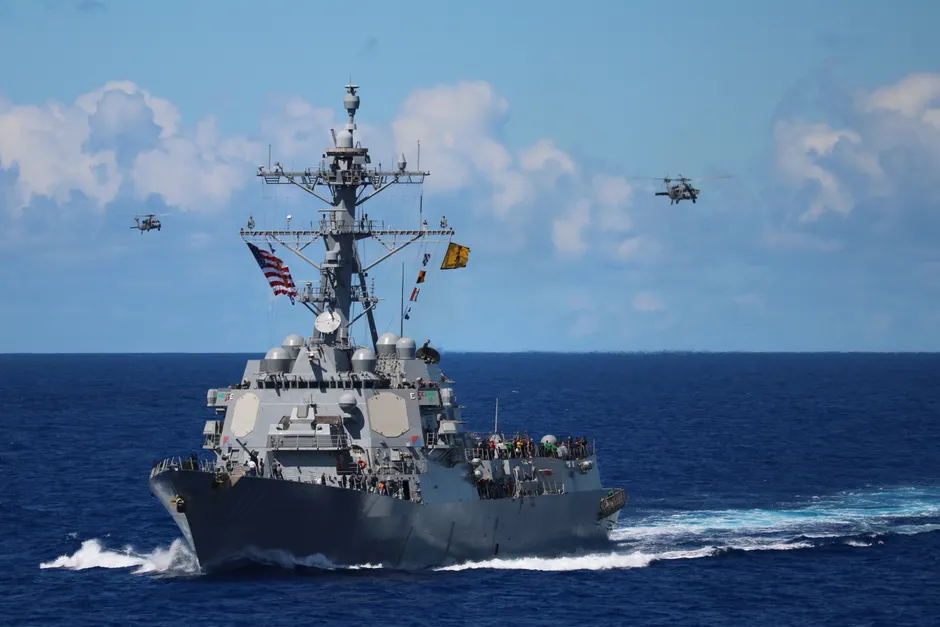
The United States attacked Iran for the eighth night in a row on July 19, 2026. The US military said the goal is to stop Iran from blocking the Strait of Hormuz, a narrow strip of water between Iran and Oman. About one-fifth of all the oil the world uses every day passes through this strait. Iran fired back the same night, continuing a back-and-forth fight that started in mid-July (Al Jazeera).
The latest US strikes hit Iran's Revolutionary Guard, a powerful part of Iran's military. The US said this was payback for an attack that killed American troops. Another strike hit Hormozgan, a province in southern Iran right next to the Strait of Hormuz, on July 18. Iranian news confirmed the strike (AP News; Reuters). US officials said they would "swiftly punish" Iran's capital, Tehran, meaning the attacks would continue (CNN).
The US has hit a lot of targets. In just the week of July 6–11, the military reported striking about 140 Iranian military sites. Before that, roughly 90 targets were hit on July 7–8, and over 80 on July 7 alone. More strikes came on July 12 and again on July 13 (CENTCOM; CENTCOM; CENTCOM; CENTCOM). By July 11, the US said it had struck hundreds of Iranian targets in total (Reuters). The US military also released video on July 12 that it said showed Iran attacking commercial ships in the Strait (CENTCOM).
Iran announced it was closing the Strait of Hormuz around July 11, 2026. Think of it like putting a roadblock on a highway that oil trucks depend on. By July 16, Iran had set up its blockade again, and the US had blocked Iran's own ports. Iran warned that the Strait is a "red line" — meaning Iran would fight over it. Iran also threatened to block other important shipping routes (Reuters; Reuters; CNBC Africa).
The fighting has hurt other countries too. Kuwait, a neighboring nation, suffered damage to its infrastructure on July 18 (Britannica). The US and Iran have now fought each other for three weekends in a row, starting around July 11 (NPR via VPM).
This crisis has been building for a while. In June 2025, President Trump ordered strikes on Iran's nuclear facilities (White House). By March 2026, the White House called Iran's blockade of the Strait an "oil shock" (White House). In April 2026, the White House announced a plan called "Operation Epic Fury" and said Iran had agreed to a ceasefire — a pause in fighting — and would reopen the Strait. At that point, the US was trying to negotiate a broader peace deal with Iran (White House).
That ceasefire did not last. Trump had posted on Truth Social demanding that Iran "FULLY OPEN, WITHOUT THREAT, the Strait of Hormuz" within 48 hours or face strikes. He later declared "The Hormuz Strait is OPEN, and will remain OPEN, with or without Iran" and talked about "THE IRANIAN BLOCKADE." He then announced "The Deal with the Islamic Republic of Iran is now complete" and authorized "the toll free opening of the Strait of Hormuz." But after each statement, the fighting started up again.
There has been some diplomacy around the conflict. In May 2026, the US and China's leaders agreed together that Iran should not get a nuclear weapon and that the Strait of Hormuz should be reopened (White House). In February 2026, Trump signed orders keeping emergency measures on Iran and setting up taxes on countries connected to Iranian threats.
The broader context here is that the April ceasefire was fragile from the start. There was no system to check whether either side was keeping its promises, and no outside group was watching. When Iran blocked the Strait again on July 11, it effectively canceled the commitments made three months earlier. With both sides blocking each other's ports, attacks spreading to nearby countries, and Kuwait taking damage, the conflict is growing wider rather than winding down. China has agreed with the US in words that the Strait should stay open, but has not taken any known action to help. The eighth night of strikes suggests neither side is ready to stop, and the Strait of Hormuz — that critical ocean highway — remains at the center of it all.