Lebanon's Army Starts Taking Over Southern Villages — but Will the Plan Hold?
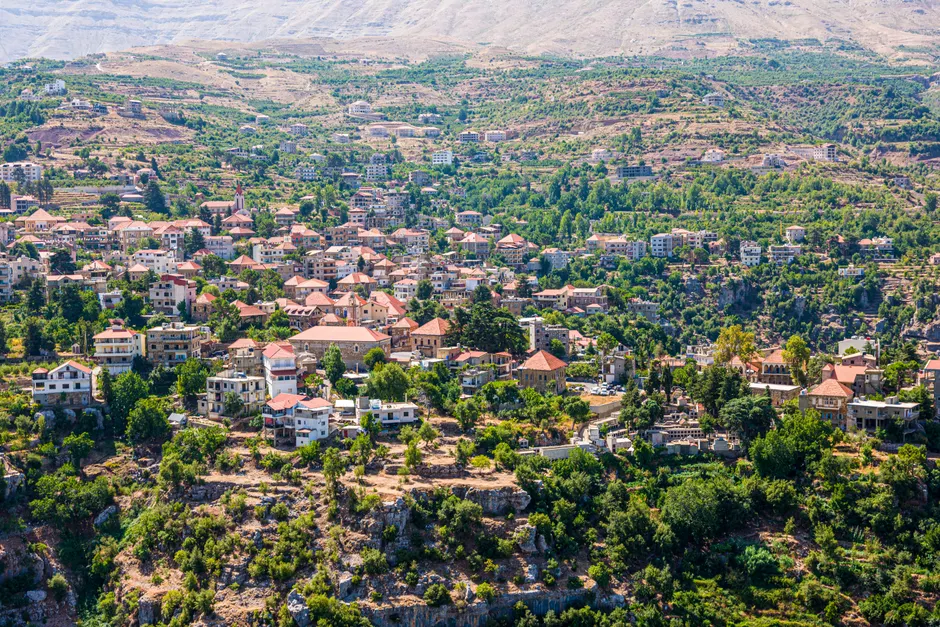
The Lebanese army has started deploying in three villages in southern Lebanon — Froun, Srifa, and Zawtar al-Gharbiya — as part of a deal worked out with the help of the United States. The deal calls for Israeli forces to gradually leave Lebanese territory they have been occupying, and for the Lebanese army to take over security there, including collecting weapons from the armed group Hezbollah. The US State Department announced on July 20, 2026, that these operations had started "in accordance with the Trilateral Framework" and named the three villages as the first test sites. Al Jazeera
The agreement was reached on June 26, 2026, by Lebanon, Israel, and the United States after six rounds of in-person negotiations. The Israeli government confirmed the deal on June 27, noting that the two pilot areas near the Yellow Line — a boundary separating Israel and Lebanon — had been suggested by the Israeli military. US Secretary of State Marco Rubio had used the term "pilot zone" to describe the handover arrangement in a Reuters report on June 24. The State Department said the launch followed discussions between Israel and Lebanon held in Rome the week before the July 20 announcement.
The idea is simple on paper. Israeli forces pull out of areas they occupy in southern Lebanon. Then the Lebanese army moves in, takes charge of security, and oversees the removal of Hezbollah's weapons from those areas. Axios reported on July 20 that the Israeli military was expected to withdraw from the pilot zones on Tuesday, July 22.
In practice, things have moved more slowly. A security source told Al Jazeera that the Lebanese army had not yet gone to Zawtar al-Gharbiya because Israeli forces had not pulled out of the town's outskirts. The mayor of Froun said nothing new had happened there. The mayor of Srifa said he had not been told about the pilot zones, nothing had changed, and the Lebanese army had already been present in his town throughout the war. Al Jazeera
The Lebanese army's own English-language website, as of July 13, had no statement about the pilot zone deployment. General Rodolph Haykal, the head of the Lebanese army, had met with the ambassadors of the Netherlands, Belgium, and Canada at his office around that date, but no military statement about the pilot zones came out before the US announcement. That gap between Washington's official rollout and the Lebanese military's silence is worth noting, though it could simply mean the army is being cautious rather than that it disagrees.
The agreement does not set a deadline for Israel to leave the areas it occupies, which cover roughly one-fifth of Lebanese territory. Israeli officials have said they will stay 10 km (6 miles) inside Lebanon in what they call a "security zone" for as long as Hezbollah has weapons. Hezbollah has rejected the deal entirely, saying Israel must leave Lebanon without any conditions. That refusal creates a problem built into the plan: the deal needs Hezbollah to give up its weapons in areas where Hezbollah itself has not agreed to take part.
The most recent fighting started in March 2026, when Hezbollah fired rockets at Israel after Iran's Supreme Leader Ali Khamenei was killed during the US-Israel war on Iran. As of July 20, Lebanon's Ministry of Public Health reported 4,328 Lebanese people killed and over one million forced from their homes since March. At least 32 Israeli soldiers and four Israeli civilians have been killed in the same period, most of them in southern Lebanon.
The broader context here is that the pilot zones are trying to solve a circular problem. Israel says it will leave only if Hezbollah gives up its weapons. Hezbollah says it will only discuss giving up weapons if Israel leaves first. The framework puts the Lebanese army in the middle, asking it to take territory from Israel and take weapons from Hezbollah at the same time, with no fixed deadline for either task. Think of it like a small test before a bigger exam: the three villages are small, but they are meant to show whether the approach can work. If the Lebanese army can deploy, Israel withdraws, and Hezbollah's weapons are removed in even one village, the model could expand. If any of those steps fails, the plan could end up like many past agreements for southern Lebanon that fell apart once they met reality on the ground.


