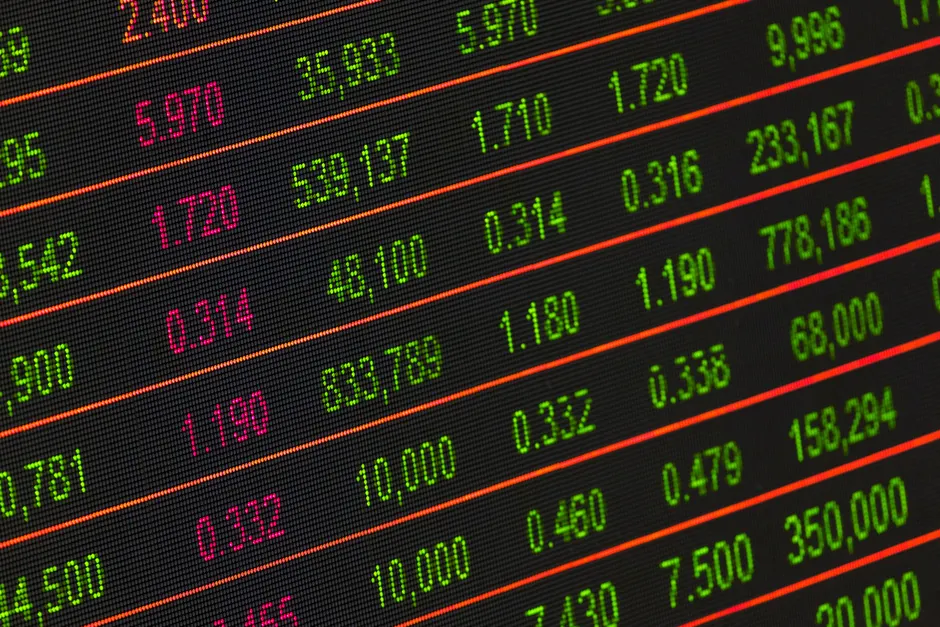
A Market Expert Who Said Stocks Weren't in a Bubble Just Changed His Mind

Owen Lamont, a senior strategist at Acadian Asset Management, has changed his mind about whether the stock market is in a bubble. After more than two years of saying no, he now says yes, and he points to semiconductor (computer chip) stocks as the reason, according to a June 2026 report by Yahoo Finance (Yahoo Finance). On July 23, 2026, CNBC mentioned Lamont and his "four horsemen" warning system in a story about U.S. IPO activity and the broader market (CNBC).
An IPO, or initial public offering, is when a company sells shares to the public for the first time. A bubble is when prices rise far above what something is actually worth, usually driven by excitement rather than real value.
Lamont built his argument across a series of blog posts called "Owenomics." In March 2024, he wrote "No, we are not in a bubble yet," introducing his "four horsemen" warning system. By July 2024, a post titled "Getting bubbly" mentioned the "First Horseman," meaning he was starting to worry. A November 2024 post described the Four Horsemen as the main signs of a bubble. In November 2025, he focused on whether companies were issuing new shares or buying back their own stock as a clue.
His most recent post, titled "We are Not in an AI Bubble" and published January 9, 2026, on Acadian's website, laid out the full framework (Acadian Asset Management). By June 2026, Yahoo Finance reported that Lamont had flipped to an explicit alarm, with chip stocks as the trigger.
Lamont's system is like a checklist with four warning signs rather than a single number. One sign is what companies do with their own stock. When a company sells new shares, it raises money. When it buys back its own shares, it reduces the number available. Lamont calls companies "the smart money" because their leaders know more about the business than anyone else. If executives are selling shares aggressively, that can signal they think the price is too high. Another sign is psychology: the belief that prices are too high but will keep climbing anyway.
What stands out is how Lamont's view changed over 27 months. He started with a firm "no bubble" in March 2024. Through five posts, he moved from reassurance to close monitoring to, by mid-2026, an active warning tied to the chip industry. The CNBC mention on July 23, 2026 ties his system to real IPO activity, which means the part of his checklist about companies selling shares is now being tested in real time.
In my view, the most important detail is what Lamont is basing his alarm on. Most people who warn about bubbles look at prices: how fast they are rising or how expensive stocks are compared to company earnings. Lamont's system is different. He watches what companies actually do with their own shares. If his alarm is based on corporate insiders selling stock or companies issuing shares at inflated prices, that is a stronger signal than just saying prices look high. It means the people who know the most about these companies may be acting as if the party is ending.
Neither the Yahoo Finance report nor the CNBC segment specified which of Lamont's four warning signs he currently sees as triggered versus merely approaching. For anyone following his argument, the original Owenomics posts remain the primary source, each adding one piece to the picture.
The biggest tension is between Lamont's January 2026 statement that AI is "not" a bubble and his June 2026 alarm. Only five months separate them. Whether new data about chip companies changed his mind, or whether stock prices crossed a line in his system, or both, the available reporting does not say. What is clear is the direction: from reassurance to warning, focused on the sector that has driven the U.S. stock market for most of the past two years.
Lamont's approach is unusual because most bubble warnings rely on price data. His focuses on company behavior. As of July 23, 2026, CNBC is citing his framework alongside live IPO activity. Whether that activity confirms or challenges his bubble warning depends on details like how many companies are going public, at what prices, and how those stocks perform afterward. The framework provides the lens. The data will deliver the verdict.