Gold Prices Are Bouncing Around $4,000 — Here's Why the Federal Reserve Is Calling the Shots
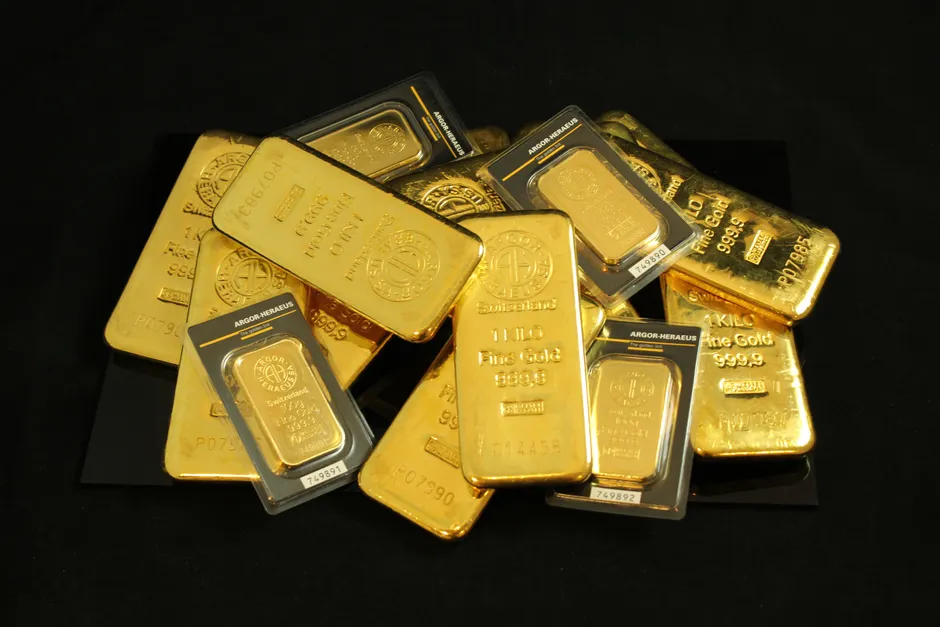
Gold fell 1.2% to $4,026.49 per ounce on July 28, 2026, its lowest level since July 21. The drop was driven by a stronger US dollar and changing expectations ahead of the Federal Reserve's next policy meeting. The decline extended a weeks-long slide from gold's summer highs as traders bet increasingly on further interest-rate hikes.
Interest rates matter for gold because gold doesn't pay interest or dividends. When rates rise, money sitting in a bank account or a government bond earns more, making gold less attractive by comparison. That's the core tension right now.
TradingEconomics recorded gold at $4,015.15 per ounce that day, down 1.53% from the previous session. COMEX August 2026 gold futures, tracked via CNBC, opened at $4,083.00, hit a high of $4,085.70 and a low of $4,011.10, with a previous close of $4,077.00 — a roughly $74 swing in a single day that shows how volatile trading has become around the $4,000 mark.
The very next day, the story flipped. COMEX gold settled 1.60% higher at $4,061.10 on July 29, 2026, bouncing back as bond yields eased. When bond yields fall, gold becomes relatively more attractive because the income you give up by not holding bonds shrinks. The back-to-back swing — down 1.2% one day, up 1.6% the next — reflects a market caught between expectations of higher rates and hope that the Fed might change course.
This pressure has been building since June. Reuters reported on June 30 that gold prices had fallen 11.2% that month as traders priced in more Fed rate hikes — a drop that wiped out most of gold's gains for the year. The driver was a shift in expectations: inflation data and signals from the Fed pointed toward more rate increases rather than the pause many had anticipated by mid-year.
There was a brief recovery in July. On July 14, Reuters reported gold up 1.6% at $4,063.78 per ounce after inflation came in lower than expected, suggesting the Fed might not need to raise rates as aggressively. But that rally didn't last. By July 28, prices had fallen back below their July 14 level, with the dollar strengthening and bond yields climbing again.
Major Banks Lower Their Gold Forecasts
The pressure has pushed major banks to cut their gold price predictions. HSBC lowered its 2026 average gold price forecast to $4,560 per ounce from $4,864, and its 2027 forecast to $4,925 from $5,000, as reported by Reuters on July 9. ING went further on near-term cuts: Reuters reported on June 24 that the bank reduced its Q3 2026 forecast to an average of $4,300 per ounce and its Q4 2026 forecast to $4,600.
Both banks are responding to the same chain of events: the Fed leaning toward higher rates, the dollar strengthening as a result, and bond yields rising. All three work against gold, which earns no income. HSBC's revised 2026 average of $4,560 still implies a meaningful recovery from current prices near $4,060, but the gap between what banks forecast and what the market is actually pricing has narrowed considerably since earlier in the year.
The gap between the two banks' forecasts is worth noting. ING's Q3 average of $4,300 is only about $240 above the July 28 spot price — a modest cushion by historical standards. HSBC's full-year 2026 average of $4,560 implies a much more optimistic second half of the year. Which bank turns out to be closer depends almost entirely on what the Fed decides next and what inflation data shows before then.
What to Watch
The Fed meeting referenced in Reuters' July 28 report is the key event. Gold prices have been bouncing within a narrow $50–75 range around $4,000–$4,085 for several sessions, and CNBC's futures data shows those intraday swings tightening. If the Fed signals more rate hikes than expected, gold could break below $4,000. If the Fed hints at a softer approach, prices could recover toward the $4,100–$4,150 range seen earlier in July.
The broader context here is a tug-of-war between two forces. On one side is the long-term case for owning gold — things like central-bank purchases and global uncertainty tend to support prices over time. On the other side is the immediate pressure of rising rates and a stronger dollar, which weigh on gold in the short term. The forecast cuts from HSBC and ING tell us that the short-term pressure is being taken seriously by professional analysts.
What the price action makes clear is that gold is moving almost entirely in response to interest-rate expectations and the dollar right now — not because of safe-haven buying or demand for physical gold. The swing between July 28 and 29, a combined move of roughly 2.8 percentage points across two days, tracks bond-yield movements closely. That means a friendlier Fed could lift gold sharply, but it also means gold isn't providing much of a buffer at a moment when both the dollar and interest rates are rising together.


