OpenAI Is Giving Its Smartest AI to 100,000 Scientists for Free
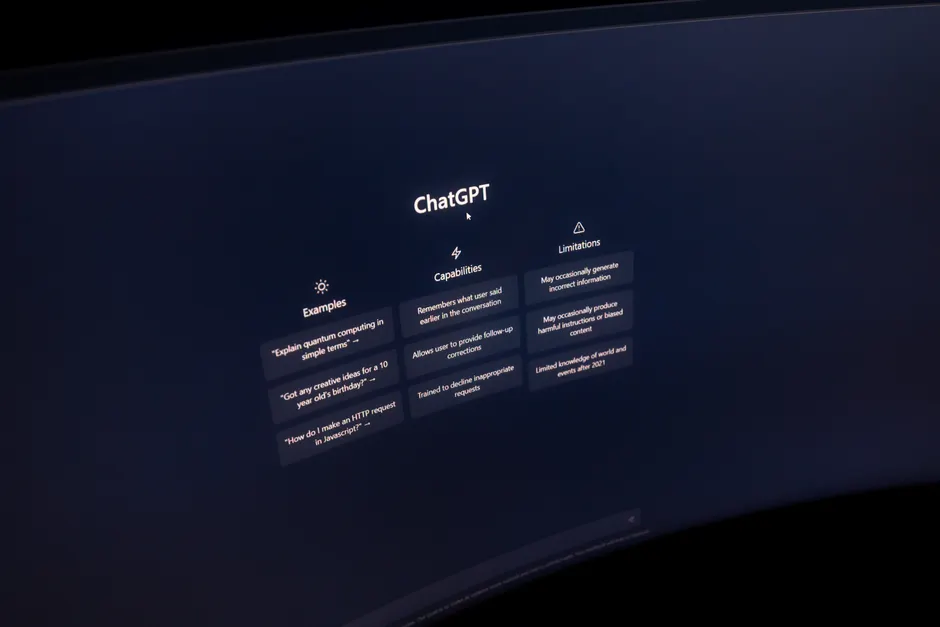
OpenAI announced on July 29, 2026 that it will give free access to its most advanced AI to up to 100,000 scientists, mathematicians, and engineers from select universities and research institutions (Engadget).
The program, called "ChatGPT for Academic Researchers," will start with 10,000 participants this summer and grow to the full 100,000 through 2027. Each participant can invite four colleagues from their institution, which means the real number of people who get access could be much higher. Eligibility is limited to research faculty members and postdoctoral researchers affiliated with an eligible academic institution, according to OpenAI's help documentation (Article 20001406) (OpenAI Help).
Participants will get access to OpenAI's GPT-5.6 Sol Pro model, the company's most powerful AI system at the time of the announcement. OpenAI markets it on its product page with the headline "Frontier intelligence that scales with your ambition" (OpenAI). The model was introduced earlier in July 2026, succeeding GPT-5.5, which launched in April (OpenAI).
The free access program is part of a larger commitment of more than $250 million through 2027 to support external scientific research and discovery. One important detail: by default, researchers' data in the program will not be used to train OpenAI's models. This matters because standard consumer ChatGPT may use your data for training, and researchers often work with sensitive or unpublished data that they cannot risk sharing. Participants will also receive hands-on support from OpenAI (Engadget).
OpenAI President Greg Brockman posted on X that "ChatGPT for Academic Researchers is built to accelerate discovery across disciplines" (Greg Brockman, X). The program's research index page frames it under the headline "Accelerating scientific discovery with ChatGPT for Academic Researchers" (OpenAI Research). Reuters also reported on the announcement on July 29 (Reuters via TradingView).
This is not OpenAI's first program for researchers. In 2023, the company offered discounted access to GPT-4 through a Researcher Access Program, but that was narrower. It focused on researchers studying AI's societal impact or safety problems, rather than the full range of scientific disciplines the new program covers (OpenAI). The scale is also very different. The GPT-4 program offered discounted access to an older, less capable model. The new initiative provides free access to OpenAI's most advanced model to as many as half a million people once collaborator invitations are factored in.
The program also arrives alongside Prism, OpenAI's free workspace for researchers that launched in January 2026. Prism is an AI-powered editor designed for academic documents, allowing researchers to interact with an earlier model called GPT-5.2 Thinking. It helps clarify ideas, check reasoning, and refine structure by updating equations, tables, sections, and references as work evolves (OpenAI, OpenAI Prism). The ChatGPT for Academic Researchers announcement focuses on model access rather than tooling, and does not specify whether Prism is included. But the combination of free access to the most advanced model and an existing research-oriented workspace points to a deliberate strategy around academic users.
The data-handling default deserves attention. For researchers whose work involves unpublished data, proprietary datasets, or information about human subjects, the assurance that their data will not be used for model training removes a major barrier to adoption. The open question is whether that default holds as the program grows from 10,000 to 100,000 participants, and whether university ethics committees treat the assurance as sufficient.
In my view, the $250 million commitment and the decision to offer the company's most advanced model rather than an older or less capable one signal that OpenAI views academic researchers as a strategically important group, not a charitable afterthought. The four-collaborator invitation mechanic is a subtle but effective way to grow the program: it builds the tool into research groups rather than treating individual researchers as isolated users. Whether the program truly accelerates scientific discovery, as Brockman suggests, will depend on whether researchers can fit AI tools into workflows that have historically been slow to adopt external tools — peer review, experimental design, and verified computation. The hands-on support component is a practical acknowledgment that simply giving someone access to a chatbot, without guidance on how to integrate it into real research, rarely produces transformative results.


