Your Old Xbox 360 Games Are Heading to PC

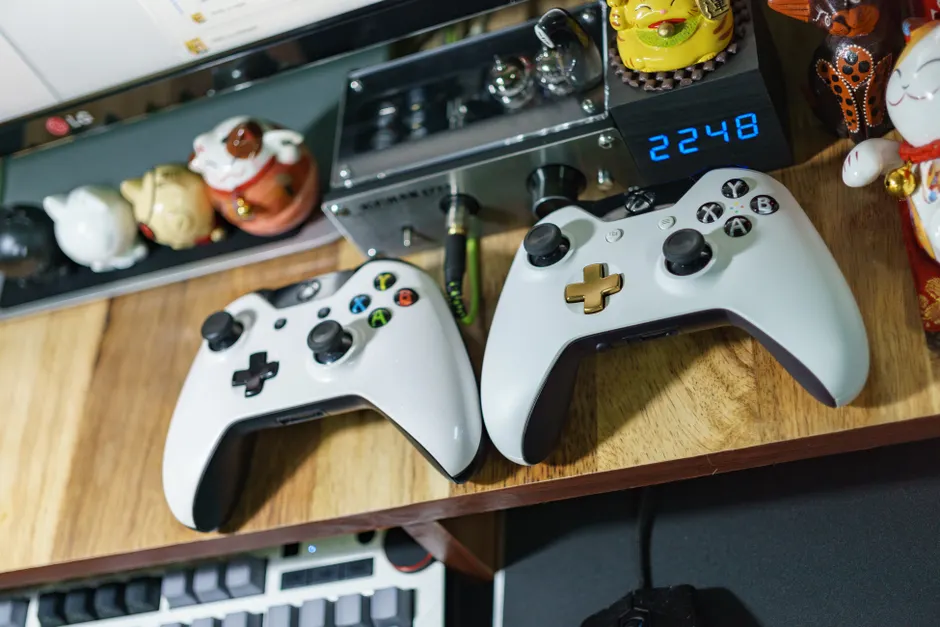
Microsoft is planning to let developers bring Xbox 360 games to PC, according to a leaked developer document seen by The Verge. The document says Xbox 360 games will run on the next-gen Project Helix console, "Xbox PCs," and handheld devices, with a gradual rollout between 2027 and 2028. The Verge
This follows a smaller step Microsoft took in July, when the company brought four original Xbox titles to PC: Conker: Live & Reloaded, Crimson Skies, Fuzion Frenzy, and Blink: The Time Sweeper. Pure Xbox The full launch of original Xbox games on PC is set for October 2026. A leaked Xbox publisher roadmap reportedly confirms that timeline alongside the disc-to-digital program launching in August and Xbox 360 support starting in 2027. Notebookcheck
Under the Xbox 360 program, developers can choose to make their games backward compatible, which means older games are adapted to run on newer hardware or different platforms. Developers will control pricing and whether their games appear on Game Pass, Microsoft's subscription service. Microsoft is reportedly working on PC versions of Fable 2 and Fable 3 as part of the effort.
The technical groundwork is already in place. After the four original Xbox games arrived on PC in July, a reverse engineer discovered that Microsoft is powering them with Xenon Fusion, an emulator — software that lets one device run games designed for a different device. The Verge That finding meant the original Xbox program and the Xbox 360 program share the same technical pipeline rather than being separate efforts, and that Microsoft was testing the system before committing to the broader catalog.
A separate but related initiative is the disc-to-digital license program. According to the leaked document, inserting an Xbox One or Series game disc into an Xbox One or Series X console with a disc drive grants a digital license bound to "that disc and the player's account." The license stays with the player across Xbox devices. If the disc changes hands, the license transfers to the new owner. A public beta was set for July, with general availability targeted for August. Microsoft had originally planned to test the program with Xbox Insiders in July, but the beta was delayed. The Verge
In practice, the disc works like a key: you insert it to prove you own the game, and Microsoft gives you a digital copy tied to your account. You can then play that game on any Xbox device linked to your account, without needing the disc. If you sell or give away the disc, the digital copy transfers to the new owner.
The broader strategy ties into leadership objectives. In a memo obtained by The Verge, Xbox CEO Asha Sharma told staff that by the end of June 2027, Microsoft will return Xbox to player and revenue growth. The Verge The 2027 timeline for Xbox 360 backward compatibility on PC aligns with that target window.
This is not Microsoft's first backward-compatibility effort. In June 2015, the company announced Xbox 360 backward compatibility on Xbox One, with more than 100 classic titles available at launch. Microsoft stated at the time that Xbox One would be the only console to support backward compatibility natively for select Xbox 360 games, for free, and with Xbox One features. Microsoft Blog
The current program differs in a key respect: it extends backward compatibility beyond a single console family to PC and handheld devices. Microsoft has been building toward this convergence. Starting in April, the company began bringing its full-screen Xbox mode to every category of Windows 11 PC, including laptops, desktops, and tablets. The Verge The leaked developer document's reference to "Xbox PCs" suggests that branded or certified hardware may sit alongside standard Windows machines in the backward-compatibility target list.
The disc-to-digital program addresses a longstanding tension between physical media ownership and digital ecosystem lock-in. The license model Microsoft describes is effectively a verification scheme: the disc functions as a physical token that authorizes a digital entitlement, and that entitlement is portable across devices tied to the account. The transfer-on-resale mechanic preserves the secondary market for physical discs while still funneling players into Microsoft's digital storefront and ecosystem.
Historical context is relevant here. Confidential court documents from the Epic v. Apple proceedings revealed that Microsoft had been planning to cut its Xbox store fees to 12 percent. The Verge A lower take rate, combined with a broader catalog accessible across more device categories, would increase the addressable surface for digital purchases and Game Pass subscriptions.
The roadmap, if it holds, gives Microsoft a phased sequence: disc-to-digital in August, original Xbox games on PC in October, and Xbox 360 games rolling out across 2027 and 2028. Each phase expands the playable catalog and the number of device categories where that catalog is accessible. The Xenon Fusion emulator discovery suggests the technical layer is already operational; the remaining variables are publisher opt-in, licensing negotiations, and the pace of the gradual rollout Microsoft has described.
The broader context here is the dependence on developer opt-in for Xbox 360 titles. Unlike the 2015 Xbox One program, where Microsoft curated the initial backward-compatible catalog, this effort gives publishers control over pricing, Game Pass inclusion, and availability. That model could produce a slower catalog buildout if rights holders are cautious, or a faster one if the economics of a broader PC audience prove compelling. The reported work on Fable 2 and Fable 3 suggests at least some first-party momentum is already in motion.