An $8 Gadget That Lets Old Electronics Charge From USB-C
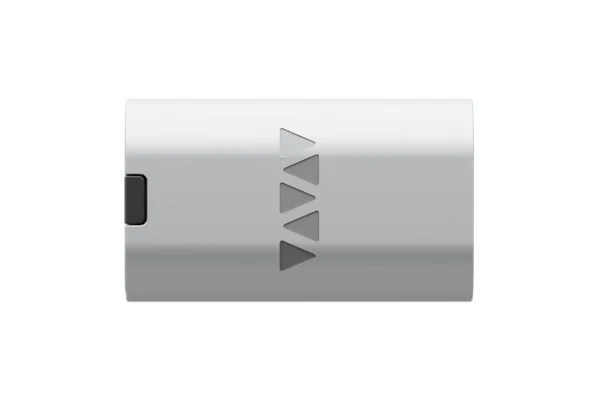
A company called Werewolf has made a small adapter called the VFLEX that lets older devices charge from USB-C chargers, even if they were built for a different kind of plug. No changes to the device are needed. The Verge published a hands-on preview on August 7, 2026 (The Verge).
Many older electronics, from monitors to retro game consoles, use a round power plug called a barrel jack. These cannot plug directly into a USB-C charger. The VFLEX fills that gap. The adapter costs $8, and you can buy interchangeable tips that fit different barrel-jack sizes for $4 each.
Here is how it works. USB-C chargers can deliver several different voltage levels, but they need a way to know which one the device wants. The VFLEX acts like a translator: it tells the charger which voltage to send, then passes that power along to the device through the barrel-jack tip. The adapter does not change the voltage itself. The charger has to be capable of providing what is asked for.
To set the voltage, you plug the USB-C end of the VFLEX into a phone and pick the level you want in an app. The setting stays saved even after you unplug it, so the next time you use it, it remembers. You can change the setting whenever you need to use it with a different device (The Verge).
The VFLEX supports voltages from 3.3V to 48V (werewolf.us). Standard USB-C charger voltage levels include 5V, 9V, 15V, 20V, 28V, 36V, and 48V (The Verge). Werewolf says it can go up to 48V when used with a 240W USB-C charger that can deliver that level (The Verge).
There is a catch. USB-C chargers do not offer every voltage that every device might need. For example, Apple's 140W USB-C charger can deliver 5V, 9V, 15V, 20V, and 28V, but some monitors need 19V, which that charger does not provide (The Verge). The VFLEX can only request what the charger already offers. It cannot create a voltage that is not there. If a device needs a voltage the charger does not have, you would need a different charger or accept the closest match at your own risk.
Verge writer Sean Hollister tested the VFLEX on three devices using a single portable battery: an Asus monitor drawing 24W, a Super Famicom drawing 2W, and an RCA-to-HDMI adapter drawing under 1W (The Verge). That range, from under a watt to 24 watts, shows how many different kinds of devices share the same barrel-jack power input.
The VFLEX is made by Werewolf, a company based at werewolf.us (The Verge; werewolf.us).
The broader context is that USB-C has become a flexible power standard, but most devices that use barrel jacks have not caught up. Barrel-jack inputs are still everywhere, in monitors, routers, external drives, retro hardware, and industrial equipment. The VFLEX turns any USB-C charger into a power supply for these devices, which is simpler than keeping a drawer full of different wall adapters for each one.
The $8 price matters. Other USB-C adapters exist, but most are locked to a single voltage or need a separate tool to program. A dongle you can set from your phone, that remembers its setting, and costs less than a good cable, is cheap enough to keep several around. For anyone who has switched to USB-C charging but still has older hardware, the VFLEX removes the last barrier without any soldering or modification.
The main limitation is that the VFLEX depends entirely on what the charger can do. A device needing 19V paired with a charger that offers 20V is not a perfect match, and many barrel-jack devices need their voltage to be quite precise. The adapter passes the voltage through without adjusting it. Users should check that the voltage their charger provides falls within what their device can handle.