What's Going On at the Army's Training College for 16-Year-Olds?
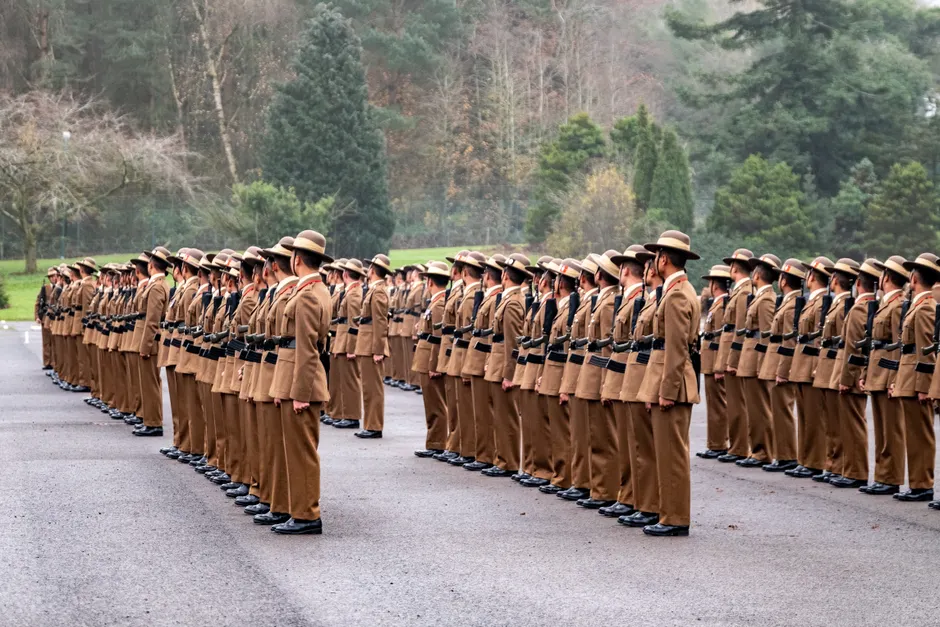
North Yorkshire Police received 16 reports of sexual offences linked to the Army Foundation College in the year to June 2025, the force told the BBC. The reports included allegations of exposure, voyeurism and sexual assault (BBC News).
The college is in Harrogate, North Yorkshire. It is the largest military training site for under-19s in the UK and takes in all of the Army's 16-year-old recruits. Between January 2018 and June 2025, 176 complaints of inappropriate sexual behaviour were made at the site, according to Ministry of Defence data obtained by the BBC (BBC News).
A woman identified as Tilly told the BBC she was 17 when she was raped at the college by several fellow soldiers who had invited her into their room. Her account is among the testimonies that have prompted renewed scrutiny of how the college protects the young people in its care (BBC News).
Defence Secretary John Streeting said he sympathised with women who had been "badly failed" and praised them for speaking up. He said there is a duty to uphold "the very highest standards in uniform" and to treat every woman with "the dignity and respect she deserves" (BBC News).
Sarah Atherton, a former MP and a former Army Intelligence Corps officer, told the BBC that public confidence in the college could only be restored through an independent inquiry, one run by people outside the military rather than by the Army itself. Atherton led a 2021 government review into the experiences of women in the armed forces (BBC News).
Emma Lewell MP said that if the college were any other school or residential home for children, it would have been closed down (BBC News).
The figures span more than seven years of recorded complaints. That scale points to an institutional problem, not a one-off. The 176 complaints were recorded during a period when the armed forces have faced repeated pressure over their handling of sexual misconduct, from Atherton's 2021 review through to broader cultural criticisms aimed at all three services.
What sets the Harrogate case apart from other military misconduct stories is the age of the recruits. The college takes 16-year-olds straight from civilian life into a residential military environment. Lewell's comparison to mainstream schools and children's homes frames the question in terms that go beyond defence: whether the standards applied to military training of minors match those expected of civilian institutions.
Streeting's response, while sympathetic, has not yet included a commitment to the independent inquiry Atherton and others are seeking. His phrase "badly failed" is an acknowledgement of institutional failure, but it leaves open the question of what the government will actually do to investigate.
Atherton's call carries particular weight. A former intelligence officer who led the only government-commissioned review into women's experiences across the armed forces, she is well placed to speak on the gap between official policy and what actually happens in service environments. Her insistence on an independent inquiry, rather than an internal military review, signals a lack of confidence in the armed forces' ability to police themselves on this issue.
The broader context here is the recurring tension between the military running its own affairs and civilian oversight. The armed forces have their own justice system, their own complaints processes, and their own disciplinary culture. When those who may have been failed are minors, that independence comes under greater pressure, and civilian authorities such as police forces, safeguarding bodies, or Parliament itself face a lower bar for stepping in. North Yorkshire Police's confirmation of 16 sexual offence reports in a single year shows that the civilian criminal justice system is already involved.
The MoD data covers January 2018 to June 2025. The police figures cover the year to June 2025. The overlap between the two sets of figures is not specified in the information released, and the relationship between internal complaints and criminal reports, how many complaints went to police and how many did not, is among the details an independent inquiry would be expected to examine.
The Defence Sixth Form College at Welbeck Abbey, formerly an Army sixth form college, is a separate institution from the Army Foundation College at Harrogate (gov.uk).
For those in defence policy, the political question is whether Streeting's acknowledgement of failure will lead to a formal inquiry. For those in child protection, the question is whether the standards applied to civilian institutions for under-18s are being applied with equal rigour in military settings. The two groups may end up making the same demand.


