Amazon Wants to Power Its AI Computers With a Huge Gas Plant in Texas. Here's What That Means.
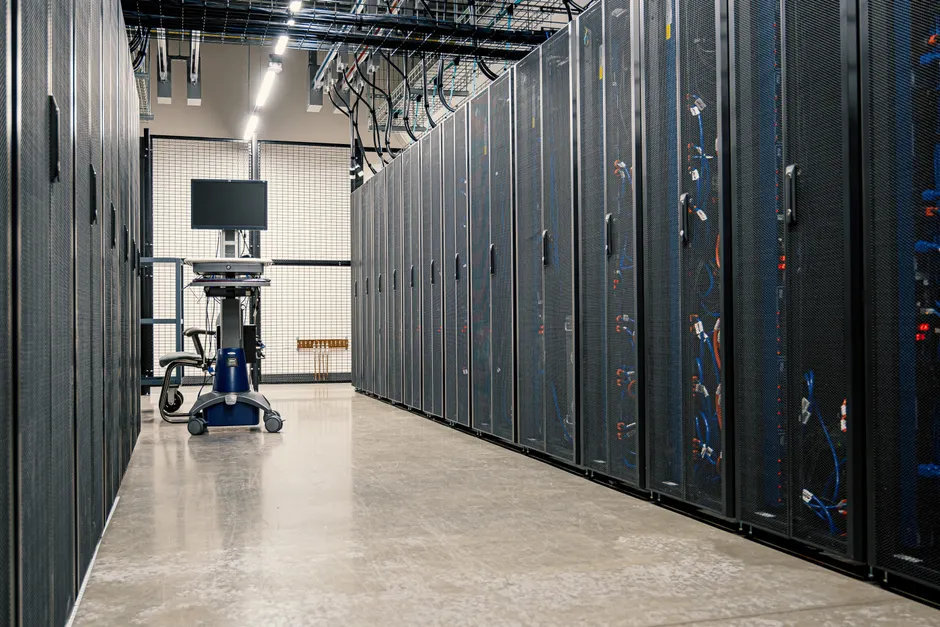
Amazon confirmed on August 7, 2026, that it is investing in a large natural-gas-burning power plant as part of its data center complex in West Texas. The company purchased the GW Ranch site in Pecos County and plans to buy power from the project, according to both the New York Times and The Verge (New York Times; The Verge).
The plant would use 35 natural-gas turbines to produce 7.65 gigawatts of electricity, mainly for the new Amazon data center. To put that in perspective, a single gigawatt can power about 750,000 homes, making this enough to power millions. At least at first, the plant would not be connected to the Texas power grid. Instead, it would send electricity directly to the data center next door.
The project received a Texas permit allowing it to release up to 33 million tons of CO2, the main greenhouse gas driving climate change. That cap is higher than the emissions of the largest coal plant in the United States (The Verge). By that measure, the facility could become one of the largest single sources of greenhouse gases in the country.
Amazon's corporate emissions have risen for several years in a row, largely because of the heavy computing power needed for AI (The Verge). The Pecos County plant, if built to the permitted scale, would push that trend further. In 2019, Jeff Bezos pledged to make Amazon carbon neutral by 2040 through the Climate Pledge, a commitment Amazon co-founded.
Amazon spokeswoman Margaret Callahan told the New York Times that "the world looks different now than when we co-founded the climate pledge," but said that Amazon's commitment has not changed (New York Times; The Verge).
A 7.65-gigawatt gas plant is one of the largest single-site power projects of any kind in the United States. Because it will not connect to the public grid, it sits outside the oversight of ERCOT, the organization that manages electricity in Texas. Running off-grid means Amazon gets a steady, reliable supply of power, which is the biggest challenge for running massive AI systems. But it also means the plant is regulated mostly through Texas air-quality permits rather than the broader planning that grid-connected power plants go through.
The 33-million-ton CO2 cap is a maximum allowance, not a prediction of what the plant will actually emit. How much the turbines run, how efficiently they operate at different loads, and whether Amazon later adds carbon-capture technology or renewable energy offsets will all affect the real total. Still, the high cap signals that the project is designed to run almost all the time, not just during peaks in demand.
For the AI industry as a whole, this project shows a trade-off that has been building for a while. The biggest tech companies spent the last decade buying wind and solar power to run their data centers cleanly. Now they face a problem: the power grid cannot connect new, enormous data centers fast enough. In many parts of the country, the waiting list for grid connection stretches beyond 2030. Gas turbines can be built and started up in a fraction of that time. The trade-off is carbon emissions.
The tension between Amazon's Climate Pledge and this new gas plant is real, but it is not automatically contradictory under Amazon's own accounting. The company's plan to reach carbon neutrality by 2040 has always depended on a mix of cutting emissions directly, buying clean power, and using carbon removal to cancel out what remains. A new gas plant starting up in the late 2020s would need to be offset, shut down, or cleaned up within about a decade to stay consistent with that goal. Whether that is possible at this scale is an open question, and Amazon has not yet explained how it would work in practical terms.
Running the plant off-grid raises separate concerns. A power plant this size, serving only one customer, takes a major electricity user out of the public grid's planning. That can reduce strain on the grid in the short term, but it also gives up the efficiency that comes from sharing power across many users and managing supply across a whole region. If other tech companies copy this approach, the result would be a separate, private power system running alongside the public one, with its own fuel supplies, emissions, and reliability issues.
The New York Times published its reporting on the project on August 8, 2026. Amazon's confirmation came the preceding day.


