A 2,100-Year-Old Roman Ship Found at the Bottom of the Sea — With Its Cargo Still On Board
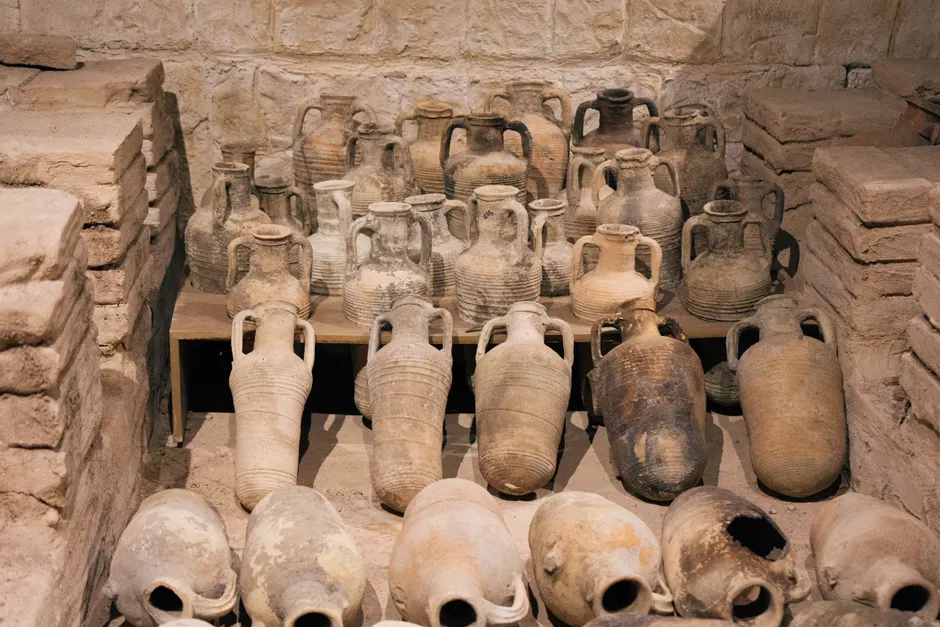
Italian police divers have found an ancient Roman shipwreck about 46 metres (150 feet) underwater off the coast of Sicily, near a town called Mazara del Vallo. Italy's culture ministry says the ship is from the 2nd or 1st century BC, making it roughly 2,100 years old. The wreck is covered with hundreds of amphorae — tall clay pots that Romans used to carry goods like wine and olive oil across the sea. (BBC, Asharq Al-Awsat)
Culture Minister Alessandro Giuli called the find "one of the most important underwater archaeological discoveries of recent years." The wreck measures 21 metres (69 feet) long and 6 metres (20 feet) wide, according to local media reports. (BBC)
The discovery started with a fisherman. Giacomo De Mola, a fisherman who also dives without breathing equipment, spotted what looked like a large rock on his scanner while checking the seabed near Mazara del Vallo. He decided to dive down and take a closer look. What he found was a Roman merchant ship, its cargo still largely intact after two thousand years under sand and seawater. De Mola called it "the most incredible discovery of my life." (BBC)
The location is no accident. Mazara del Vallo sits on Sicily's western coast, along the narrow strip of sea between the island and North Africa. In ancient times, this was one of the busiest shipping lanes in the Mediterranean. Roman merchant ships sailed these waters carrying wine, olive oil, garum (a fermented fish sauce Romans loved), and grain. The large number of amphorae on this wreck suggests it was a big commercial ship, the kind that moved goods across the Roman trade network after Rome had taken over trade routes once run by the Phoenicians and Greeks.
Italy's specialist police diving teams got involved for a reason. The underwater units of Italy's Carabinieri and Guardia di Finanza regularly survey the seabed and follow up on tips from fishermen and divers. They are part of Italy's effort to stop people from looting ancient underwater sites and selling stolen artefacts. The Channel of Sicily has produced multiple Roman and Punic wrecks in recent decades, making it one of the richest underwater archaeological zones in the Mediterranean.
What makes this find stand out is how well-preserved it is. Amphorae cargoes are usually found scattered or broken, their contents long gone, after centuries of fishing trawls dragging the seabed, ocean currents, and marine organisms eating away at the materials. A wreck "piled high" with hundreds of containers still intact gives archaeologists a rare chance to study how the cargo was arranged, how the ship was loaded, and possibly where the goods came from by analysing leftover residue inside the pots. The size of the wreck — 21 by 6 metres — points to a mid-sized Roman cargo ship, large enough to carry plenty of goods but small enough for coastal routes rather than the long open-sea grain crossings between Alexandria and Puteoli.
The broader context here helps explain why Italy's culture ministry rushed to announce the find and call it nationally significant. Italy has spent heavily on protecting its underwater heritage over the past twenty years. Big discoveries like this one serve two purposes at once: they strengthen Italy's position as a leading guardian of Mediterranean history, and they help make the case for stronger rules against bottom trawling and looting in waters that hold ancient sites.
For experts, the 2nd or 1st century BC date is especially interesting because it falls right in the transition from the Roman Republic to the early Roman Empire, when trade across the Roman world was growing rapidly. Once the cargo is analysed, it could help clarify which trade routes this ship worked: western routes linking Sicily to North Africa and southern Spain, or more easterly routes connecting the Tyrrhenian Sea to the Aegean and the Levant.
The next steps will involve careful archaeological documentation — taking detailed measurements and photographs to build a 3D model of the site, taking samples, and likely raising selected artefacts. Because the wreck is so deep, divers will need special gas mixtures or underwater robots to reach it. Full documentation will take well beyond the initial announcement.


