New Patterns Can Hide Your Car and Face from Surveillance Cameras
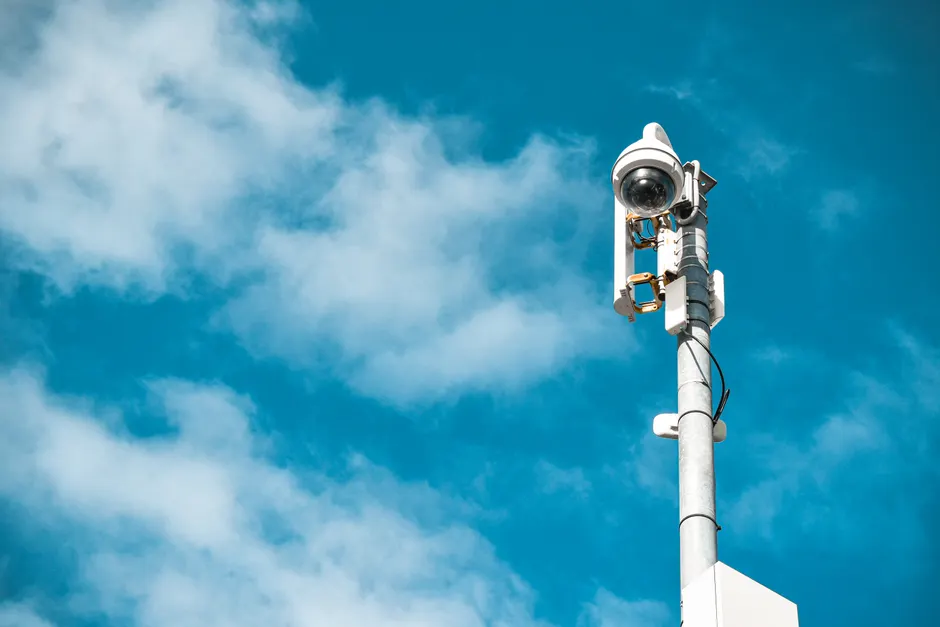
A security researcher named Bill Swearingen has created patterns that can stop surveillance cameras and license plate readers from detecting people, faces, and vehicles. He first showed the patterns printed on a car at the Def Con cybersecurity conference in Las Vegas. The project is called noRecognition and is hosted at norecognition.org. TechCrunch
The patterns do not block the camera from recording video. Instead, they confuse the camera's ability to figure out what it is looking at. The camera still films everything, but the system cannot tell that a person, face, or car is there, so it never triggers an alert. TechCrunch
Swearingen ran about 31 million tests over roughly a year of development. He lives in Kansas City and co-founded SecKC (seckc.org), a local cybersecurity meet-up. TechCrunch
Other researchers are working on similar ideas. At the Black Hat 2026 security conference, held in the same city just days before Def Con, a different hacker showed that printing certain patterns on ordinary clothing can fool facial recognition systems without needing a mask. PCMag A research survey published in March 2026 in the journal Neurocomputing reviewed existing studies on this type of attack against face recognition, showing that academic interest in the topic is growing. Neurocomputing / ScienceDirect
The idea behind these patterns is not entirely new. Artificial intelligence systems that recognize images work by looking for patterns in the pixels of a photo. Sometimes a design that looks like random noise or abstract art to a human can trick the AI into making a mistake, classifying a person as something else entirely. What is new with Swearingen's work and the Black Hat demonstration is that these tricks now work in the physical world. The patterns are printed on fabric or car wraps and still fool the camera after passing through a real lens under real lighting and from different angles. Getting that to work reliably outside a computer simulation has been the hard part.
The broader context here is that surveillance cameras and license plate readers have spread quickly across public streets, parking lots, and private buildings. These systems rely on detection software that is often built from widely known components. Swearingen's patterns turn that situation on its head. Any visible surface, a jacket, a hat, a car wrap, could be designed to defeat a specific camera system. Swearingen says his patterns work against some of the most commonly deployed cameras and readers, which matters because those are the ones already installed in large numbers.
It is worth flagging that this could start an arms race. Camera makers can update their software and train it to recognize these trick patterns, a standard defensive step. Swearingen's 31 million tests suggest he tuned his patterns against specific camera systems, and whether they work against others he did not test is an open question. The noRecognition project is public, which means independent testers can now try the designs against different cameras. The arXiv preprint server, which hosts nearly 2.4 million scholarly articles without peer review, has been a common place to publish this kind of research, though no specific noRecognition paper has been found there at time of writing. arXiv
There is also a practical limit that has nothing to do with technology. A pattern that fools a camera also looks strange to people, which draws attention. Swearingen's car demonstration gets around this. A patterned car wrap is less noticeable than a person wearing an unusual hoodie, and license plate readers are designed to scan vehicles, not pedestrians. For anyone worried about automated tracking, the vehicle application may be the more practical starting point.
What this enables is a tool for people who are watched, rather than just for the people doing the watching. The long-term question is whether these patterns become a lasting countermeasure or push camera makers to build better systems that make the patterns useless. Either way, the field moves forward. For now, the patterns exist, they are public, and they work against cameras already in use.


