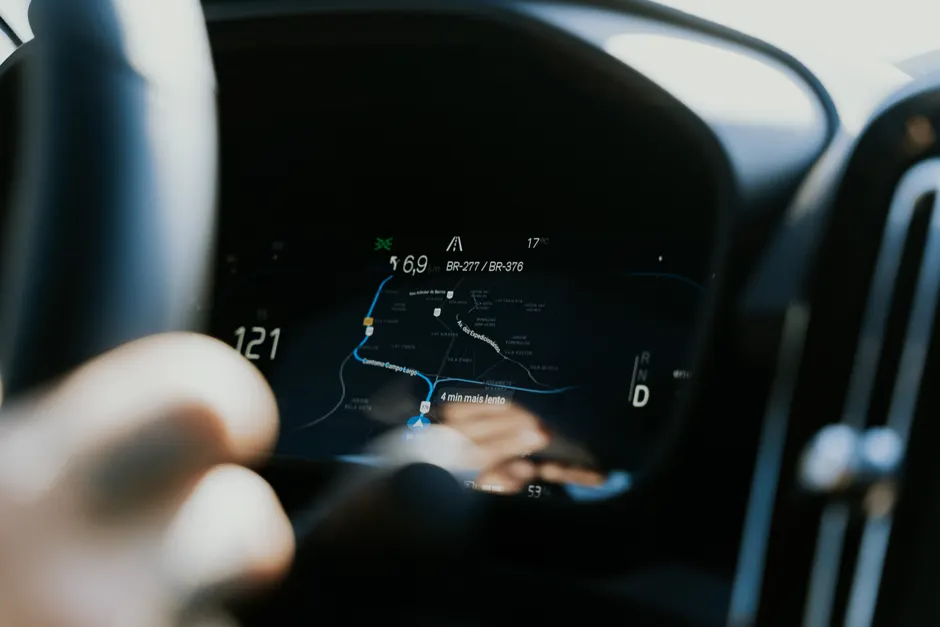
Ford Rolls Out AI Assistant to Ford and Lincoln Mobile Apps, With In-Vehicle Voice Planned for 2027

Ford is rolling out a new AI-powered assistant chatbot to its Ford and Lincoln mobile apps, starting in the first half of 2026, with the goal of reaching 8 million owners of Ford and Lincoln vehicles (The Verge; Ford). The assistant is being deployed in waves and will be free to use rather than placed behind a subscription or paywall (The Verge).
Because the app is linked to the customer's specific vehicle, the assistant has access to details about the make and model, including fuel levels, cargo capacity, and towing capabilities. It can answer questions drawn from the owner's manual and surface live telemetry from the vehicle's systems (The Verge). After a customer adds their vehicle to the Ford app and activates the vehicle's modem, they can also access the Tire Pressure Monitoring System through the Service dashboard (Ford Support).
One of the more technically interesting capabilities is payload assessment via image upload. Owners can upload photos to the assistant to check whether their vehicle is capable of carrying or towing a specific payload. The system presumably combines the vehicle's known specifications, retrieved from its profile, with visual analysis of the cargo in the image. Ford has not detailed the underlying vision model or inference pipeline (The Verge).
Ford first announced plans to introduce an AI chatbot earlier in 2026, alongside promises for a future Level 3 "eyes off" driver assist system. The chatbot rollout is the first concrete deliverable from that announcement. The in-cabin voice assistant is planned for sometime in 2027 (The Verge).
Separately, Ford is integrating Google's Gemini into its vehicles as an "opt-in alternative" to Google Assistant. The Android-based Ford and Lincoln Digital Experiences, which power the infotainment stack, will feature Gemini as an available assistant. The Ford-branded AI assistant rolling out in the mobile app is a distinct product from the Gemini integration, though Ford has not fully clarified how the two will coexist in-vehicle once the 2027 voice assistant arrives (The Verge).
Mike Aragon, Ford's president for integrated services, oversees the initiative. The "integrated services" title itself signals where Ford sees the strategic play: the vehicle as a connected platform where software-mediated services, telemetry, and AI assistance converge, rather than a standalone hardware product (The Verge).
The decision to make the assistant free is notable. Across the automotive industry, connected-vehicle services have increasingly moved toward subscription models, and consumers have pushed back. Ford's choice to forgo a paywall here suggests the assistant is positioned as a customer-retention and brand-loyalty tool rather than a direct revenue line. The 8-million-owner target implies a broad fleet rather than a premium-tier subset, which aligns with that positioning.
Worth flagging is the telemetry integration angle. The assistant's ability to pull live data from the vehicle's systems, combined with natural language query handling, effectively turns the owner's manual and the diagnostic dashboard into a conversational interface. For a tech-literate audience, this is a straightforward application of retrieval-augmented generation over a structured knowledge base (the manual) joined to a live data feed (vehicle telemetry). The image-based payload check adds a multimodal layer on top. None of this is technically novel in isolation, but the integration into a production consumer app at fleet scale is where the execution challenge lies.
The phasing also tells a story. Starting with the mobile app gives Ford a lower-risk deployment surface: latency tolerance is higher, connectivity is assumed, and the smartphone's own compute and camera handle the multimodal input. Moving to an in-vehicle voice assistant in 2027 raises the bar on inference latency, offline resilience, and integration with the vehicle's microphone array and audio pipeline. It is a sensible sequencing, even if the 2027 timeline leaves a gap between the mobile experience and the in-cabin one.
Ford's broader AI roadmap, including the promised Level 3 driver assist, suggests the company is building toward a unified software and AI layer across the ownership experience. Whether that materializes as a coherent platform or a collection of disconnected features will depend on execution details that are not yet public. For now, the mobile app assistant is the first tangible artifact of that strategy, and it reaches a large fleet at no cost to the owner.