Strike at a Wedding, Talks in Miami: Gaza's Ceasefire Hangs in the Balance

A Strike That Landed in the Middle of Diplomacy
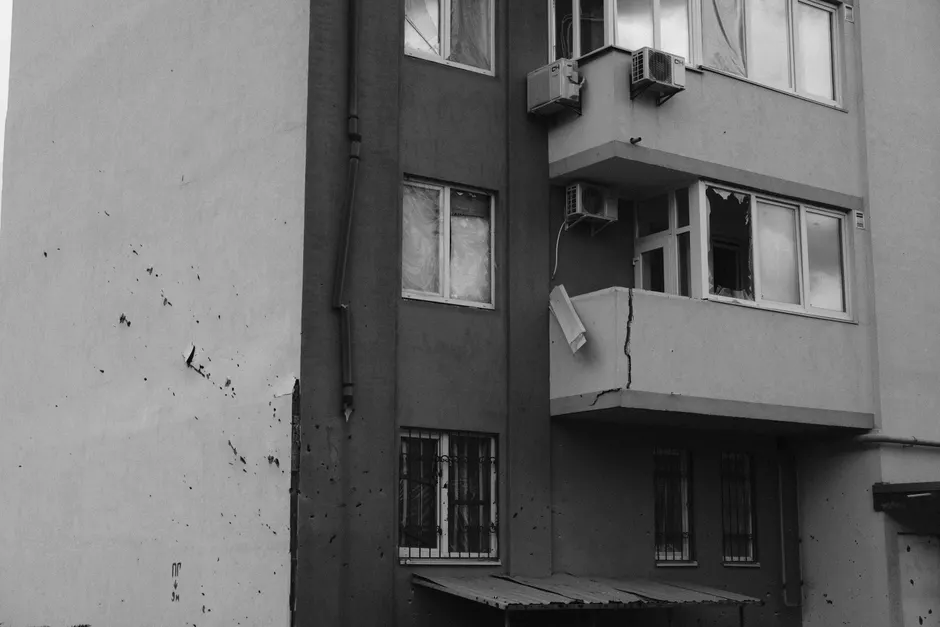
On Friday, December 19, 2025, an Israeli military strike hit a school-turned-shelter in Gaza City during a wedding gathering, killing at least six Palestinians. The timing was stark: at the precise moment mourners were pulling bodies from the rubble, senior officials from Qatar, Egypt, and Turkey were sitting down with American counterparts in the United States to negotiate the next phase of the very ceasefire agreement that Israel's military actions are accused of repeatedly violating. Steve Witkoff, President Donald Trump's special envoy for the Middle East, was set to open those talks in Miami, Florida.
The collision of battlefield reality and diplomatic choreography is not coincidental — it is the defining structural tension of this conflict's current phase.
What the Ceasefire Framework Actually Is
The US-brokered ceasefire agreement entered into force in October 2025, establishing what negotiators described as a phased pathway toward a durable halt to hostilities in Gaza. Phase one agreements of this kind typically govern immediate humanitarian access, the release of detainees, and a drawdown of active offensive operations — while leaving the harder questions of permanent arrangements, governance, and reconstruction to subsequent phases.
It is that subsequent phase — phase two or beyond, depending on the framework's internal nomenclature — that Witkoff's Miami talks were designed to address. Qatar, Egypt, and Turkey have each played distinct roles as interlocutors throughout this conflict: Qatar as the primary channel to Hamas's political leadership; Egypt as the traditional border manager and security guarantor on Gaza's southern flank; Turkey as a regional power with deep ideological and logistical ties to Hamas that give it leverage no purely Western actor can replicate.
The convening of all three in a single American-hosted session signals that Washington is attempting to consolidate a negotiating coalition rather than rely on sequential bilateral shuttle diplomacy — a shift in method, if not yet in outcome.
The Violations Question
According to the Gaza Government Media Office, the December 19 wedding strike was one of hundreds of Israeli ceasefire violations since the agreement came into force in October 2025. Al Jazeera reported this claim directly from that source.
The framing requires precision. The Gaza Government Media Office operates under Hamas administration and is not a neutral observer; its tallies of violations are political documents as much as factual records. That does not make individual incidents like the wedding strike unverifiable — on the contrary, civilian casualties at displacement shelters are among the most extensively documented categories of harm in this conflict — but the aggregate "hundreds of violations" figure carries the provenance of a party to the dispute.
What is not disputed is the underlying pattern: ceasefire agreements in Gaza, as in other protracted urban conflicts, have rarely produced clean halts. They produce contested interpretations, asymmetric enforcement, and ongoing incidents that each side characterizes through its own legal and operational framework. Israel has consistently maintained that its military operations target Hamas infrastructure and personnel, including those embedded within civilian structures. Palestinian officials and international humanitarian organizations dispute the proportionality and targeting determinations in individual strikes.
The School-as-Shelter Problem
The venue of the December 19 strike — a school repurposed as a civilian shelter — sits at the intersection of two recurring and legally consequential debates in this conflict. Under international humanitarian law, civilian objects including schools lose protected status if they are used for military purposes, but that determination must be made on a case-by-case basis with evidence, and the burden of establishing military use rests with the attacking party.
Gaza's displacement crisis has pushed hundreds of thousands of people into schools, hospitals, mosques, and other civilian structures because there is, in many areas, nowhere else to go. The humanitarian logic and the military-legal logic have been on a collision course throughout this conflict, and the December 19 strike illustrates exactly why that collision produces not just casualties but irresolvable competing narratives.
A wedding at a displacement shelter is not a military event. The question of whether anything else in or near that building was a military target is the question that will not be answered by the parties themselves.
Why Miami, Why Now
The choice of Miami as a venue for ceasefire talks is unusual enough to warrant noting. High-stakes Middle East diplomacy has historically been conducted in regional capitals — Cairo, Doha, Amman — or in European venues like Geneva and Vienna. A Florida city signals deliberate informality, possibly an attempt to keep talks below the threshold of a formal summit's optics while still bringing the principals into the same room.
We have seen this pattern before, when the Oslo process was deliberately routed through a back-channel in a Norwegian city precisely to escape the performative pressure of official venues. Back-channel proximity talks can accelerate decisions that formal settings calcify. The risk, as Oslo itself eventually demonstrated, is that agreements reached in informal settings can lack the institutional scaffolding needed to survive implementation.
The proximity of the Miami talks to the Gaza City strike may or may not affect the negotiating atmosphere. Mediators in these processes are professionally conditioned to compartmentalize battlefield events from table dynamics — if they were not, no ceasefire negotiation in an active conflict zone would ever conclude. But delegations report back to political principals, and political principals respond to public pressure. A strike on a wedding at a shelter, on the day talks begin, is not background noise.
What Comes Next
The structure of phased ceasefire agreements creates predictable pressure points. Phase one deals are almost always easier to conclude than phase two, because they defer the existential questions: permanent governance of Gaza, the future of Hamas's armed wing, the status of Israeli hostages still in captivity, the legal framework for reconstruction, and the long-term relationship between Gaza and any prospective Palestinian political entity.
Each of those questions has domestic political constituencies in Israel, in Palestinian politics, in Qatar, Egypt, Turkey, and the United States — constituencies that are not aligned and, in several cases, are actively opposed. Witkoff's Miami talks are an attempt to build enough procedural momentum on phase two that the political costs of walking away from the table exceed the political costs of continuing.
Whether that calculus holds depends on factors no mediator fully controls: the next strike, the next political speech, the next internal Hamas power calculation, the next Israeli government decision. Ceasefire processes in Gaza have collapsed before, not because mediators failed at the table but because events on the ground made continuation politically untenable for one or more parties.
The six people killed at a wedding in Gaza City on December 19, 2025 are the human reality behind that abstraction. The diplomats in Miami are the institutional response to it. The gap between those two things is the story of this conflict's current phase — and it is not closing quickly.