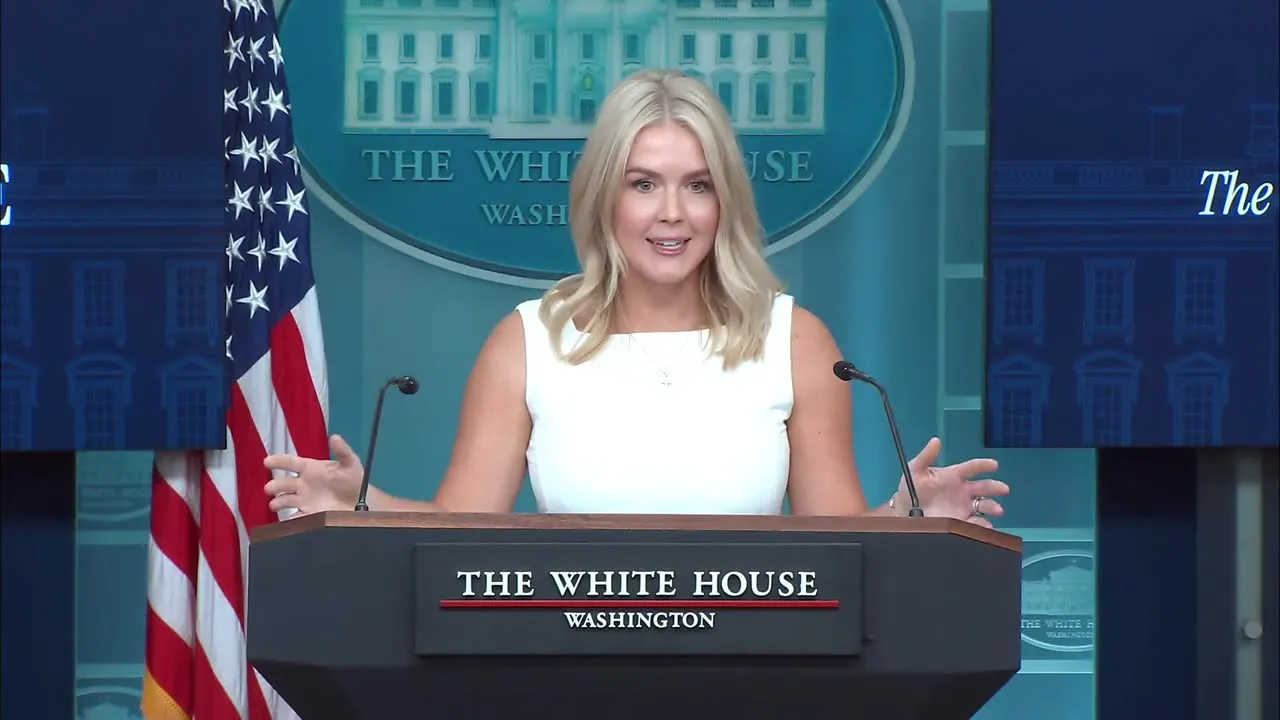
Karoline Leavitt to Step Down as White House Press Secretary, Transition to Outside Advisory Role
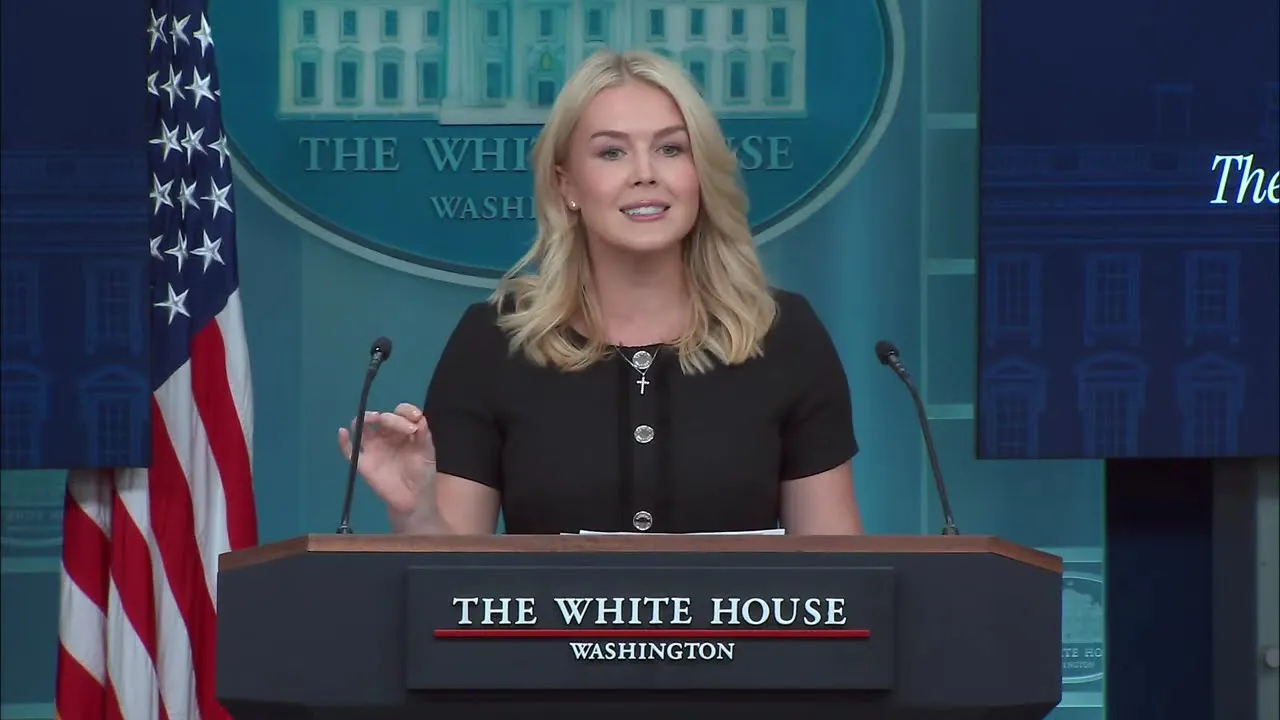
Karoline Leavitt will step down as White House press secretary at the end of August, President Donald Trump announced on August 12 via his Truth Social platform. Trump stated that Leavitt was leaving the position to spend more time with her family and would transition into a role as one of his top outside advisors The Guardian.
Leavitt, whom Trump identified as his most prominent spokesperson since he returned to office in January 2025, elaborated on the decision in a post on X (formerly Twitter). She wrote that she could not be the best mother to her two young children while devoting the constant time required of the White House press secretary role, calling her departure a "bittersweet decision" The Guardian.
Leavitt gave birth to a daughter, Viviana, in May and returned from maternity leave the following month. Before taking leave, she had held what she described as her last press gaggle for "some time," signaling even then the strain of balancing the briefing-room portfolio with a growing family. Her return in June was notably swift by any institutional standard, and she resumed a full briefing schedule within weeks.
The White House press secretary position demands near-constant availability. Leavitt maintained a regular cadence of on-camera briefings throughout her tenure, including sessions on January 8 (a joint appearance with the Vice President), January 15, February 5, March 30, and July 23 of 2026 White House video library. She also served as the administration's public point of contact during early crises, including notifying the press that Trump had been briefed on the American Airlines–Army Black Hawk helicopter collision in January 2025 Truth Social.
Trump's framing of Leavitt's move to "one of his top outside advisors" is worth examining closely. The phrase places her outside the formal White House staff structure while signaling continued proximity to the president. Such a transition allows Leavitt to operate without the daily public-facing obligations of the briefing room while retaining influence over communications strategy and political messaging. The arrangement also sidesteps some of the scrutiny that attaches to a salaried West Wing role, though outside advisors to this president have often held considerable sway over both policy and political operations.
The timing introduces a personnel question. A press secretary departure roughly 19 months into an administration is not unprecedented, but the loss of a spokesperson who has been the consistent public face of the White House since inauguration day creates an immediate communications vacuum at a moment when the administration's legislative and political agenda is still actively in motion. The White House has not yet named a successor, and the regular briefing schedule Leavitt maintained will require a replacement willing and able to sustain that cadence.
Leavitt's tenure spanned the first 19 months of Trump's second term, during which she was the primary on-camera voice defending and explaining administration policy. Her briefings were a near-daily fixture, and her departure removes a figure who became closely associated with the administration's combative communications style. The transition to an outside advisory role suggests that her relationship with the president remains intact; the departure appears driven by personal circumstances rather than any rupture.
The broader context here involves the sustainability of one of the most demanding jobs in American politics for a parent of young children. Leavitt's own words, that the role required "constant time" incompatible with being the mother she wanted to be, put the tension plainly. That a press secretary in a high-intensity West Wing would find the work-life calculus unsustainable is not surprising, but the open acknowledgment of it is relatively rare in a position where stoic endurance has typically been the expected posture. Whether this prompts any institutional reconsideration of the role's demands, or simply leads to the next person absorbing them unchanged, will depend on who follows her into the briefing room.