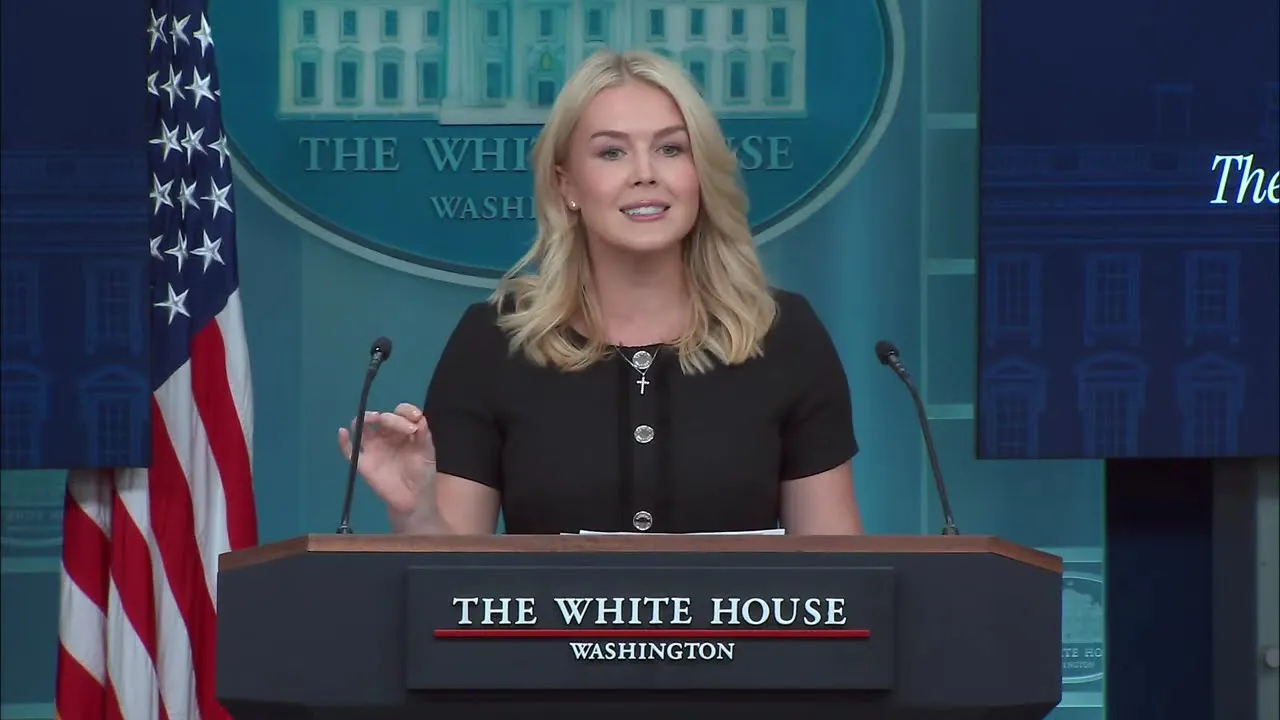
Karoline Leavitt to Step Down as White House Press Secretary, Setting Off Succession Contest
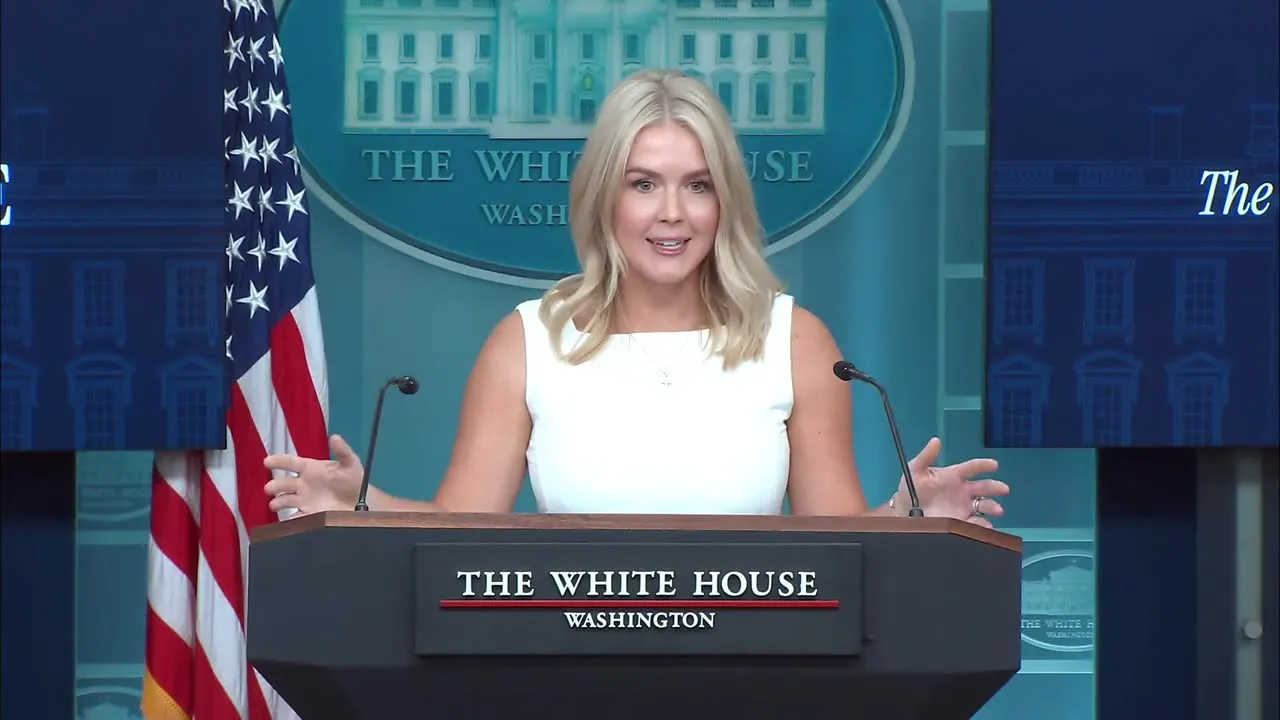
President Trump announced on August 12, 2026, that Karoline Leavitt will step down as White House press secretary at the end of the month to spend more time with her family. USA Today
Leavitt, at 28 the youngest person to serve in the role, departs after a tenure that began with the start of Trump's second administration. The White House has published video records of her briefings dating from August 2025 through early 2026, reflecting a press operation that maintained a regular briefing cadence. NBC News
Her resignation is expected to trigger a succession contest inside Trump's inner circle, with at least four names already circulating as potential replacements. The Guardian
The New York Post, citing administration sources, reported that Alina Habba is an early frontrunner for the position. Habba served as a personal lawyer for Trump before being appointed as a US attorney for New Jersey, an appointment a federal judge subsequently ruled unlawful. Her proximity to Trump and profile within his orbit place her at the center of the early speculation, though the legal complications surrounding her prior appointment could complicate a confirmation or vetting process.
Stephen Cheung, the current White House communications director, worked closely with Leavitt during the second Trump administration. As communications director, Cheung occupies the structural counterpart to the press secretary role within the West Wing's messaging apparatus, and his working relationship with Leavitt provided operational continuity. Whether Cheung's office exerts influence over the selection process is an open question within the dynamics of the White House staff hierarchy.
Anna Kelly, currently serving as principal deputy press secretary, represents the internal candidate. Kelly was a spokesperson for Trump's 2024 presidential campaign and previously served as national press secretary for the Republican National Committee. Her direct experience in the briefing room and on the campaign trail gives her the most conventional qualifications among the candidates under discussion.
Katie Miller, wife of senior White House aide Stephen Miller, brings a different profile. She hosts a conservative podcast and previously served as communications director for the Department of Government Efficiency, and before that as Vice President Mike Pence's press secretary from 2019 to 2021. Her marriage to one of the administration's most influential policy advisers gives her a line of access that few competitors can match, though it also raises questions about the concentration of influence within a single family unit inside the West Wing.
Taylor Budowich, a former White House deputy chief of staff, left the administration the previous year for the private sector. His name resurfaces in connection with the press secretary vacancy despite his departure from government. Notably, Budowich was, alongside Leavitt, a defendant in the case brought by the Associated Press after the outlet was barred from the press rotation for refusing to adopt the administration's preferred terminology renaming the Gulf of Mexico as the "Gulf of America." That litigation tied both figures to one of the more legally fraught press-access disputes of the administration.
The broader context here is that the press secretary role in this administration has functioned as more than a communications post; it has been a frontline position in the administration's sustained confrontation with mainstream media outlets over access, terminology, and framing. Leavitt's tenure, which included defending the AP ban and navigating the resulting legal fallout, placed the press secretary at the intersection of messaging and legal contestation in ways that previous occupants of the role did not face. Whoever replaces her inherits not just the briefing podium but the unresolved tensions that came with it.
The candidates profiled here span a range of backgrounds: legal, communications, campaign, and ideological. Each carries distinct institutional ties within Trump's orbit, and the selection will signal which faction or qualification set the president prioritizes heading into the latter portion of his second term. The timeline is compressed: Leavitt departs at the end of August, leaving the administration weeks to settle on a successor and manage the transition.