Iran Fires Missiles at Israel After Beirut Strikes, Testing a Fragile Regional Order

Iran Launches Missile Volleys at Israel
On June 7, 2026, Iran fired multiple volleys of ballistic and cruise missiles at Israel, a direct military response to Israeli airstrikes on Hezbollah positions in Beirut's southern suburbs, according to The New York Times. Imagery and video captured Iranian rockets and Israeli interceptors tracing arcs across the night sky simultaneously — the kinetic geometry of a layered air-defense engagement playing out in real time, as documented by Reuters.
The exchange marks the most direct Iranian strike on Israeli territory since the escalatory cycles of 2024, and it arrives at a moment when a U.S.-Iran ceasefire — already under strain — faces an acute test of its durability.
What Triggered the Strike: Netanyahu's Beirut Operations
The proximate catalyst was a set of Israeli military operations ordered by Prime Minister Benjamin Netanyahu targeting Hezbollah infrastructure in the southern suburbs of Beirut — the dense residential and logistical corridor known colloquially as the Dahieh — in early June 2026, per Reuters. Dahieh has long served as Hezbollah's administrative and command heartland within Lebanon, making strikes there qualitatively different from operations against forward positions or weapons depots in the Bekaa Valley.
Israeli officials have framed these operations as necessary to degrade Hezbollah's capacity to reconstitute after prior rounds of conflict. From Tehran's strategic calculus, however, strikes on Dahieh carry a different weight: they touch the organizational core of what Iran treats as its most capable forward proxy — and, by extension, a central pillar of its deterrence architecture in the Levant.
The Broader Conflict Architecture
To understand why Tehran responded with direct missile fire rather than relying solely on Hezbollah's own retaliatory capacity, it is worth mapping the structural logic at work.
Iran's "axis of resistance" functions as a distributed deterrence network. Hezbollah is not merely a proxy in the transactional sense; it is Iran's primary means of projecting credible second-strike capability against Israel without crossing the threshold of declared war. When Israel attacks Dahieh at scale, it does not simply punish Hezbollah — it signals to Tehran that the proxy buffer is being systematically degraded. Iran's direct missile response is, in that frame, an attempt to reassert escalation dominance and re-establish the costs of Israeli action at a level that proxies alone can no longer credibly threaten.
We have seen this pattern before. In April 2024, Iran launched its first-ever direct aerial attack on Israel — a mass drone and missile salvo framed explicitly as a response to an Israeli strike on an Iranian consular facility in Damascus. That episode produced a contained, if alarming, exchange: Israel responded with a limited strike inside Iran, both sides absorbed the contact, and the situation — just barely — did not spiral. The underlying tension, however, was never resolved. It was deferred. What is unfolding now tracks that same escalatory grammar: a perceived red-line crossing by Israel, a direct Iranian kinetic response, and the world watching to see whether the ladder stops here or continues upward.
The U.S. Dimension: A Ceasefire Under Pressure
Compounding the volatility is the status of a separate, parallel track: the Iran-U.S. ceasefire that had been in place heading into June 2026. AP News reported on U.S. strikes against Iranian facilities in the same general timeframe, while a subsequent AP dispatch documented how continued military actions by multiple parties were actively stressing the ceasefire framework. A ceasefire, in diplomatic terms, is a negotiated halt to active hostilities — it does not resolve underlying disputes, and it typically includes implicit thresholds whose breach can unwind the arrangement rapidly.
The precise relationship between the U.S.-Iran ceasefire and the Israel-Iran exchange on June 7 is a critical open question. If Tehran's missile launches were conducted in a manner the U.S. interprets as a violation of ceasefire terms, Washington faces an immediate dilemma: respond and risk expanding the conflict into a three-party military confrontation, or absorb the breach and accept the credibility cost. If, conversely, Tehran calibrated its response to fall outside the ceasefire's defined parameters — perhaps by framing the strikes as action against Israel rather than against U.S. interests — the diplomatic architecture may survive, badly damaged but intact.
Israel's Air-Defense Posture and Interception
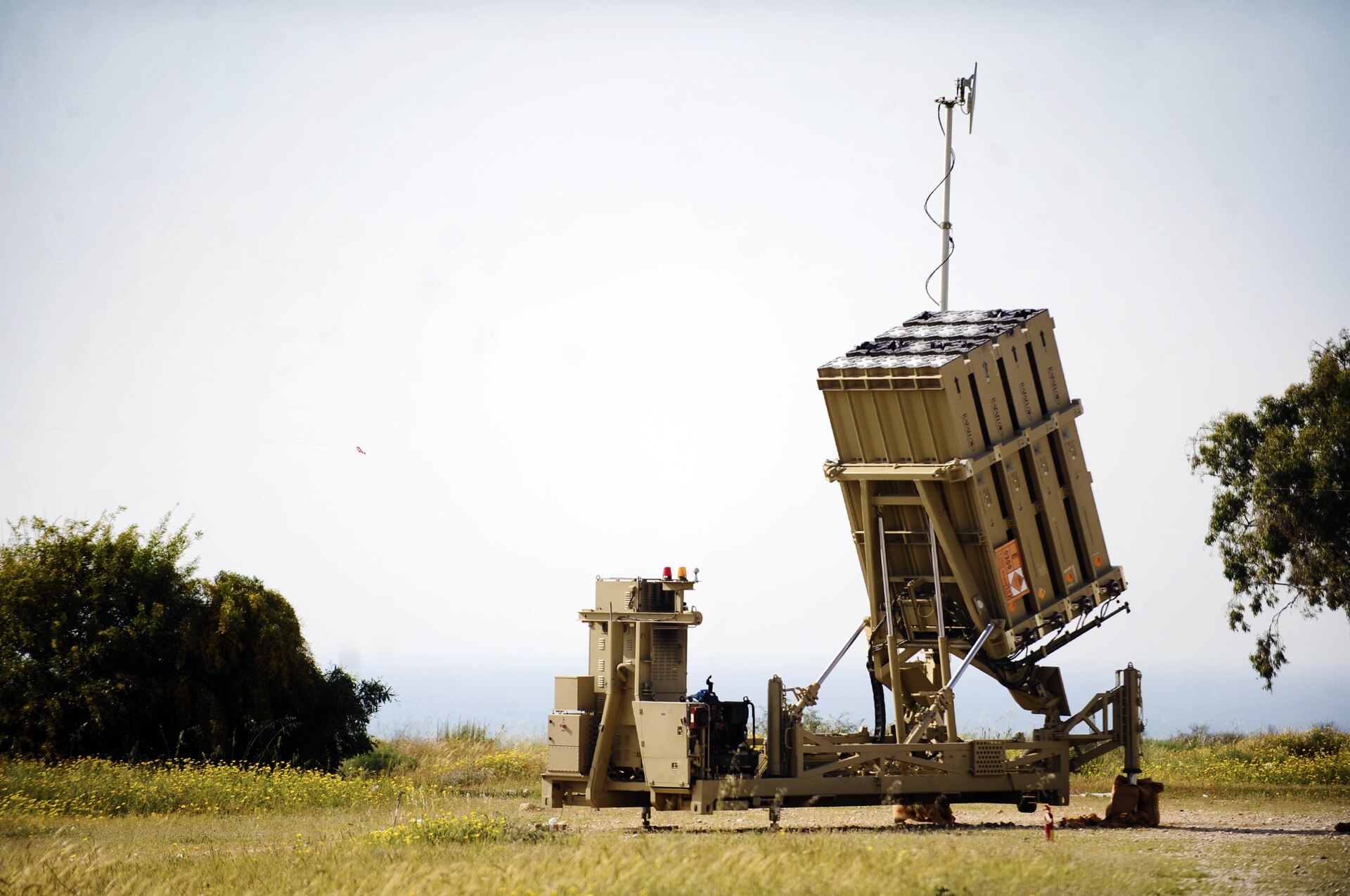
Israeli interceptors engaged the incoming Iranian missiles, consistent with the multi-tier air-defense doctrine Israel has refined through successive escalatory episodes — employing Iron Dome for short-range threats, David's Sling for medium-range ballistic missiles, and Arrow-2 and Arrow-3 systems for longer-range ballistic trajectories. The specific intercept rate from the June 7 exchange had not been definitively confirmed at the time of publication, but the visual documentation of concurrent rocket and interceptor trails suggests a high-tempo engagement across multiple layers of the system.
Iran, for its part, has progressively refined its missile inventory since 2024, incorporating maneuvering reentry vehicles and decoy systems designed to complicate intercept geometry. Whether those capabilities were deployed in this salvo — and to what effect — will be a key technical data point for defense analysts in the days ahead.
What Comes Next: Pressure Points and Decision Nodes
Several variables will shape the trajectory from this point.
Israel's response calculus. Netanyahu operates under coalition constraints that, historically, reward visible strength. A decision to respond directly inside Iranian territory — rather than against Iranian-linked assets in Syria or Lebanon — would represent a significant escalation. A more limited response, or a deliberate pause to allow diplomatic back-channels to function, is also possible but carries domestic political costs in the current Israeli political environment.
Iran's escalation ceiling. Tehran has its own red lines. Direct, large-scale Israeli strikes on Iranian nuclear or energy infrastructure have long been defined implicitly as threshold-crossing events. Short of that, Iran has shown it can absorb Israeli responses while maintaining its posture of strategic patience punctuated by periodic direct action.
U.S. diplomatic traffic. The state of back-channel communication between Washington, Tehran, and Jerusalem will be the least visible but most consequential variable. Qatar, Oman, and Kuwait have each served as interlocutors in prior Iran-U.S. de-escalation efforts; whether any of those channels are active and carrying weight right now is unknown publicly.
Lebanese political and humanitarian exposure. Strikes on Dahieh carry severe civilian risk in one of Beirut's most densely populated corridors. International humanitarian law, and the political attention of European and Gulf partners, will turn quickly to civilian casualty assessments — adding external diplomatic pressure on all parties.
The situation as of June 8, 2026 remains fluid. The exchange on June 7 did not resolve the underlying conflict; it sharpened it. Whether the next seventy-two hours produce a managed de-escalation or a further rung on the ladder is, at this point, genuinely uncertain — and that uncertainty itself is the defining feature of where the region stands.