Iran-Israel Escalation and the $100 Oil Threshold: Markets Absorb the Shock
The Strike That Reset the Calculus
Israel launched what it described as a pre-emptive attack against Iran in late February 2026, triggering one of the most consequential escalatory sequences in the Middle East since the October 2023 war. The operation set off a chain of diplomatic and market reactions that are still reverberating as of early June 2026 — from UN Security Council emergency sessions to the first sustained breach of $100-per-barrel crude since 2022.
The sequence that followed was neither spontaneous nor without precedent. It tracked a template established in April 2024, when an Israeli missile strike on Iranian diplomatic premises in Damascus — condemned in a formal statement by Iran's Ministry of Foreign Affairs on April 2, 2024 — produced a calibrated Iranian military response, followed by Iranian declarations at the Security Council that its "legitimate defense and counter-action against Israel had been terminated," per Iran's April 19, 2024 UNSC statement. The 2026 episode has followed a structurally similar arc, but the scale and the macro backdrop are substantially different.
Iran's Diplomatic and Legal Posture
Tehran has anchored its response in the language of Article 51 of the UN Charter. Iran's Ambassador to the Security Council argued in April 2024 — during the prior escalatory cycle — that Iran's military action constituted an exercise of its "inherent right to self-defense" and was "necessary and proportionate," as stated in the Ambassador's UNSC statement from April 15, 2024. That same legal framing has been redeployed in 2026 with consistent discipline, a signal that Iranian diplomatic doctrine treats armed responses as juridically bounded events rather than open-ended campaigns.
Iran's UN mission also issued a formal letter on April 8, 2024, rejecting Israeli allegations it characterized as unsubstantiated — an early indication of Tehran's intent to contest the narrative at the multilateral level, not merely the military one. The pattern in 2026 has been consistent: military action paired with immediate legal-diplomatic counteroffensive at the UN, calibrated to limit international isolation.
The strategy carries real weight in Security Council procedural terms. By framing each response as time-limited and self-terminating, Iran attempts to pre-empt Chapter VII referrals and reduces the dossier available to states seeking binding sanctions resolutions. Whether that framing holds in the current cycle depends heavily on the P5 calculus — particularly China and Russia, both of which have structural incentives to resist Western-sponsored resolutions that could set constraining precedents.
The Oil Price Rupture
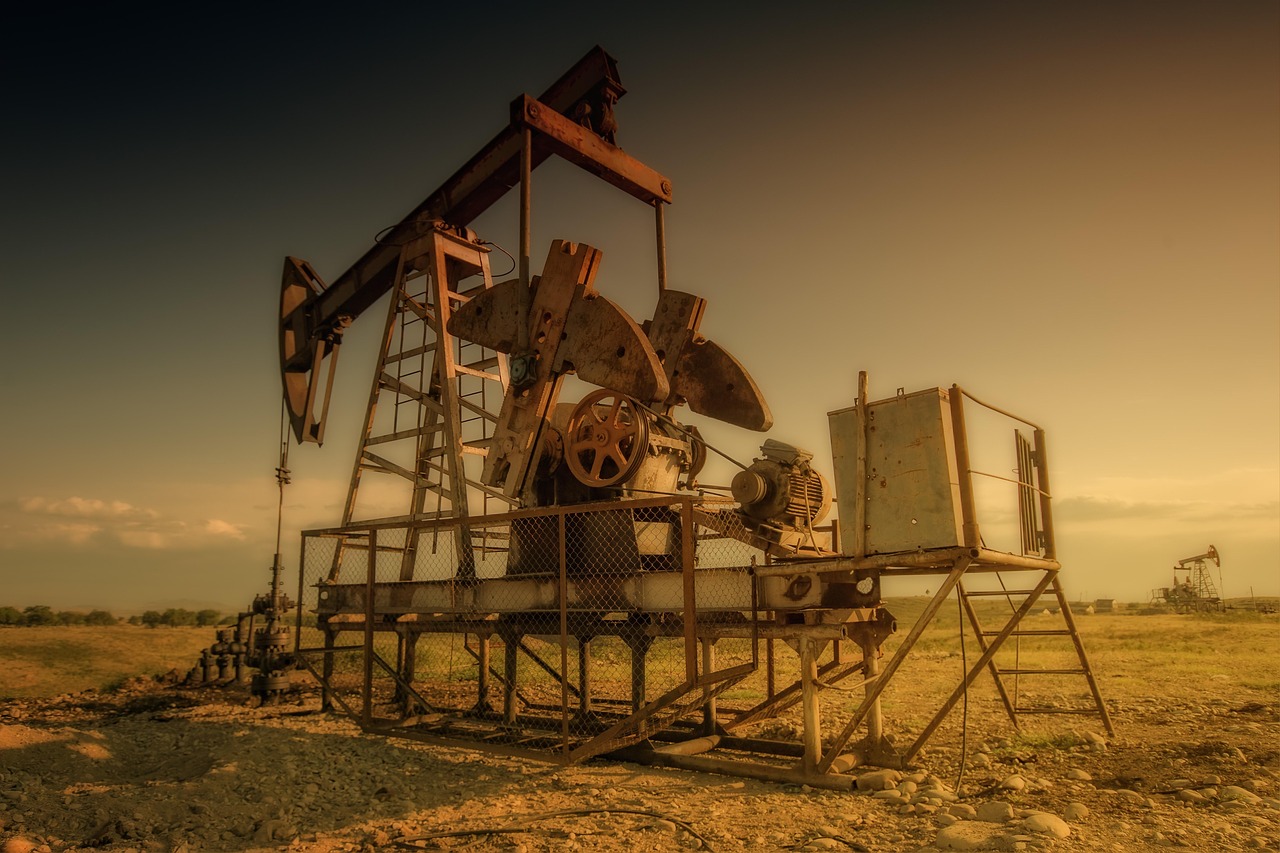
The most immediate systemic consequence of the 2026 escalation has been in energy markets. Oil prices breached $100 per barrel for the first time since 2022, driven by the escalating Middle East tensions, according to Wall Street Journal live coverage from March 8, 2026. The psychological significance of that threshold is considerable: $100/bbl is the point at which energy costs begin transmitting in earnest into headline inflation across net-importing economies, and at which central bank guidance on rate paths becomes materially complicated.
We have seen this pattern before — in the second half of 2022, when Brent's sustained run above $100 forced the ECB and the Bank of England into an aggressive tightening cycle they had initially resisted, and squeezed fiscal space in South and Southeast Asia disproportionately. The 2026 breach arrives in a different context: central banks in most advanced economies have reduced rates from their post-pandemic peaks, meaning headline inflation had been trending down. A sustained oil shock now risks re-anchoring inflation expectations upward just as policymakers had begun signaling normalization.
Asian Markets: From Circuit Breakers to Stabilization
The transmission into equity markets was rapid and severe. Trading in South Korea and Pakistan was briefly halted as circuit breakers triggered amid the initial price shock, per WSJ reporting from March 9, 2026. Japanese and Korean indices led the regional selloff, with the tech sector bearing disproportionate losses — a function of both elevated discount-rate sensitivity in high-multiple growth stocks and specific exposure concerns for semiconductor supply chains that route through Middle Eastern air corridors.
The sell-off in Asian tech was particularly acute given that the sector had been pricing in a prolonged rate-cutting environment. Elevated geopolitical risk premium and the prospect of renewed oil-driven inflation disrupted that thesis sharply. The Yahoo Finance report from June 8, 2026 confirmed that Asian markets experienced a broad decline driven by tech-sector selling, with oil price volatility as the concurrent macro stressor. Wall Street did not escape unscathed: major US indices initially sold off before staging a recovery as institutional buyers moved in to exploit compressed valuations in the technology sector.
As of June 9, 2026, the picture has begun to stabilize at the margin. Asian tech stocks have rebounded from their most recent sell-off lows, and oil prices have slipped from their peak levels, according to reporting from the Union-Bulletin published June 9, 2026. That partial normalization does not resolve the underlying uncertainty — it reflects a market that has priced in a "contained escalation" scenario and remains acutely vulnerable to any development that breaks that assumption.
The Structural Stakes
The broader context here is that the Iran-Israel confrontation in 2026 represents a qualitative shift from the shadow-war paradigm that characterized the preceding decade. Both states have now conducted direct, acknowledged military operations against each other across two escalatory cycles. The legal-diplomatic machinery that Iran has consistently deployed — Article 51 invocations, UNSC engagement, formal rejection of allegations — is designed to manage international legitimacy costs while preserving military optionality. Israel's framing of its 2026 strike as pre-emptive places it in a different but equally contested legal category.
For practitioners watching the Security Council, the more consequential variable may not be the next military move but the degree to which the council can function as a de-escalatory mechanism under current P5 dynamics. The 2024 precedent — where Iran declared its counter-action terminated and the council absorbed the episode without a binding resolution — offers one possible template for containment. The 2026 version has involved harder market dislocations and a more complex US posture, making a repeat of that quiet absorption less certain.
For energy and macro analysts, the $100/bbl breach is the number to watch. It did not hold continuously; oil has since retreated. But the vol regime has shifted. Options markets have repriced tail risk across Middle Eastern supply routes, and any escalation involving the Strait of Hormuz — through which roughly 20 percent of global petroleum liquids transit — would move those numbers in directions that current stabilization narratives do not account for.
What Comes Next
The near-term inflection points are diplomatic rather than military. Iran's engagement pattern at the UNSC, the posture of the US administration vis-à-vis both parties, and any ceasefire or de-escalation mechanism brokered through regional intermediaries will determine whether the current partial market stabilization extends or reverses.
The structural vulnerability is unchanged: a conflict that has now twice in two years produced direct state-on-state military exchanges between nuclear-threshold adversaries, in a region whose energy infrastructure underpins global growth assumptions, is not a risk that normalizes simply because equity indices recovered. The map is clearer than the verdict — and the map says the margin for error is narrowing.


