BJP's West Bengal Landslide: A Political Map Redrawn
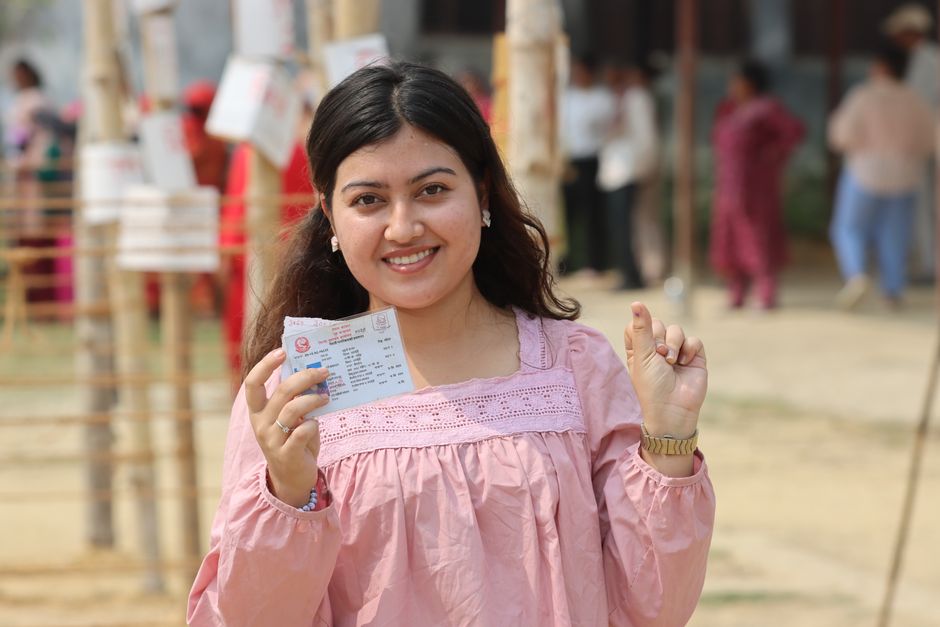
A Tectonic Shift in Bengal's Assembly
The Bharatiya Janata Party secured 207 of West Bengal's 294 assembly seats in the May 2026 state elections, according to Election Commission of India results published on May 5, 2026 — a margin that hands the party an outright supermajority in a state that had, for over a decade, been the single most resistant stronghold against its national expansion. The Trinamool Congress (AITC), which governed West Bengal continuously since 2011 under Mamata Banerjee, was reduced to 80 seats, a collapse that strips it of any credible claim to opposition leadership within the state legislature.
A two-thirds majority in a 294-seat house requires 196 seats. The BJP's 207 surpasses that threshold, granting it the constitutional latitude to reshape state institutions, amend state-level ordinances without coalition arithmetic, and install a Chief Minister with a working mandate unconstrained by floor-management calculations. The AITC's 80 seats leave it viable as a formal opposition but operationally neutered in the short term.
The Geography of the Result
West Bengal is not merely one of India's most populous states — it is a border state sharing frontiers with Bangladesh, Bhutan, and Nepal, and it contains Kolkata, the commercial and intellectual hub of eastern India. It has historically served as a laboratory for Indian political identity: the Indian National Congress held it through independence, the Left Front governed it for 34 unbroken years from 1977, and the AITC displaced that apparatus in 2011 with a campaign premised on grassroots renewal and Bengali cultural assertion.
For the BJP, the state presented a specific structural challenge: its Hindu-nationalist, Hindi-heartland brand required translation into a Bengali-speaking electorate with its own distinct literary nationalism, a substantial Muslim minority concentrated in districts bordering Bangladesh, and a deeply entrenched local patronage network built by the AITC over fifteen years in power. The party contested the 2019 Lok Sabha elections in West Bengal, making competitive inroads at the parliamentary level that foreshadowed an eventual assembly-level push — but translating parliamentary momentum into assembly arithmetic is a different engineering problem entirely, one that has tripped up parties with strong central governments before.
Why This Took Longer Than the BJP Expected
The 2021 West Bengal assembly election was the inflection point that defined this cycle's stakes. The BJP, riding its 2019 parliamentary surge in the state and with Prime Minister Narendra Modi campaigning extensively, fell significantly short of a majority, winning 77 seats to the AITC's 213. That outcome was widely read as evidence that Bengali voter identity and Mamata Banerjee's personal brand constituted a durable defensive wall — and it emboldened the AITC to position itself as the national template for regional resistance to BJP dominance.
The intervening five years eroded that narrative on several fronts. The AITC faced sustained governance criticism over local-level political violence, post-poll reprisals, and corruption allegations against district-level party machinery. The BJP, meanwhile, invested heavily in organisational infrastructure — shakha networks, panchayat-level presence, and cadre training — that converted parliamentary vote shares into assembly-constituency discipline. In Bengal's first-past-the-post system, even moderate swings in closely contested constituencies produce asymmetric seat outcomes; a shift of a few percentage points across marginal seats can swing dozens of assembly constituencies simultaneously.
We have seen this pattern before, when the Left Front's 34-year grip on West Bengal crumbled not gradually but almost instantaneously in 2011 — the AITC swept 184 seats in a single cycle against an apparatus that had seemed structurally immovable. Patronage-based political machines in Indian states tend to hold until they don't; once the perception of invincibility cracks, the defection cascade among local brokers and booth-level workers can be rapid and irreversible.
What a BJP Government in Kolkata Changes
At the administrative level, a BJP state government in West Bengal alters the Centre-state dynamic on a range of pending files: land acquisition for infrastructure projects, implementation of centrally-sponsored welfare schemes that the AITC government had selectively adopted or rebranded, and law enforcement coordination in districts with active cross-border smuggling networks.
The diplomatic dimension is non-trivial. West Bengal shares roughly 2,217 kilometres of border with Bangladesh. Relations between New Delhi and Dhaka involve a layered portfolio of water-sharing agreements, transit arrangements, and security cooperation on irregular migration. Having a state government in Kolkata aligned with the central government simplifies coordination on border management and reduces the friction that had periodically surfaced when the AITC state government and the BJP-led Centre held divergent positions on Bangladesh policy.
The Muslim-minority electorate — which comprises roughly 27 percent of West Bengal's population and is concentrated in districts like Murshidabad, Malda, and parts of the Sundarbans — will now be governed by a party whose national political identity has, at various points, generated significant anxiety within that constituency. How the BJP manages that demographic reality — through administrative inclusion, welfare delivery, or continued marginalisation — will determine whether its 2026 majority is a durable realignment or a high-water mark vulnerable to reversal in 2031.
The AITC's Path Forward
An 80-seat rump is not a death sentence for a party with a mass base and a recognisable national leader, but it is a serious structural setback. The AITC's residual leverage depends heavily on whether Mamata Banerjee retains her own seat and her capacity to lead a credible opposition bloc from the floor. Eighty seats is enough to sustain a party organisation, maintain a legislative presence, and contest by-elections — but it is not enough to mount a serious challenge to the government's legislative programme.
The more consequential question is what the AITC's collapse means for the broader national opposition architecture. The party had positioned itself as a proof-of-concept for regional parties capable of resisting BJP expansion; that argument is now considerably harder to make. Parties that had looked to the AITC as a template — particularly in states where regional identity politics had provided insulation against BJP penetration — will now be recalibrating their assumptions.
Looking at what this means for the medium term: West Bengal joins a growing list of states where the BJP holds both the parliamentary delegation and the state government, consolidating a form of institutional layering that has historically allowed ruling parties in India to embed themselves deeply in state administrative structures before the next electoral cycle. Whether that translates into a durable demographic coalition in Bengal, or whether the state's political culture reasserts itself as it has done repeatedly since independence, is the question that will define the next five years.


