Operation True Promise II: Iran's Missile Salvo Against Israel and the Architecture of Escalation

Operation True Promise II: Iran's Missile Salvo Against Israel and the Architecture of Escalation
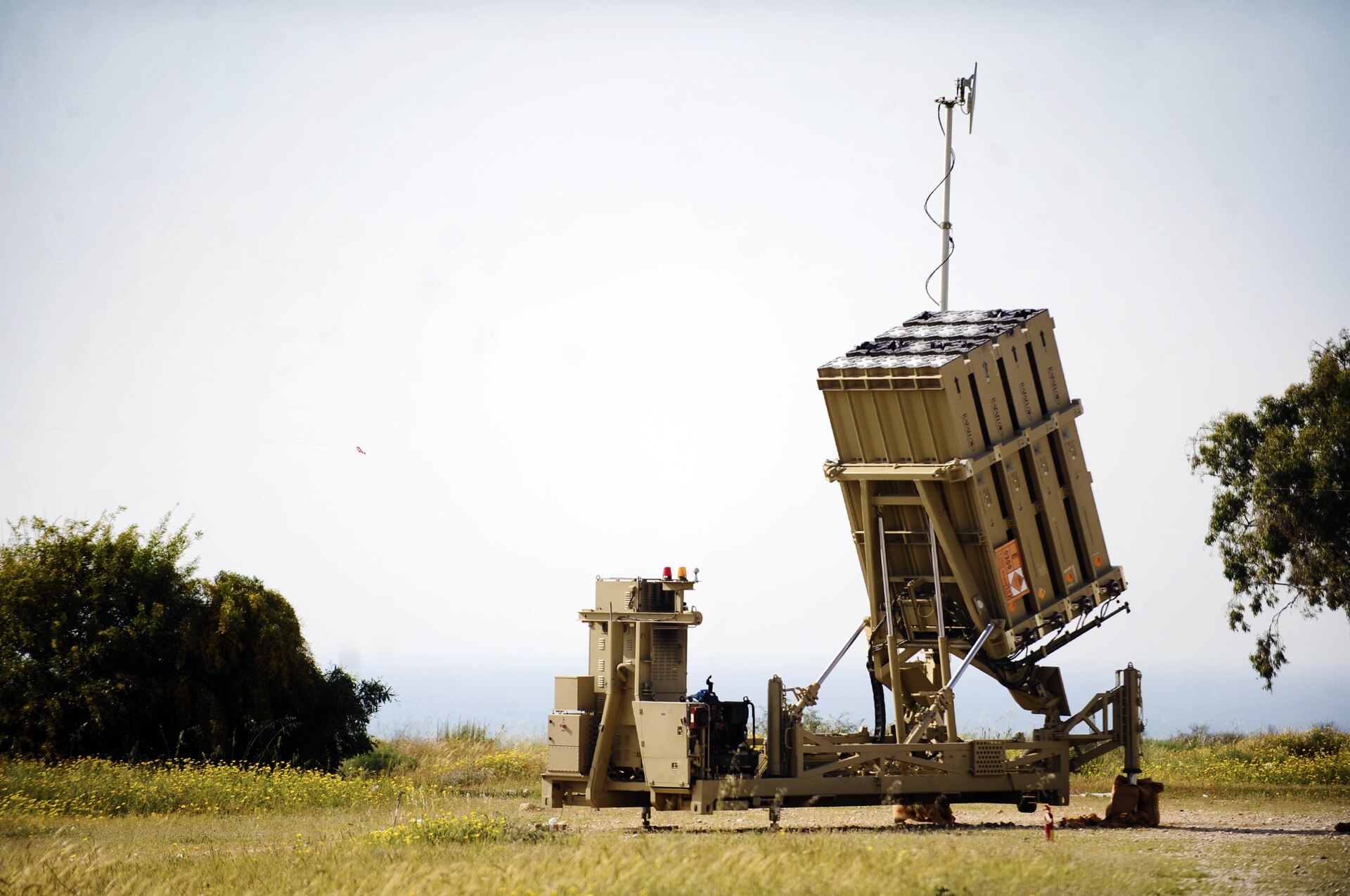
Iran launched 180 ballistic missiles against Israeli military and security targets in October 2024 in an operation it designated "Operation True Promise II," according to Iran's official UN delegation statement. Tehran framed the strike as a direct response to Israel's killing of the leaders of Hamas and Hezbollah — a characterization consistent with CFR's conflict tracker, which reported the same triggering sequence. The Israeli Ministry of Defense assessed that 86% of those ballistic missiles were intercepted, with air defense systems preventing damage to Israeli territory — a performance evaluation the MoD released under the operational banner "Rising Lion."
The Casus Belli: Damascus, April 1, 2024
The chain of events that produced the October salvo traces directly to a strike six months earlier. On the evening of April 1, 2024, Israel conducted a missile attack on the consular section of Iran's Embassy compound in Damascus, according to Iran's Ministry of Foreign Affairs. The strike killed senior Islamic Revolutionary Guard Corps officers, including a brigadier general who commanded IRGC operations in Syria and Lebanon. Under the Vienna Convention, a consular section is inviolable sovereign territory — hitting it crossed a threshold Iran had long treated as a red line, forcing the Islamic Republic's leadership into a painful calculation: absorb the blow or respond overtly, at the cost of bringing the direct Israel-Iran confrontation out of the shadow war both sides had carefully managed for decades.
Iran's first direct missile-and-drone barrage against Israel followed on April 13–14, 2024 — Operation True Promise I — which Israel and its partners, including the United States, intercepted at high rates. The aftermath was notable for its restraint: both governments publicly played down an apparent Israeli retaliatory airstrike near a major air base and nuclear site in central Iran on April 19, 2024, according to AP reporting. That mutual de-escalatory signaling — neither side claiming credit, neither demanding punishment — pointed to a tacit off-ramp that held through the spring and into the summer.
October 2024: The Second Salvo
That off-ramp collapsed when Israel moved against Hezbollah and Hamas leadership simultaneously. The killing of Hezbollah Secretary-General Hassan Nasrallah in late September 2024, followed by the elimination of Hamas politburo chief Yahya Sinwar in Gaza, removed two of Iran's most operationally significant proxy commanders in a matter of weeks. From Tehran's perspective, absorbing those losses without a kinetic response would have severely degraded its deterrence posture across the Axis of Resistance — the network of non-state armed groups through which Iran projects regional power without direct territorial exposure.
The October 1 launch of 180 ballistic missiles was the result. Iran's Ambassador to the UN characterized the strikes as targeting military and security infrastructure, framing them under Article 51 of the UN Charter — the self-defense provision — in a letter to the Security Council. The legal framing matters less for its persuasive weight with Western P5 members than for what it signals about Iran's domestic and regional audience management: Tehran was performing proportionality and legality, not claiming victory through scale.
Intercept Performance and What the Numbers Mean
The Israeli MoD's post-operation assessment, published under the "Rising Lion" label, placed the ballistic missile intercept rate at 86%. That figure merits careful reading. Ballistic missiles — particularly medium-range variants in Iran's inventory, such as the Fattah and Qadr series — travel on a more predictable trajectory than cruise missiles or drones, making them inherently more interceptable by layered systems like Arrow-3, Arrow-2, and THAAD assets deployed with U.S. support. An 86% rate against a 180-missile salvo implies roughly 25 missiles were not intercepted by the primary defense layer; whether those were handled by secondary systems, fell in unpopulated areas, or failed mechanically is not detailed in the public MoD statement.
The broader operational picture is that Israeli air defense — bolstered by U.S., Jordanian, and other partner intercepts during the April barrage — performed within expected parameters. The MoD statement that systems "prevented damage" is an outcomes claim, not simply a performance metric, and it carries its own ambiguity: it does not specify whether zero damage was sustained or whether damage was contained below a militarily significant threshold.
Diplomatic Containment and the U.S. Variable
AP reporting from June 2026 — drawing on the trajectory of events through early 2024 — noted that both Israel and Iran appeared to back away from further strikes within hours of trading fire, including after U.S. involvement in the intercept effort. That pattern — exchange, intercept, mutual de-escalation — has now repeated across at least two distinct operational cycles. It is consistent with what scholars of deterrence theory call "controlled escalation": each side demonstrates capability and resolve without triggering the runaway escalatory spiral both ostensibly wish to avoid.
We have seen this architecture before, in the Iran-Iraq tanker war of the 1980s, where tit-for-tat maritime strikes were calibrated to send messages rather than compel unconditional surrender. The logic then, as now, was that both parties needed the conflict to remain legible — costly enough to register, bounded enough to manage. The difference in the current cycle is the presence of nuclear ambiguity: Iran's enrichment program has advanced to 60% purity, and Israel's willingness to strike near Iranian nuclear sites — however carefully downplayed — introduces a destabilizing variable that the tanker war did not carry.
What Comes Next
The structural conditions that produced both True Promise operations remain intact. Iran has not abandoned its proxy network, though Hezbollah and Hamas have been significantly degraded. Israel has not altered its stated objective of preventing Iranian nuclear weapons capability. The United States remains the critical intercept partner and the party whose constraints most directly bound Israeli offensive options against Iran proper.
The question for analysts tracking this file is whether the 86% intercept rate emboldens Israeli planners to absorb future Iranian salvos as manageable — and whether Tehran has drawn the same conclusion, calculating that missiles alone cannot impose sufficient cost to deter Israeli action. If both sides internalize that lesson simultaneously, the escalatory logic shifts from missiles toward precisely the targets — leadership, nuclear infrastructure, energy — where the costs of miscalculation are hardest to contain.
The diplomatic track, thin as it is, runs through the UN Security Council, where Iran's Article 51 letters accumulate without generating enforceable resolution, and through back-channel communications that neither government publicly acknowledges. Neither venue has produced durable constraint so far. The next trigger, whenever it comes, will test whether the intercept architecture and the mutual off-ramp instinct are sufficient to hold — or whether the cycle has already moved to a phase where both are no longer enough.