Stitched Into the Game: How Indigenous Women From Puebla Hand-Embroidered Mexico's World Cup Jersey
The Jersey on the Pitch
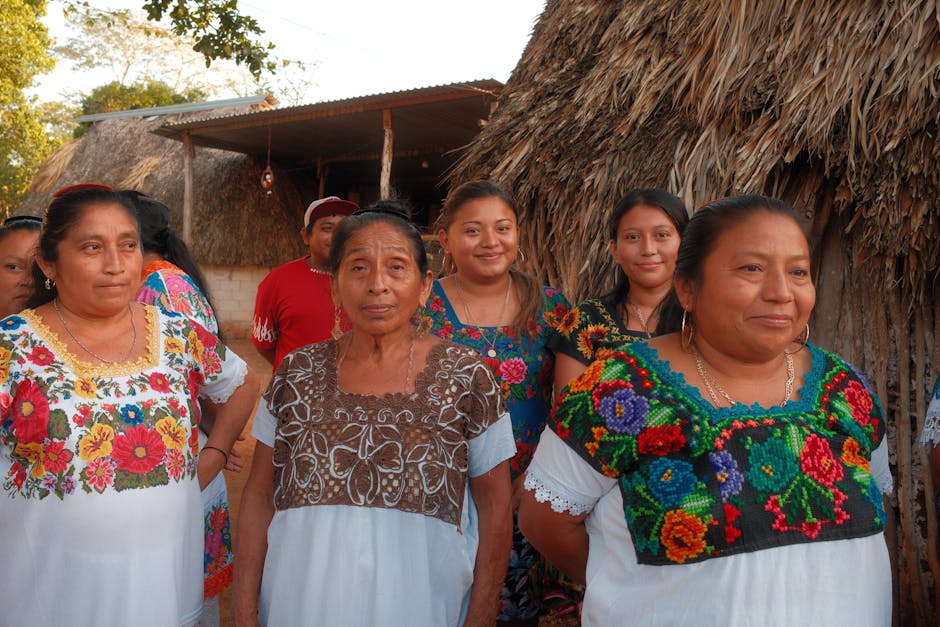
When Mexico's squad takes the field at the 2026 FIFA World Cup — played, in part, on home soil — the kit they wear will carry something no mass-production line could replicate: the handwork of more than 150 Indigenous women artisans from the Sierra Norte de Puebla. According to The New York Times, those artisans — drawn specifically from the community of Naupan — hand-embroidered the limited-edition jerseys in a collaboration brokered between Adidas and the social enterprise Someone Somewhere.
The garments are not a mass-market product. They are a limited edition, each one bearing embroidery executed by hand in a region where textile traditions have been transmitted across generations largely outside the formal economy. The scale — 150-plus artisans — puts this well beyond a token craft insert and into territory that qualifies as a genuine production partnership.
Who Made This Happen
The architecture of the collaboration involves three distinct actors: Adidas, the global sportswear giant headquartered in Herzogenaurach, Germany; Someone Somewhere, a Mexico-based impact enterprise that has built supply-chain relationships with Indigenous and rural artisan communities; and the Nahua-speaking women of Naupan, a municipality in the Sierra Norte de Puebla, roughly 200 kilometres northeast of Mexico City.
Someone Somewhere's model is to position artisan labor not as a philanthropic add-on but as a production input with commercial value — essentially disaggregating the "handmade" premium from the charity narrative and rerouting it as a wage. The Adidas partnership, as reported by The New York Times, is among the highest-profile deployments of that model to date.
For Adidas, the calculus is partly commercial and partly reputational. The 2026 World Cup is co-hosted by the United States, Mexico, and Canada, which means Mexico jerseys will be scrutinized in one of the sport's largest merchandise markets. A limited-edition kit that carries a traceable, culturally embedded provenance story is a differentiator in a saturated licensed-goods landscape.
The Sierra Norte de Puebla in Context
The Sierra Norte de Puebla is one of Mexico's most ethnically diverse and economically marginalized highland regions. It is home to Nahua, Totonac, Otomí, and Tepehua communities, among others, many of whom have maintained distinctive textile and embroidery practices — including the densely worked floral motifs characteristic of the area — for centuries. Access to formal labor markets is limited; subsistence agriculture and informal artisan sales have historically constituted the primary economic base for many households.
Artisan cooperatives in this region have long operated in a structurally weak bargaining position relative to intermediaries. The "artesanías" market — encompassing craft fairs, tourist retail, and export channels — routinely extracts value at the production end while concentrating margins downstream. Someone Somewhere's stated intervention is to shorten that chain and fix a transparent price at the point of production.
We have seen iterations of this model before. In the 1990s and early 2000s, fair-trade certification schemes attempted to address analogous structural imbalances in agricultural commodity chains — coffee being the canonical case. The results were mixed: certification costs and compliance burdens sometimes offset wage gains for smallholders, and consumer premiums did not always transmit reliably down the chain. The artisan apparel space faces different constraints, but the underlying tension — between the commercial imperatives of a global brand and the economic vulnerability of community producers — is structurally familiar. Whether Someone Somewhere's model resolves that tension more durably than earlier fair-trade architectures is a question the Adidas partnership will stress-test at meaningful scale.
What the Embroidery Entails
Hand embroidery of the kind practiced in Naupan is labor-intensive in ways that resist easy quantification in per-unit cost terms. The floral and geometric vocabularies used in Sierra Norte textiles require not only technical skill but pattern literacy — knowledge of design systems that are not written down but learned through practice and community transmission. Each embroidered jersey is, in a production-economics sense, a slow good: the hours embedded in a single piece are not compressible below a threshold without degrading the craft itself.
This distinguishes the project from embroidered-patch or appliqué applications that some brands have used as surface-level craft signals. The embroidery here is integral to the garment, not decorative trim applied at the end of a conventional production run.
Timing and the World Cup Stage
The World Cup begins in June 2026, and the tournament's co-host status for Mexico amplifies the visibility of anything connected to El Tri's participation. Kit releases for host nations draw disproportionate media and retail attention; a limited-edition variant with the kind of provenance story the Naupan collaboration carries is well-positioned to circulate widely in both sports media and the broader cultural conversation around the tournament.
The timing of the New York Times report — published June 8, 2026, days before the tournament's opening — reflects a media environment primed to receive this story. That priming is not incidental; it is part of how impact-enterprise narratives achieve reach. The story travels because the platform (a global sporting event) and the substance (Indigenous women's labor, cultural heritage, structural equity) align with several distinct audience interests simultaneously.
What Comes After
The more consequential question for practitioners in development finance, supply-chain management, and Indigenous rights is what happens when the tournament ends. Limited-edition collaborations generate a spike of attention and, presumably, revenue. The structural question is whether the production relationship between Adidas, Someone Somewhere, and the Naupan artisans has been designed with continuity mechanisms — ongoing orders, capacity investment, IP protections for the embroidery designs — or whether it is a one-cycle activation.
Someone Somewhere has not, to the extent of available public reporting as of June 2026, disclosed the specific terms of the artisan compensation structure or the volume of units produced. Those details matter considerably for assessing the project's economic impact. A run of 1,000 jerseys distributed across 150 artisans implies a very different income event than a run of 50,000. Without that figure, the collaboration's material effect on household incomes in Naupan remains difficult to evaluate.
What is verifiable is the scope: more than 150 artisans involved, drawn from a specific community in one of Mexico's more economically precarious highland regions, working on a product attached to one of the world's most-watched sporting events. The structural conditions — a global brand, an intermediary with a social mandate, and community producers with deep craft expertise — are the right ingredients. Whether they have been combined in the right proportions is a question the post-tournament record will answer.


