Jensen Huang Named 2026 IEEE Medal of Honor Recipient
Jensen Huang, Founder, President, and CEO of NVIDIA, has been named the 2026 recipient of the IEEE Medal of Honor, the Institute of Electrical and Electronics Engineers' most prestigious individual award. The honor was confirmed by IEEE at its Excellence Honors Ceremony on April 27, 2026.
The Award and Its Weight
The IEEE Medal of Honor sits at the apex of a recognition structure that covers more than 400,000 members across 160 countries. Established in 1917, it is awarded to individuals whose contributions have had extraordinary impact on the electrical engineering and electronics disciplines broadly construed — a category that, in the modern era, encompasses computing, communications, and the systems that underpin them. Past recipients include figures whose work defined the technological infrastructure of their generations: Gordon Moore, Jack Kilby, Claude Shannon, and Robert Noyce among them. Huang joins that roster as the 2026 honoree.
Who Jensen Huang Is
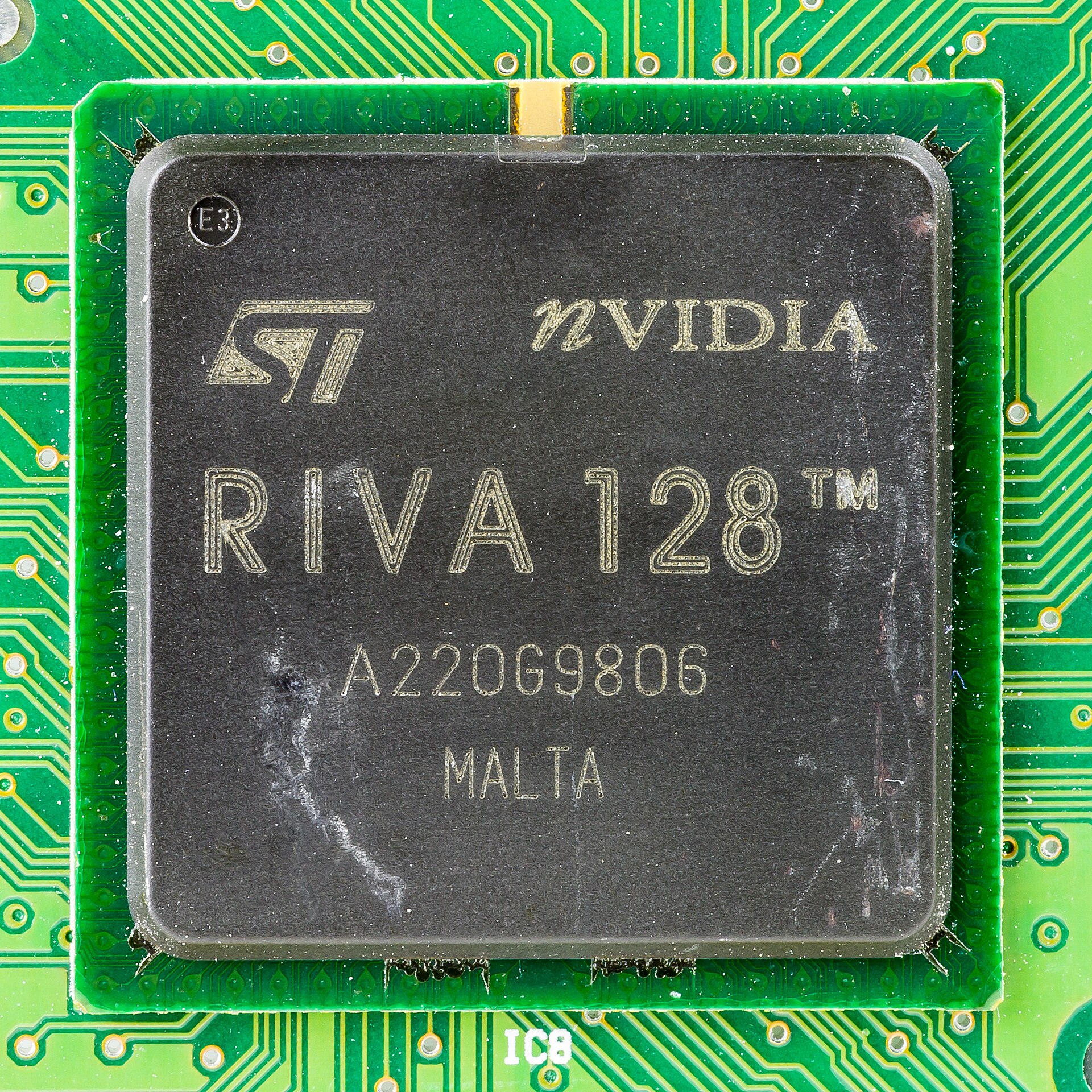
Huang co-founded NVIDIA in 1993 alongside Chris Malachowsky and Curtis Priem, and has led the company continuously since. Under his direction, NVIDIA evolved from a graphics accelerator vendor — a niche but intensely competitive market in the mid-1990s — into the dominant supplier of parallel compute infrastructure for machine learning workloads at scale. The company's GPU architecture, particularly the CUDA programming model introduced in 2006, created a software ecosystem that proved far more durable than any single product cycle. Researchers and engineers building neural networks found that CUDA's abstraction layer lowered the barrier to exploiting massive parallelism, a property that became structurally critical once deep learning methods began yielding state-of-the-art results across vision, language, and speech tasks in the early 2010s.
That architectural bet compounded over the following decade. The Volta, Ampere, Hopper, and Blackwell GPU generations each extended NVIDIA's lead in training throughput and inference efficiency, while the NVLink interconnect fabric and the DGX system line gave hyperscalers and enterprise customers a vertically integrated path from silicon to workload. By the mid-2020s, NVIDIA's hardware sat at the center of virtually every major large language model training run and a substantial share of inference deployments globally.
The Historical Pattern at Work
It is worth placing this trajectory in a longer frame. The semiconductor and computing industries have, repeatedly, produced platforms where a single architectural decision — made years or decades before the market fully materialized — ended up defining the competitive landscape almost by default. We saw the pattern clearly with Intel's x86 ISA in the late 1970s and early 1980s: a design that was, by many measures, architecturally inelegant, but which accumulated a software ecosystem so vast that displacing it became progressively harder with each passing year. CUDA's relationship to GPU compute follows a structurally similar logic. The programming model was not inevitable; OpenCL and later SYCL offered credible alternatives. But NVIDIA invested relentlessly in the developer toolchain, the compiler stack, and the library ecosystem — cuDNN, cuBLAS, TensorRT — and the resulting lock-in proved extraordinarily resilient even as AMD and Intel mounted serious GPU compute challenges.
Huang's particular contribution was recognizing that the relevant competition was not only in silicon performance but in the full stack: the software abstractions, the developer experience, and ultimately the training clusters that hyperscalers would need to build. The IEEE's recognition of him reflects an assessment that this systems-level vision, sustained over more than three decades, constitutes a contribution of the kind the Medal of Honor was designed to acknowledge.
What the Recognition Covers
IEEE Medal of Honor citations are typically specific about the technical basis for the award, and the framing matters. In Huang's case, the award follows a body of work that spans GPU microarchitecture, parallel programming models, and the acceleration of AI and deep learning at industrial scale. The progression from consumer graphics to scientific computing to AI training infrastructure was neither obvious nor inevitable at each transition; competitors with comparable technical resources did not replicate NVIDIA's trajectory.
The timing of the award also reflects the maturation of the AI wave as a recognized technical discipline rather than a speculative domain. IEEE, as the preeminent professional organization for electrical and electronics engineers, tends to confer its highest honors once a contribution's impact has been sufficiently absorbed and validated by the broader community — which, in the case of deep learning infrastructure, has clearly now occurred.
Broader Context
NVIDIA's position in the compute stack has drawn substantial regulatory scrutiny alongside its technical acclaim — antitrust reviews in multiple jurisdictions, export controls affecting GPU sales to certain markets, and ongoing questions about supply concentration in AI infrastructure. None of that diminishes the engineering and organizational achievement that the IEEE is recognizing, but it is part of the complete picture of a company and a leader operating at the intersection of technology, geopolitics, and industrial policy.
The IEEE Excellence Honors Ceremony, held on April 27, 2026, gathers recipients of the organization's full portfolio of technical awards. Huang's Medal of Honor stands as the headline recognition from that gathering.
For the engineering and technology community, the award is a formal marker of what practitioners in AI infrastructure have understood operationally for years: that the architectural decisions NVIDIA made — and that Huang championed — shaped the hardware substrate on which the current generation of AI systems was built.


