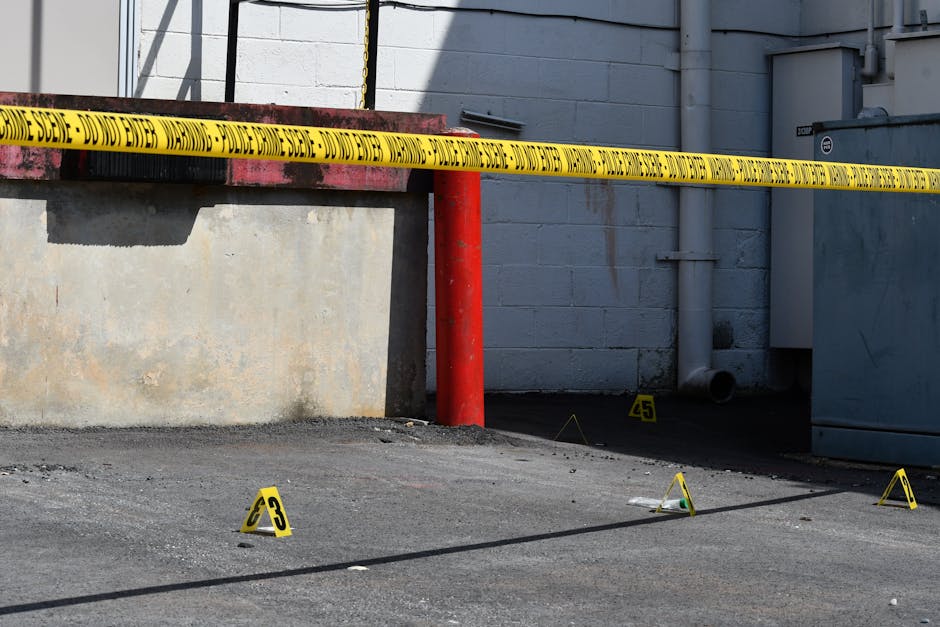
Man Arrested on Suspicion of Attempted Murder After North Belfast Stabbing

Arrest Made After Serious Assault in North Belfast
A man in his 30s has been arrested on suspicion of attempted murder following a knife attack in north Belfast, according to a statement from the Police Service of Northern Ireland. The victim was conveyed to hospital with serious injuries. As of the time of writing — 9 June 2026 — no further details about the victim's current condition have been confirmed in official releases.
Prime Minister Keir Starmer described the attack as "horrific," according to BBC News, marking an early and direct intervention from the head of government on what is, operationally, a devolved policing matter in Northern Ireland.
What Is Known — and What Isn't
The core facts established by the PSNI are narrow but significant: a serious assault involving a bladed weapon occurred in north Belfast; a victim sustained injuries serious enough to require hospital treatment; and a male suspect in his 30s was taken into custody on an attempted murder charge. Charges at that threshold require police to have reasonable grounds to believe the assault was carried out with intent to kill.
What remains publicly unconfirmed at this stage includes the precise location within north Belfast, the time of the incident, the nature of any relationship between the parties, and whether the arrest has led to a formal charge. Under PACE-equivalent powers in Northern Ireland — governed by the Police and Criminal Evidence (Northern Ireland) Order 1989 — an arrest on suspicion does not constitute a charge. The clock on permissible detention without charge runs strictly, and extensions require magistrate approval.
The PSNI statement, while brief, follows standard public communications protocol during an active investigation: minimal disclosure to protect evidentiary integrity and avoid prejudicing any subsequent prosecution.
The North Belfast Context
North Belfast is not a generic postcode. It is one of the most residentially segregated urban areas in the United Kingdom, a product of decades of ethno-sectarian division that the 1998 Belfast Agreement (the Good Friday Agreement) managed politically but never fully dissolved at street level. Interface areas — zones where predominantly nationalist and unionist communities abut one another — have historically been flashpoints for violence, albeit the nature and frequency of that violence has shifted substantially since the height of the Troubles.
That said, it would be premature — and analytically sloppy — to assign any communal or sectarian character to this incident on current evidence. Knife crime in Belfast, as in many UK and Irish cities, has risen over the past decade in ways that frequently have no political dimension whatsoever. The PSNI has not indicated any such dimension here.
What north Belfast's geography does mean, practically, is that any serious violent incident there carries a heightened political sensitivity. Elected representatives, community groups, and media watch these events with close attention. The Prime Minister's comment, however brief, reflects an awareness of that sensitivity — a signal that the Westminster government is monitoring the situation even where operational authority rests with the devolved institutions.
The Wider Knife Crime Picture
The United Kingdom has grappled persistently with knife crime. England and Wales recorded over 50,000 knife crime offences in the year to March 2025 — a figure that, while representing a slight year-on-year moderation, remains near historic highs. Northern Ireland, with a much smaller population, tracks differently, but the PSNI has acknowledged an upward trend in serious assaults involving bladed weapons over several years.
Coverage of knife crime in the British and Irish political discourse tends to oscillate between calls for legislative intervention — stricter sentencing, extended stop-and-search powers, age restrictions on blade purchases — and structural arguments about poverty, social deprivation, and the erosion of community services. Northern Ireland carries an additional layer: the legacy infrastructure of paramilitarism, including residual involvement in street-level violence and organised crime, creates a context that policing here must navigate that has no direct parallel elsewhere in the UK.
We have seen this pattern before — where a single violent incident in a symbolically freighted location triggers a cascade of commentary that rapidly outpaces verified fact. The 2018 and 2019 periods saw multiple serious assaults in north and west Belfast generate political statements within hours, well before investigators had established even basic circumstantial detail. The risk is not that politicians engage — engagement is appropriate — but that the public narrative hardens around an interpretation before the evidentiary picture is complete.
Investigative Status and What Comes Next
With a suspect in custody, the PSNI's immediate priorities will be forensic recovery, witness accounts, and CCTV analysis — standard procedure in a serious assault investigation. The victim's medical status will have bearing on how the charge is ultimately framed: if the victim's condition deteriorates, the charge could be elevated; if they recover, prosecutorial decisions about the appropriate charge will be made in consultation with the Public Prosecution Service for Northern Ireland (PPS NI).
The PPS NI operates independently of the PSNI and will make charging decisions based on the sufficiency of evidence and public interest test — the same twin-track framework applied across UK prosecutorial bodies. Given an attempted murder arrest, the file, once compiled, will be subject to close scrutiny at senior level within the PPS.
Public updates from the PSNI are likely to be incremental and carefully worded for the duration of the investigation. Anyone with information relevant to the incident has the standard reporting channels available — including the Crimestoppers anonymous line — though the PSNI statement did not indicate at this stage that wider witness appeals had been issued, suggesting the investigation may already have a defined evidential line of inquiry.
The picture, in short, is early and still forming. What is established is that a serious, potentially life-threatening assault occurred in north Belfast, a man is in custody on one of the gravest charges available to police short of murder, and the matter has already drawn comment at the highest level of UK government. Further clarity will depend on what investigators establish in the hours and days ahead.